Mystery may forever surround the death of a young NSW man who vanished while caving in remote Tasmanian wilderness more than 50 years ago.
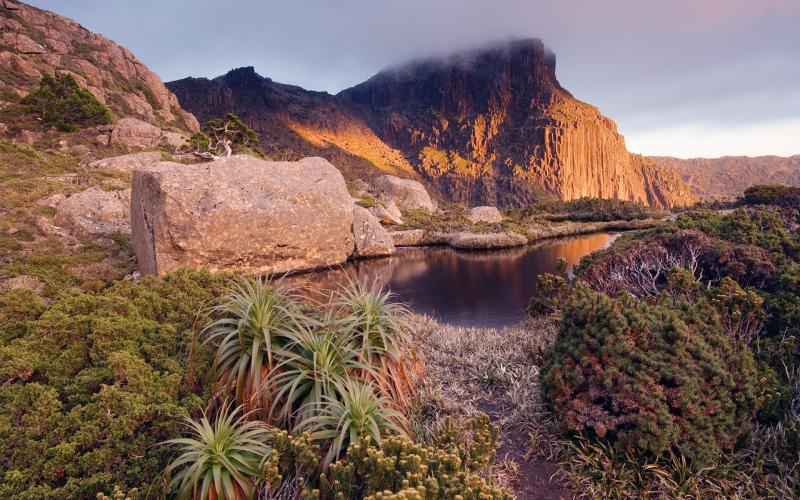
John Patrick Boyle was 26 when he disappeared in October 1969 at Mt Anne in the state’s rugged south-west, now part of the South-West National Park.
Boyle was out with three friends from a caving group when one asked him to retrieve a jumper from a vertical cave entrance.
He seemingly set off in the right direction but was never seen again.
In findings published recently, coroner Simon Cooper said he was convinced John Boyle died on the slopes of the mountain.
“How he died will, I think, remain a mystery,” Mr Cooper wrote.
“He may have fallen in a pothole or through horizontal scrub or succumbed to hypothermia. But it is impossible to say.”
His friends searched into the night after realising he was missing. Searchers from the Caverneering Club, the Hobart Walking Club, Tasmania Police and the Climbing Club of Tasmania arrived at midnight and commenced searching the next morning.
The search for Boyle continued for eight days. Aircraft, including a Wessex Helicopter from the HMS London, a Royal Navy guided missile frigate visiting Hobart, were involved. Searchers were equipped with ‘walkie talkie’ radios. Access tracks were cut using chainsaws and machinery and a siren belonging to the Hydro Electric Commission was used.
No trace of Boyle was ever found. No one has seen or heard from Boyle since and there was no evidence of him being alive after that day; the coroner observed he had not held a bank account, nor been registered with Medicare or Centrelink, nor appeared in birth, death or marriage registries, nor had any dealings with police.
The coroner made no formal recommendations, noting safety equipment had changed dramatically since then.
“However, the danger posed by the Tasmanian wilderness has not changed,” he wrote.
“Those who venture into remote areas … must be properly equipped and recognise that the responsibility for their safety ultimately rests with them.”
Cooper said if Boyle was carrying a whistle the outcome ‘may have been different’.
The coroner noted the following regarding the legal circumstances of the case, leading it to only be investigated many years after the fact:
“A coroner in Tasmania has jurisdiction to investigate any death which appears to have been unexpected, unnatural or the cause of which is unknown. The definition of ‘death’ in the Coroners Act 1995 includes ‘suspected death’1. For reasons which will, I hope, become apparent later in this finding, not only do I suspect Mr Boyle is dead, but I am satisfied to the requisite legal standard that he is.
A coroner can only investigate a death that is reported. Mr Boyle’s death was only reported in the latter part of 2019. The fact that it was not reported, and therefore investigated, when Mr Boyle disappeared is probably due to the fact that under the now repealed Coroners Act 1957, a coroner could not investigate a suspected death. That changed when the current Act became law on 31 December 1996. Why Mr Boyle’s disappearance was not reported after that date is not clear to me. However, I do not think that the delay since 1996 has materially affected the investigation.”
At the time of incident, Boyle was with friends Allan Keller, Paul Taylor and Andrew Cole exploring the Mount Anne area and looking for potholes5. All four men were members of the Tasmanian Caverneering Club. Keller, the group leader, is now dead, while the other two men were unable to be located and contacted to provide evidence to the inquest.
Boyle, who was born in Mullumbimby in northern NSW, had moved to Tasmania several months before going missing partly to pursue caving. He had been living in Macquarie St in South Hobart.