Canadian First Nations Mi’kmaq Elder, Albert Marshall, coined the term “two-eyed seeing” in relation to bridging the gap between the western way and the First Nations way.
In Marshall’s words
“Two-Eyed Seeing refers to learning to see from one eye with the strengths of Indigenous ways of knowing and from the other eye with the strengths of Western ways of knowing and to using both of these eyes together”
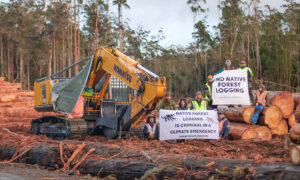
In March 2026, Ruth Langford/Tipruthanna pleaded not guilty to trespass and other charges relating to anti-logging protests at Snow Hill in 2025.
Langford told the court she was acting to protect Aboriginal Country, saying it was her cultural responsibility.
Before proceedings began, Langford requested that the hearing be held at Risdon Cove, an Aboriginal-owned site, arguing that the location would provide greater context about Aboriginal people’s relationship with Country and the historical experiences that shaped her actions.
Although the prosecution did not oppose the request, the Chief Magistrate decided the hearing would remain at the courthouse. Some witnesses were, however, permitted to give evidence via video link from Risdon Cove.
Representing herself, Langford questioned Sustainable Timber Tasmania staff about their understanding of Aboriginal cultural heritage and the assessment process for the Snow Hill logging area. The answers provided by STT staff demonstrated a lack of basic understanding of Tasmanian Aboriginal cultural heritage.
Aboriginal elders and other witnesses told the court that caring for Country is a cultural responsibility and that damage to native forests can cause spiritual harm.
On-Country hearings are already being used in some jurisdictions in Australia and overseas. They aim to incorporate Indigenous cultural perspectives while continuing to apply existing laws.
Supporters of on-Country hearings argue that they can improve cultural understanding within the justice system and help address concerns about the over-representation of Aboriginal people in Tasmania’s prison population.
The Tasmanian Government currently has no plans to introduce legislation allowing on-Country court hearings.
Aboriginal cultural heritage specialist Shani Everett, who has previously worked with Forestry Tasmania and Aboriginal Heritage Tasmania, said Tasmania’s old-growth forests are “the very connection to our identity as Palawa”.
“Every time we lose one of our ancient trees, we not only lose a tree, but we are stripped of that connection to the past and knowledge that is held as a tangible source to fulfil the cultural obligation to teach the current generation and pass this onto the future generations,” she said.
“Under one law, Ruth [Langford] is accused of trespassing, but under cultural law, Ruth was doing exactly what the arresting officer on the day was doing, fulfilling her obligation to protect what belongs to her, what belongs to Palawa.”
Jim Puralia Meenamatta Everett said the Tasmanian Government needed to make practical changes to ensure future Palawa generations do not inherit “lifeless forests, dead sea waters, and undrinkable fresh water”.
“Alternative building materials should be pursued by governments to replace native forest logging, forests are finite resources and planning for the future should start immediately,” he said.
The matter has been adjourned, and a further hearing will be held on September 24.
If you’re interested in this article, please join our mailing list. It’s all free … and we won’t share your information with anyone!
Truly independent media is a cornerstone of democracy.
Remember: once they gain power the first action of every despot in modern history is to take control of the media, so please consider supporting us.
Your kids will thank you and so will your Granny, but the aspiring despots won’t…