Tas That Was
Tas That Was – Tamar Estuary

The Tamar Estuary formed millions of years ago. Over time, Aboriginal groups such as the Leterrermairrener, Panninher, and Tyerrenotepanner peoples occupied the surrounding lands.
In 1798, British explorers George Bass and Matthew Flinders named the estuary and river after the River Tamar in England while charting the coast of northern Tasmania. Six years later, the first settlement near the mouth of the estuary, York Town, was established. Launceston and other towns followed, springing up along the estuary and river in the early 1800s. During this period, levees were constructed, wetlands were drained, and land was cleared for farms – contributing to the loss of the estuary’s original tidal wetlands and the deterioration of its waterways.
Partly to control waste entering the estuary, sewage and stormwater systems were installed in Launceston from the mid-1800s.
Between the late 1800s and the early 1900s, the upper part of the Tamar Estuary was dredged to better facilitate shipping as local ports expanded. Large-scale dredging did not stop until 1967, when port and shipping activities shifted to deeper water at Bell Bay near the estuary mouth. Smaller dredging programs continued in parts of the estuary to maintain channels.
In 2008, the Tamar Estuary and Esk Rivers Program was created to improve scientific understanding of the estuary and help guide its overall management.
Six years later, in 2014, the estuary was officially given the dual name kanamaluka / Tamar Estuary to honour Aboriginal cultural heritage.
Work to upgrade the bridges and boardwalk at the Tamar Island Wetlands began in 2026.

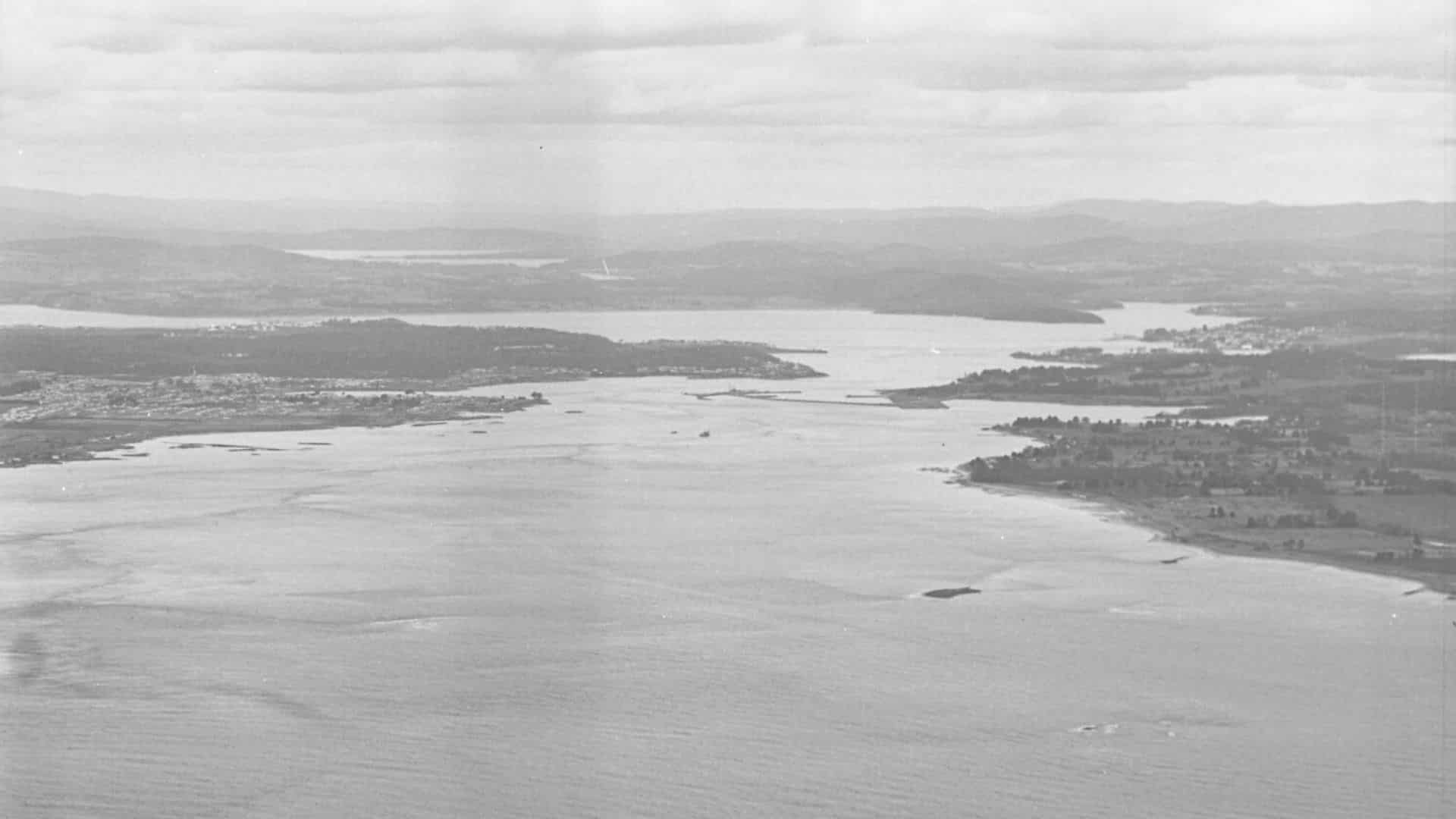
Tamar Estuary (1970s).
Media Release – Madeleine Ogilvie, Acting Minister for Parks, 26 February 2026
Improving the Visitor Experience at Tamar Island Wetlands
Work has begun to upgrade the bridges and boardwalk at the much-loved Tamar Island Wetlands.
As part of the Tamar Island Wetlands Bridge and Boardwalk Upgrade Project redundant jetty infrastructure is being removed on the outer side of the island.
The next stage of works will be the replacement of the first two bridges leading from the Tamar Island Wetlands Centre.
Acting Minister for Parks, Madeleine Ogilvie, said the Tasmanian Government is committed to delivering improvements to the visitor experience at the Tamar Island Wetlands.
“This is an exciting step forward for the project,” Minister Ogilvie said.
“The Tamar Island Wetlands is a unique estuarine wetland ecosystem of mudflats, lagoons and islands and is enjoyed by many locals, national and international visitors. The Island focuses on educational interpretation and is also a great spot to see bird life in Tasmania with around 60 species identified in the area.
“These works are important to further improve accessibility at the site and enhance the overall visitor experience while maintaining cultural and natural values of the site.”
The tender for the main project works is expected to be published in coming weeks, with the contract to be awarded in the following months. Works are expected to be completed later this year.
More information on the Tamar Island Wetlands Centre is available on the Tasmania Parks and Wildlife Service website.
References & Bibliography
- Aboriginal connection – Kanamaluka / Tamar (TEER Program)
- Natural history (TEER Program)
- About the Estuary (Tamar Estuary Management Taskforce)
- River Tamar (Britannica)
- Tamar Island Wetlands Centre (Tasmania Parks and Wildlife Service)
- More than half of Tamar River wetlands lost since European settlement, study reveals (Phys.org)
- The saga of Tamar silt (Tasmanian Times)
- Tidal immersion of the Tamar Estuary Spartina Marsh, Tasmania, Australia (Royal Society of Tasmania)
- Tamar Estuary (Companion to Tasmanian History)
Tas That Was is a column that includes:
- anecdotes of life in Tasmania in the past;
- historical photographs of locations in Tasmania; and/or
- documentaries about locations in Tasmania.
If you have an anecdote or photograph you’d like to share with us, please send it to submit@tasmaniantimes.com.
Callum J. Jones studied English, History and Journalism at the University of Tasmania and lived in Western Sydney from 2022 to 2024 while working as a journalist for Professional Planner, a leading online publication for financial planners. He has written for Tasmanian Times since 2018 and has also been published in a range of other outlets, including Quadrant and the BAD Western Sydney anthologies.