
A question often asked online is “how much has the MPDC spent so far?” A recent analysis of their ‘books’ shows that up to August 2025, they’ve had $187M go into their accounts:

With $42M more committed to the next year or so, MPDC’s spending amounts to $229M over 15 years.
The next question has to be then, “how effective has this spending been in meeting MPDC’s goals?”
To develop the Macquarie Point site into a mixed-use precinct with arts, culture and sports, while also being a hub for events and entertainment. The goals include delivering a project for the benefit of all Tasmanians, ensuring community engagement, and creating a sustainable and vibrant destination that is well-connected to its surroundings.
While it’s not clear how much of the Commonwealth’s $50M was spent by the MPDC on remediation, it seems apparent that much was spent on other things because the remediation work was ongoing way past the conditional deadline of 2016 set by the Commonwealth. The $50M ran out around 2021 and the State government has been topping up the coffers since then to the tune of $26M pa.
Despite this largesse, and contrary to assurances from Minister Abetz that the remediation work has been done (see Fig 1.), the TPC Final Integrated Assessment Report (FIAR) released in September 2025 says the remediation, assessment and auditing has not been completed for the whole site, and in particular for the stadium development (section 8.1(f)).
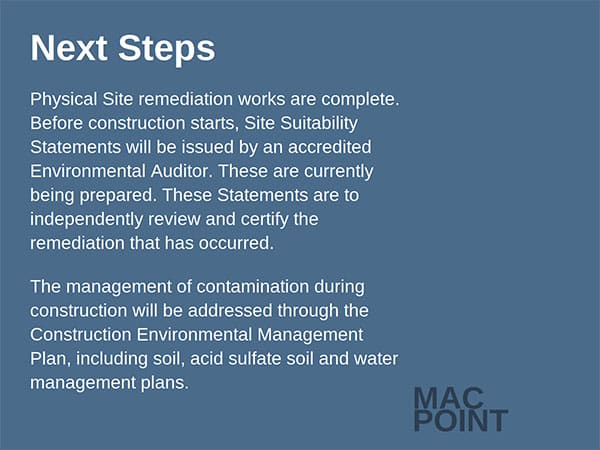
Fig 1: Storyboard at Mac Pt Stadium Showcase. The Goods Shed Hobart 31/10 – 5/11/25.
Multiple instances throughout the report cite insufficient evidence or incomplete analysis to make a proper assessment of the site’s suitability in environmental terms. The TPC has concluded that suitability of the site for a stadium will not be known until all these assessments are complete (section 8.1(p)). The TPC report highlights the uncertainty surrounding what actually needs to be done to complete the remediation. It refers to the proponent’s own 2024 update which prevents access to the soil, i.e. no digging.
The TPC FIAR (p.134) notes that:
“AECOM (2024), identifies that the current site suitability requirements:
- prevent access to the soil;
- require break layers, such as paving, importation of clean fill, and similar alternative methods to prevent access to soil;
- require garden planting in above ground boxes or require auditor confirmation before in-soil planting can occur.
- portions of these areas are identified for the Aboriginal culturally informed zone, landscaped areas or are likely locations for the incorporation of water sensitive urban design features.” (section 8.1 (g))
Despite the Minister’s assurances, the site is still contaminated and will need ongoing remediation before its viability as a location for this development can even be properly assessed.
Yet the MPDC accounts, as of 30 June 2025, provide only $850,000 for further remediation and certification, a scant amount compared to the hundreds of millions that are bandied about in relation to the rest of the build. Such a relatively paltry sum suggests the Minister and his Corporation are expecting it’s simply a matter of ticking a few boxes, and that the EPA will ignore all its previously stated concerns over environmental contamination and the limits of their role in its oversight.
The PoSS (Mac Point) Order includes a condition that the site must be certified in terms of remediation before the project can proceed, therein acknowledging that the remediation was not complete when the order was issued. Who knows what will be required before that certification can be provided?
Tasmanian Times (TT) is a community-based news and current affairs service covering the island state of Tasmania. It exists to provide a diverse presentation of Tasmanian issues. TT creates and supports independent media content utilising the best of modern technologies and tried-and-true practices of public-interest journalism.
Support us in expanding our coverage and developing new content by and for Tasmanians.
New initiatives on the way include … what our contributors and readers suggest! Please get in touch with your suggestions.