Article
Tasmania Lagging on Retirement Villages

A new report card reveals two thirds of retirement village development applications in Tasmania take more than a year to be assessed, despite the state’s ageing population and housing supply crisis.
The Retirement Living Council (RLC) has released its national planning report card – called Retirement ready – which ranks state-based planning systems and recommends a suite of practical reforms.
The report card has been prepared together with leading national urban consultancy Urbis and has made the following key findings:
– 67 per cent of development applications for retirement villages take more than 12 months to receive a determination, while 23 per cent take more than two years.
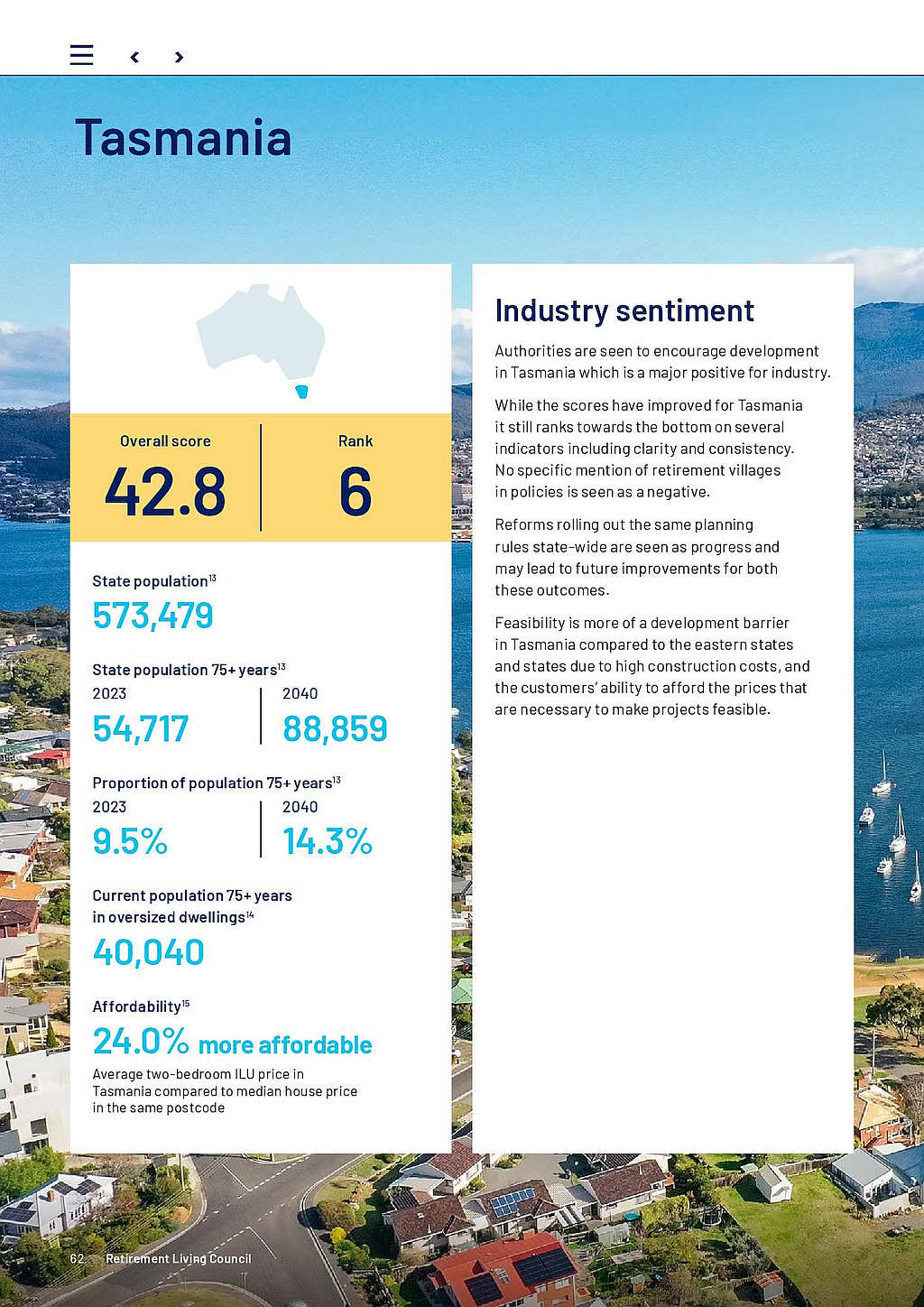
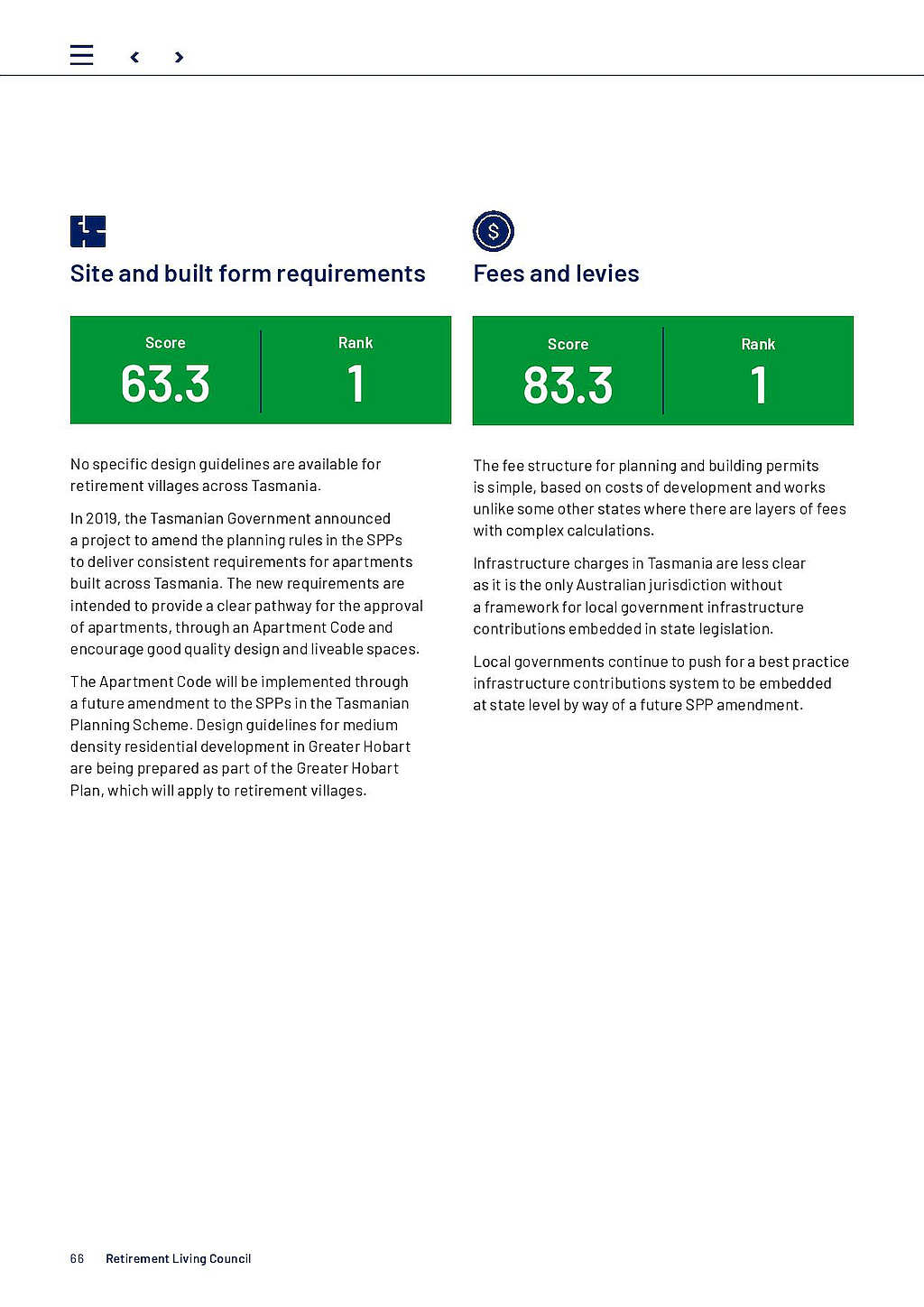
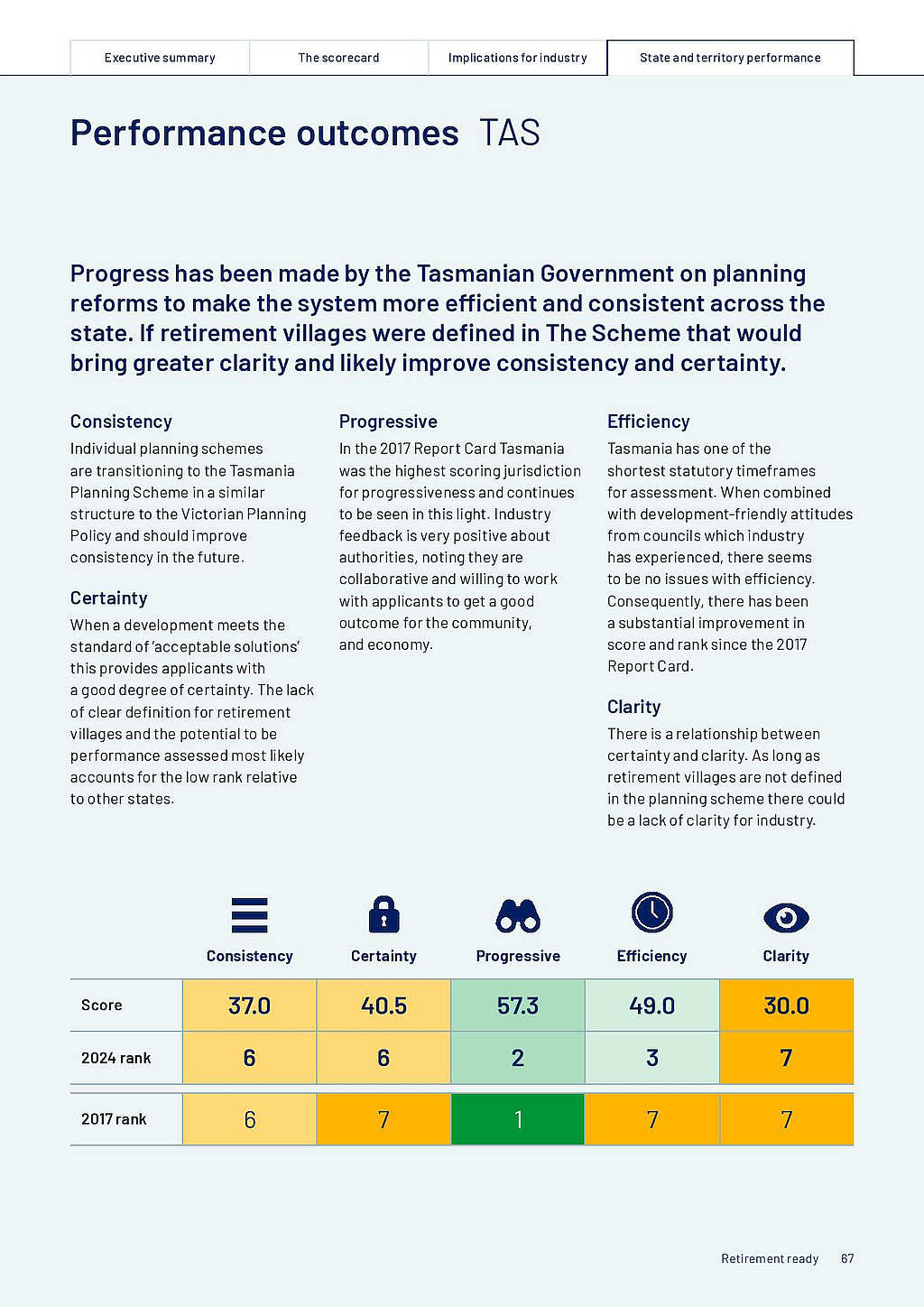
– Tasmania ranks sixth on the national leaderboard with a score 42.8/100, trailing SA, NSW, ACT, VIC and QLD, and only ahead of WA.
– Feasibility is more of a development barrier in Tasmania compared to the eastern states due to high construction costs, and the customer’s ability to afford prices necessary to make projects feasible.
– The report recommends the establishment of minimum land allocations for retirement communities and providing additional floor space and height bonuses for all states.
“We are in a race to house the nation, which means that governments at all levels need to ensure they are ‘retirement ready’,” said RLC Executive Director Daniel Gannon.
“We now know that 67 per cent of retirement village development applications take more than 365 days to complete assessment, while 23 per cent take more than 730 days.
“Given Tasmania’s over-75s cohort will increase by 62 per cent over the next decade and a half and retirement villages are effectively operating at full capacity, this is alarming and unacceptable.
“Like the rest of the country, Tasmania is ageing, housing supply is in deficit and the aged care sector is breaking under the weight of increasing demand.
“Governments are crying out for more housing supply while at the same time holding it back. Feedback from industry indicates Tasmania’s planning system suffers from a lack of clarity and consistency, with no specific mention of retirement villages in policies leading to frustration for operators.
“More red tape and complexity in planning systems won’t help build the homes that older Tasmanians need, but they can dampen supply very easily. Given the proven benefits that age-friendly communities deliver for older Australians, governments should be throwing the kitchen sink at approving more of them – and fast.”
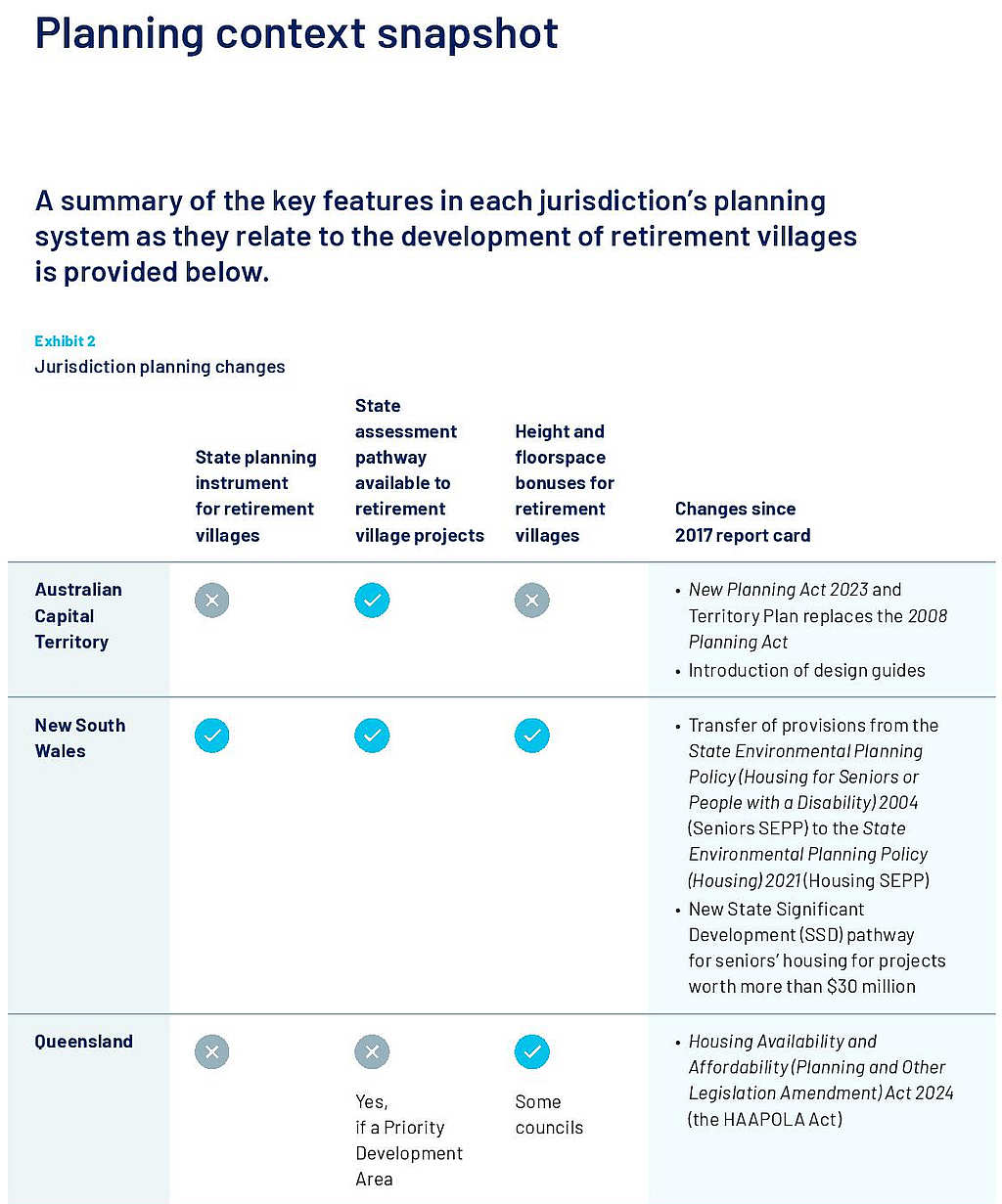
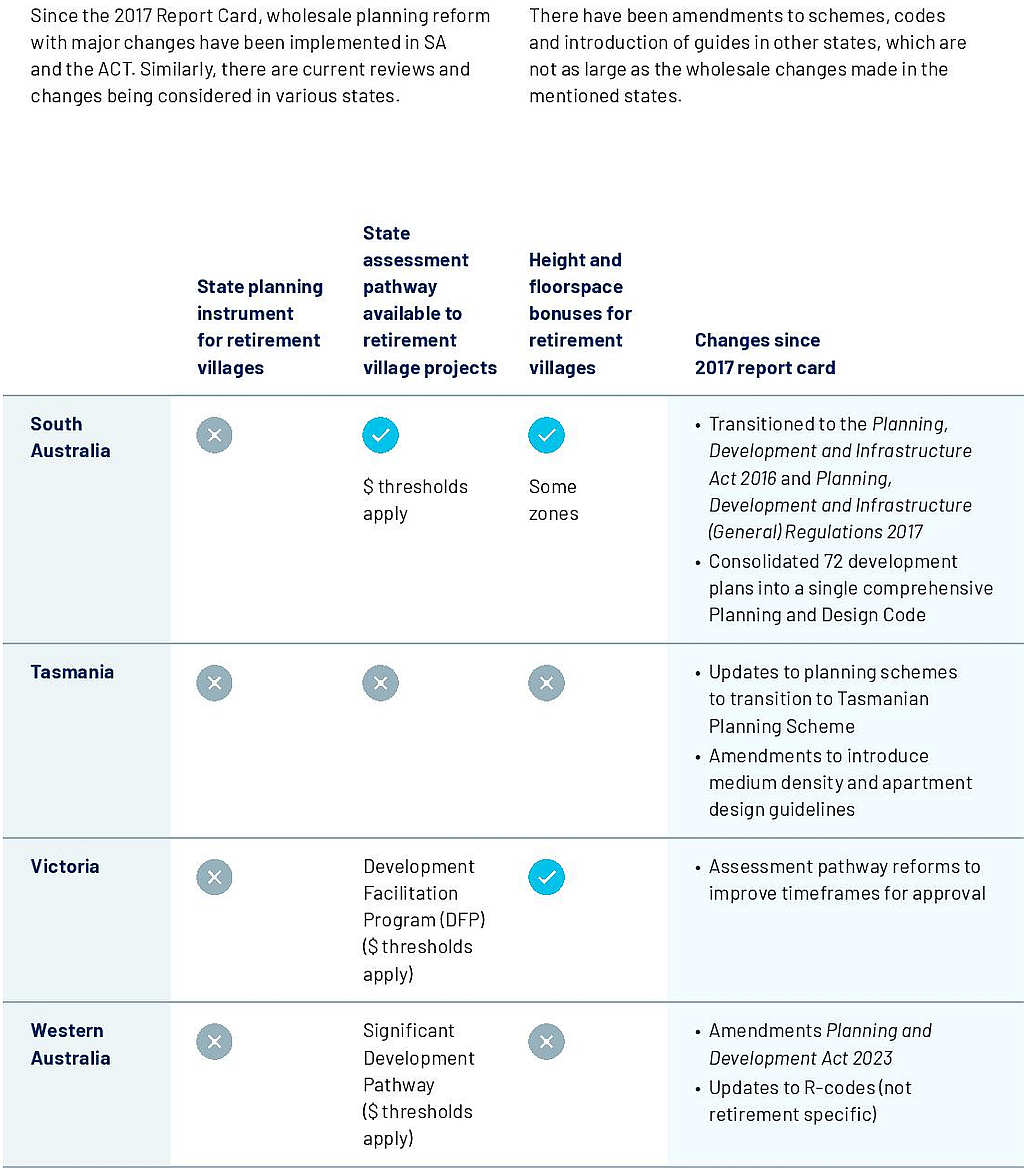
The report showed that Tasmania was behind the rest of the nation when it came to facilitating retirement villages.


Meanwhile Urbis Associate Director, Kylie Newcombe, said that retirement living played a crucial role in providing age-friendly housing, enabling older residents to remain integral parts of their communities.
“Planning is a critical enabler for delivering the housing that the retirement living sector provides for older Australians,” she said. “However, a significant 70 per cent of the industry feels let down by the system, citing that authorities have a ‘poor’ understanding of retirement living.
“As our ageing population continues to grow, it’s more important than ever that retirement living is addressed in strategic plans and policies by state and local governments.
“A promising starting point could be setting explicit targets for retirement living, backed by a consistent set of controls and design guidance for application across the state.”