Article
Participation Makes My Life Worth Living
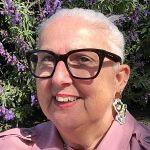
Participation makes my life worth living. I am a joiner … I want to belong and contribute to my community. As a person with disabilities this is really important to my health and wellbeing.
It is well-documented in psychology that those who are engaged and participate in a wide circle of social activities do better on health indicators. Their mental health is better, their overall health is better.
So how do we encourage people with disabilities to participate?
We provide safe and accessible physical sites to be engaged.
The simplest of infrastructure can be a barrier to participation. How many venues have we all been to that does not have a disability-accessible bathroom? Or that one step that stops a person with mobility restrictions from entering. It’s getting better but there is still work to be done.
My personal pet hate is when NDIS providers offer services to people with disabilities, but their understanding of disability diversity is limited. They simply do not think of the simple things like a bathroom for us to use.
What if it’s more sinister than that and they only want to provide services to a certain cohort of participants?
That’s dark but scary to think not only are PWD now commodified for their NDIS packages, but providers can pick and choose the easiest to service for maximum profit.
My second real concern that the mainstream still has a lot to learn too. Now I will expose my shame and embarrassment when fundraising for a big charity and attending the nationwide charity event in my city.
I was excited and keen. I had fundraised really well and was proud of my efforts to contribute to this well-deserving organisation.
We started the event and I was impressed with how accessible it was. I was assured a parking spot and the terrain of the event at the start was perfect. I felt involved and proud to be with everyone else in the community contributing.
Then things went bad. We veered off the path at the very end on to a dirt track up a hill. It was goat country. My off-road scooter just was not prepared for such an adventure and after being grounded on a large rock some wiring was dislodged and I was stuck.
Two members of the public and some volunteers of the organisation had to push me up a very steep hill and then carefully hold on to me as we negotiated the steep descent.
I felt humiliated and embarrassed that I was no longer an equal member of the event but someone who required assistance to complete the course. It was hard work for the volunteers and the community members to get me to the finish line and I felt terrible, really mortified that this happened. We left the event and I slunk off leaving early holding my wounded self close to heal.
Always solutions-based and putting my discomfort aside, I reached out to the organisation and there is a plan to make the event accessible next year.
Organisations don’t know if we people with disability don’t tell them what we need; my experience will make it better for people in the future.
So I guess my point here is that the hard work is still up to people with disability to make our perspective and world more accessible.
Access is only as good as the person who designs it for an organisation. If that person has limited experience with inclusion policies or indeed if the organisation does not have an access and inclusion policy, it throws all the hard work and at times embarrassment back on to people with disabilities.
As a community we are all still learning. But I sometimes wish that we were already there, that access issues are a thing of the past and that we can be assured that we can all contribute and be engaged in a safe and welcoming world.
Tammy Milne is a deaf interpreter, a community activist in various fields and a person living with Arthrogrophosis Multipex Congenita.