by Dickie Currier, Smart Company
Last week I had the pleasure of jetting to Hobart, the capital of Australia’s least populous state, Tasmania, on a research mission to understand the inner workings of its fledgling startup economy.
With just over 570,000 residents, Tasmania has a population roughly 1/10th the size of the country’s two biggest cities, Sydney and Melbourne.
Hobart was founded in 1804 as a British penal colony and is Australia’s second oldest state capital, making up over half of Tasmania’s small but mighty population.
Despite its diminutive nature, I found a welcoming community who were honest about the challenges that impact their growth and deeply passionate in the face of adversity.
A familiar story on a micro level
When looking at the challenges that face Tasmania in growing its innovation economy, it’s hard not to see it as a miniature version of Australia.
Comparing its ecosystem to the mainland feels like an analogy for how the Australian startup ecosystem competes globally.
The same problems of:
- island isolationism makes it a struggle to keep both culturally and economically connected
- a tall poppy mentality limits the ambition to stay humble and local
- A two-way talent crisis with top talent looking to move overseas while a battle to attract the brightest international minds is an uphill struggle
- and infrastructure and investment that is still decades behind the larger innovation hubs worldwide.
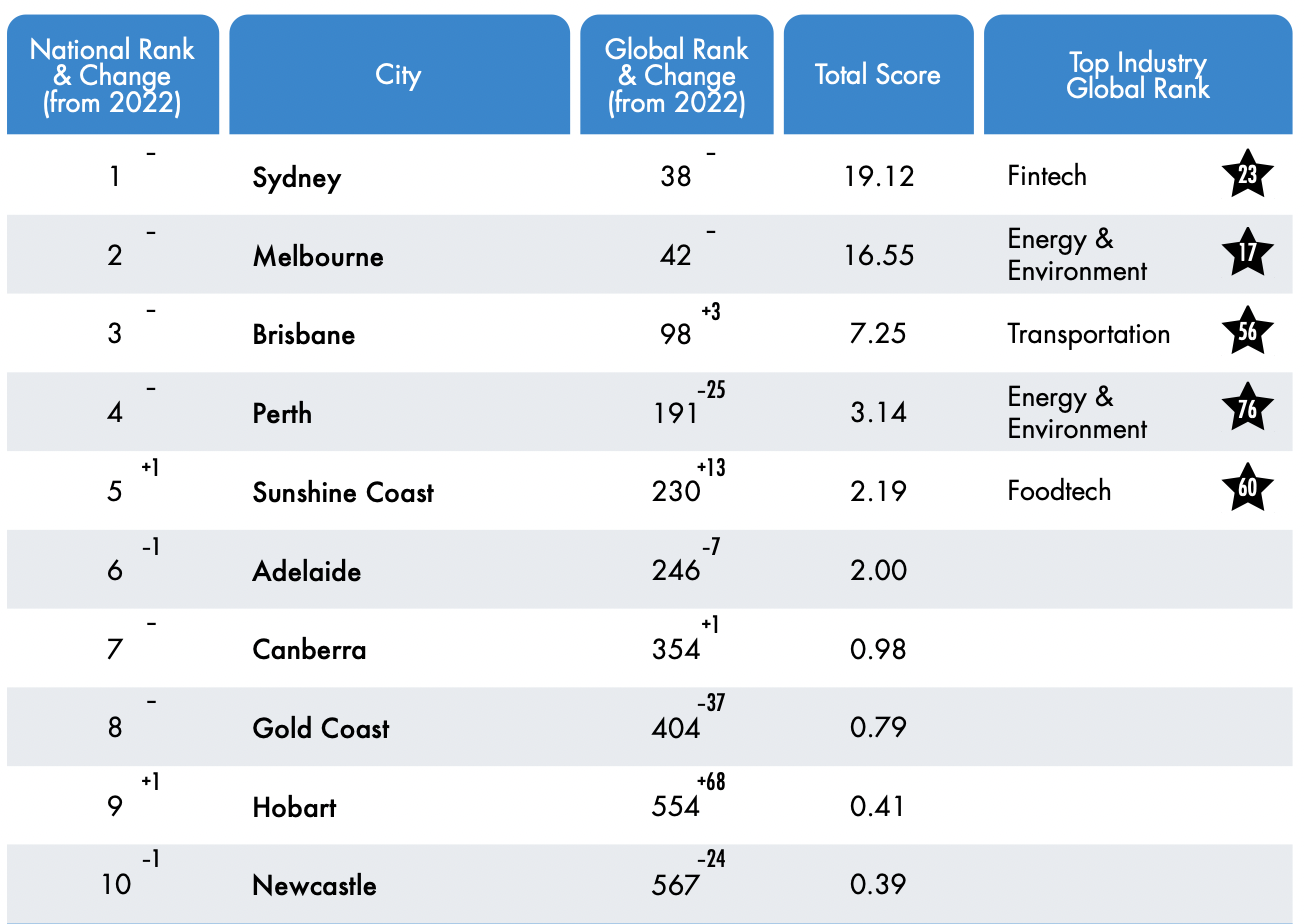
With these obvious barriers for entrepreneurs, it’s no wonder that Hobart ranked 554th in this year’s Startup Ecosystem Report produced by StartupBlink.
Wedged halfway between Caxias do Sul, Brazil (553rd) and Catania, Italy (555th), which with no offence meant, are hardly global powerhouses.
Read the full story here: https://www.smartcompany.com.au/opinion/tasmania-startup-innovation-growth/