Media release – Department of Natural Resources and Environment Tasmania, 26 April 2023
Public asked to let hauled out seal rest
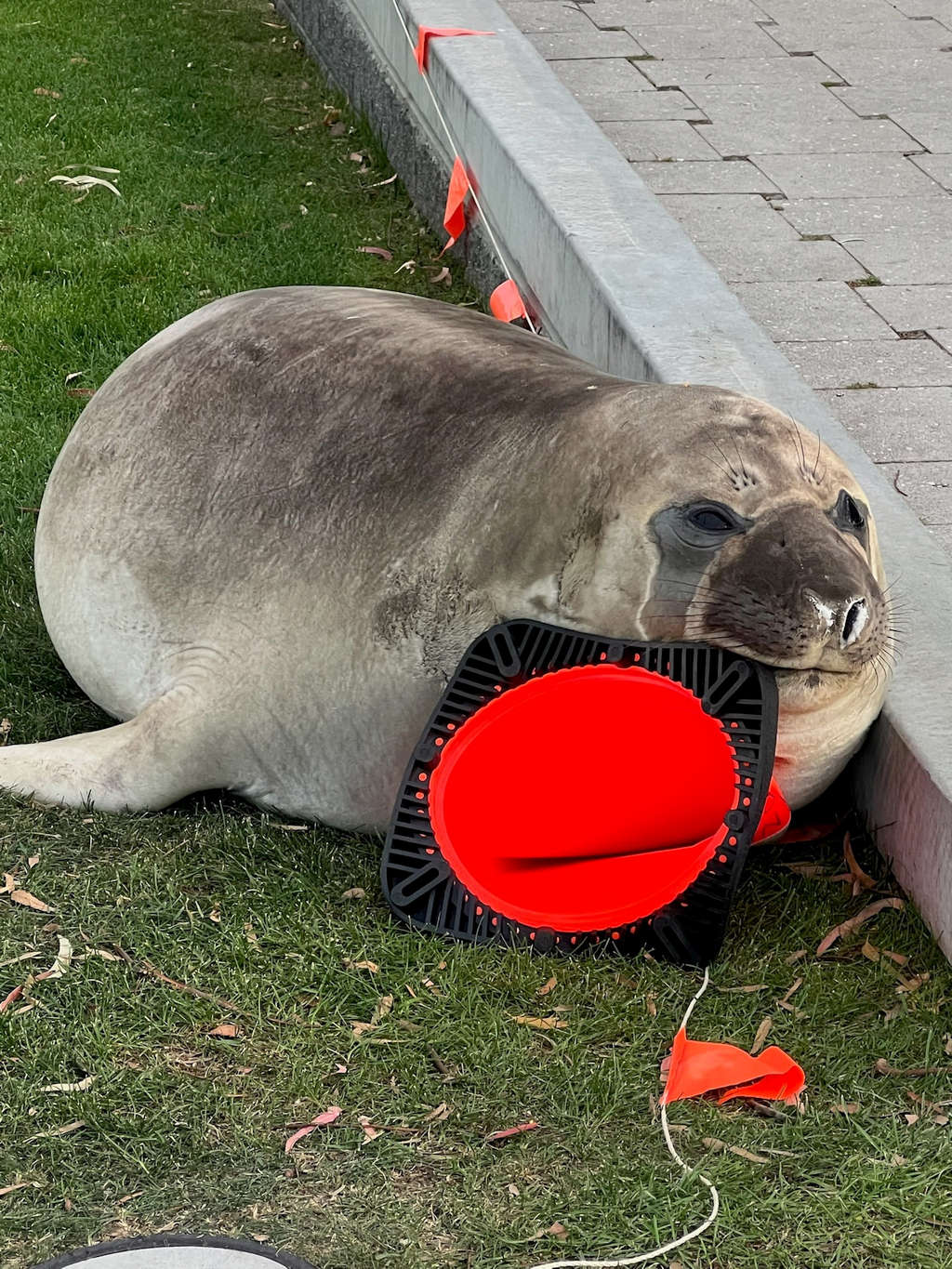
Members of the public are being asked to keep their distance from an elephant seal hauled out near Kingston Beach.
The male southern elephant seal, nicknamed Neil, was born on the Tasman Peninsula in October 2020 and has since been reported at multiple locations in the state’s south-east.
“Hauling out is normal behaviour for a seal and it should be left alone to rest,” Marine Conservation Program (MCP) wildlife biologist Sam Thalmann said.
“The seal appears to be in good condition and may simply be resting after foraging at sea. Seals also haul out to undergo an annual moult.
“It is important people stay at least 20m from the animal and don’t disturb it. Pets should be kept on a leash and away from the seal. While it may appear calm and relaxed, it is still a large wild animal.”
Marine Conservation Program wildlife biologists previously tagged the seal, which is Tasmania’s only known resident elephant seal.
Wildlife biologists will continue to monitor the seal but it is unnecessary to intervene at this time. The program also does not require assistance from the public but will contact trained volunteers if help is required.
Members of the public are reminded that interfering with wildlife is an offence. It is also important the seal does not become habituated to humans and continues to maintain wild behaviours for long-term health and survival.
Anyone with concerns about the seal can call the marine mammal hotline on 0427 WHALES (0427 942 537).
Media release – Department of Natural Resources and Environment Tasmania, 27 April 2023
Reminder to stay away from hauled out seal
Following reports of youths harassing and touching a southern elephant seal hauled out near Kingston Beach, members of the public are again reminded to stay at least 20m away from the animal.
Southern elephant seals are a threatened species and it is an offence to interfere with wildlife.
“Seals are wild animals and it is unacceptable to touch and harass the animal – it puts the individuals and the seal at risk,” Marine Conservation Program wildlife biologist Sam Thalmann said.
“Elephant seals may seem unbothered by humans and people may think patting a wild animal makes good social media content, but the seal could be dangerous if harassed.
“We don’t want to be in a position where human or animal safety is at risk. There is precedent in the northern hemisphere, where a walrus was euthanised after human behaviour increased the safety risk, so we’re again asking people to respect the seal and stay at least 20m away.”
Wild animals can be unpredictable so members of the public should keep their distance. It is important the seal does not become habituated to humans and maintains wild behaviours for long-term health and survival.
Wildlife biologists will continue to monitor the seal and will seek assistance from Tasmania Police where required.
Hauling out to rest or moult is normal behaviour for seals and the seal should be left to rest. It will make its way back to sea when it is ready.
Anyone with concerns about the seal can call the marine mammal hotline on 0427 WHALES (0427 942 537).
How to uphold animal rights? How to participate?
You can donate or volunteer for animal protection organisations. These organisations are often on the front line, fighting to protect animals from harm. Also consider custom animal protection pins, animal rights custom enamel pins with animal protection information and the name of the organisation. This is so that everyone can learn more about and join these organisations.