Article
Rural Health Struggle to Service People with Disabilities
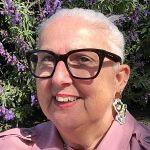
As a person with disability, I am not doing myself any favours by living in a regional rural setting.
I have Arthrogrophosis multiplex congentia (AMC), which most doctors I have seen over the years in my city have to look up. Most comment, ‘I have never heard of this’.
The thing is I have been able to manage my condition extremely well for the 57 years of my existence. I have not had an appointment with an orthopaedic surgeon since 1981 because there is simply nothing that could or can be medically or surgically done to further to improve my situation.
I exercise, I live a fully and participatory lifestyle. I am involved, I am loud, and I am known in my community.
So what’s the issue? I have lived with, alongside of AMC, a condition called dysphasia which may or may not be associated with AMC. I have managed this well. I know I can not eat large chunks of food and expect them to go down; invariably, they would get stuck. I drink slowly and carefully, often through a straw. I manage my activity to alleviate stressing my ability to breathe.
But this all falls over when I get a cold or flu. My already struggling ability to breathe and eat is overwhelmed and goes into crisis mode. I wake up, my airways blocked with mucus and inflammation.
So what do I do? I seek the help of Health Direct, the 24 hours a day helpline that allows patients to get advice from a medical professional.
The last four times I have called this number they have sent an ambulance and I have landed in my small regional hospital, where there are not specialists, and where they are understaffed, overworked and inexperienced in complex cases.
Whose fault is this? Is it mine for living in the place I was born? Is it mine for having a complex disability and not moving to a capital city?
Is it the health system? Is It the fault of a rich country that doesn’t manage health resources effectively?
Studies show that those living in regional areas already have a lower life expectancy because of the lack of services in the country.
“The rate of potentially avoidable deaths increased as remoteness increased. These are deaths among people aged 75 and under from conditions considered potentially preventable through individualised care, and/or treatment through existing primary or hospital care. The rate is 3.3 times higher.” – Australian Institute of Health and Welfare, 2022
Studies also show that for,
“People using specialist disability services in Australia had a mortality rate 4.7 times as high as the general population. Among service users, the rates and causes of death varied by type of disability, age and sex. The rate of potentially avoidable deaths was 3.6 times as high for service users compared with the general population.” – Mortality patterns among people using disability support services: 1 July 2013 to June 2018, Australian Institute of Health and Welfare, 2022
With both these statistics being freely available on Australian Government websites it is obvious then that government is well aware of this issue but solutions are far from easy.
Geographical locations of sparely-populated and loosely-connected areas, lack of financial incentive for specialists to move to these locations, lack of experience in the currently-serving health professionals in these areas all play a part in the abysmal death rates of people living with disabilities.
When presenting at the hospital I am asked by the treating doctor, a paediatrician, ‘what do you expect me to do for you?’ My expectation was to have the best medical attention a first world country could provide.
His response was that he has not practised that sort of medicine for 20 years in Australia. Already I have alarm bells ringing. Not only am I afraid and sick but I have a doctor telling me his options available to help me are next to none.
After a heated discussion, mine from stress and his from frustration, he said he would ring an Ear Nose and Throat specialist but he didn’t want to look like an idiot: could I pay for a private doctor?
After saying I could he rang and spoke to someone – I know not who – and came back to me saying I needed to go to the Royal Hobart Hospital for test: swallowing and a look down my respiratory tract to see what was going on. These tests are to be undertaken in the next two weeks at his instruction.
I should say here that I had been diagnosed with a paralysed vocal cord back in my childhood and have had a handful of major Issues through my life because of this.
The most dramatic was having my child through c-section under general anaesthetic instead of the proposed epidural discussed. After three attempts to do the epidural it was discover my spine was to compacted to allow a needle to go into the spinal column. The resulting general anaesthetic caused my throat to relax so much I stopped breathing. So yes, it is a serious condition and yes I need help when I need it.
So when it’s going well, and with only a handful of times through my life that I have needed attention, it is no wonder that it drops off my priority list of important things to consider needing constant medical attention because it doesn’t. I only need attention in crisis.
This doctor seemed to think I need to be more on top of my health, but that is easier said than done in a regional area where no regular health professionals have this specific expertise.
Now I’m well able to advocate for myself as a person with disability but I am continually have to strongly advocate again and again when dealing with health professionals.
What about those who cant take more charge of their health situations?
Are they sent home with a tablet and left to overcome a crisis themselves… but ultimately die in the next or subsequent health crisis event because ‘care going over and above’ professional care was not afforded to them?
The parting remark from the doctor is ‘I have spent 35 minutes with you now how much has this cost you?’ And he writes $0 on a note he has.
I felt after this interaction that this was exactly what my life was worth. This is why people with disabilities die four times more often from preventable health conditions than the general population because doctors are overburdened, under pressure and are not willing or able to go over and above to safe the lives of their patients.
They are working so much in the here and now, and backed up with another ten patients to see, that it seems easier to send us home with a headache tablet.
This needs to change. The shame of our nation is great!
Featured image above: Tammy Milne (middle) disability participant at a recent disability pride event.