Article
Rental Crisis Hits Tasmania’s COVID-essential Workforce

Media release – Everybody’s Home
Rental crisis hits Tasmania’s COVID-essential workforce
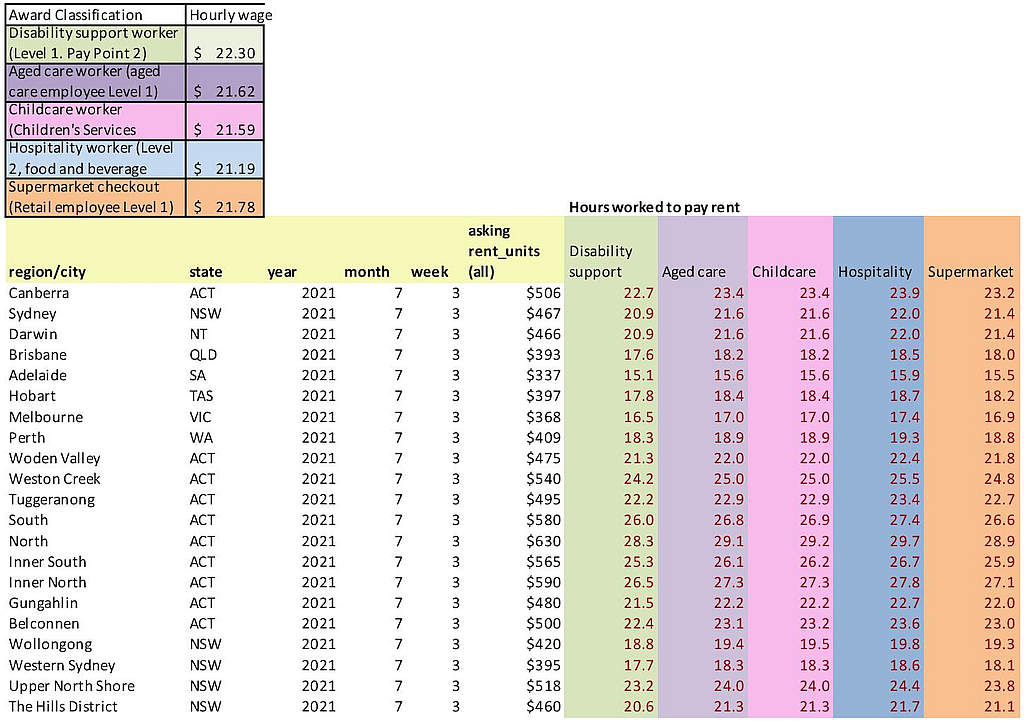
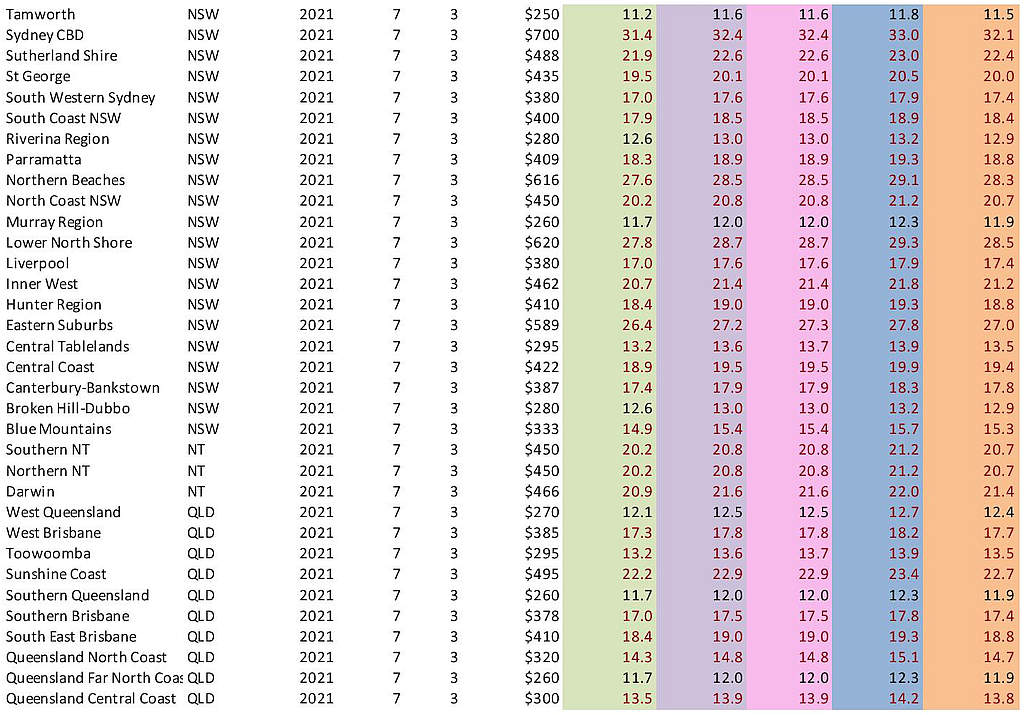
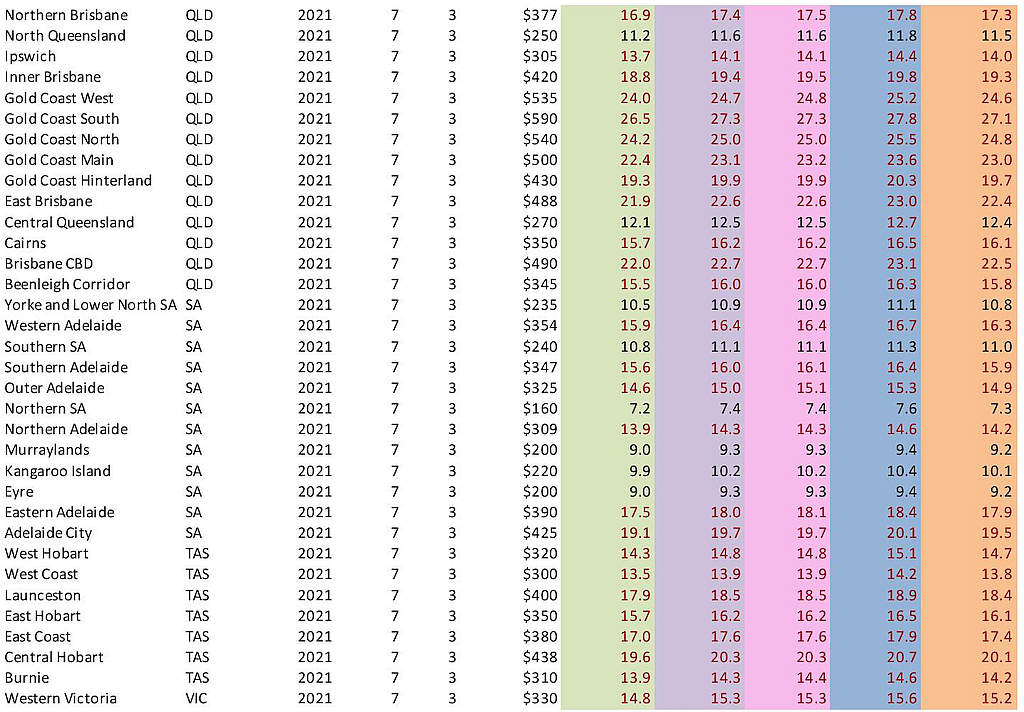
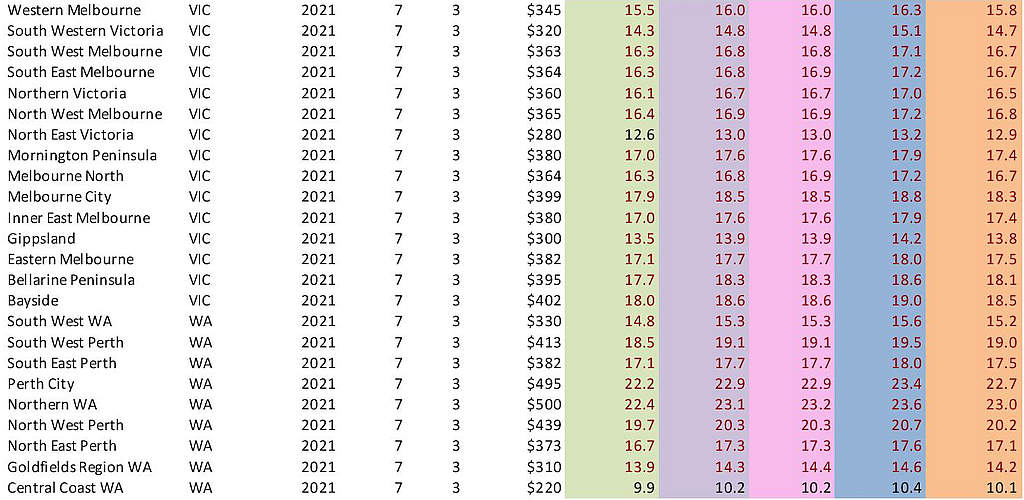
COVID-essential workers in the care and services sector are facing a rental affordability crisis, with new figures showing rent on a unit or apartment would cost at least one third of their weekly income in 87 of Australia’s 104 geographical regions.
Everybody’s Home, the national campaign against homelessness, cross-referenced SQM rent data with the basic hourly wage of workers in disability support, aged care, childcare, hospitality and supermarkets. The research is being launched to mark the start of national Homelessness Week.
The full results can be found here.
In Tasmania, there are six regions where essential care or service workers would need to spend between one third and two-thirds of normal working week’s wages to rent a unit.
Those regions were central Hobart, east Hobart, west Hobart, the entirety of Launceston, the east coast and Burnie.
In central Hobart, an aged care worker spends over 50% worth of their weekly wages on rent, while a disability support worker in Launceston is required to work over 18 hours a week to cover their rent.
Everybody’s Home national spokesperson, Kate Colvin, said Australia’s housing system wasn’t working for normal Australians.
“The pandemic has reminded us how critically important our carers and service workers are. Yet these pandemic heroes are being badly let down by the housing system and are often priced out of the communities they serve.
“While eye-watering rents are worst in our major cities, essential workers are increasingly priced out of coastal and bush communities too. People with big city incomes are moving to the regions and totally warping the rental markets. It’s astonishing that a care or service worker simply could not afford a modest apartment in the overwhelming majority of our suburbs and regions.
“We must expand social and affordable housing. This will relieve the pressure on our rental market and give Australians on low and modest incomes more options. All over the country, our caring and service workers simply can’t compete for rental properties.
“These are the people who got us through the pandemic. We must find a way to let them live close to their work.
“Expecting an exhausted aged care or supermarket worker to commute 90 minutes to and from work just to afford the rent is totally unfair and unsustainable. Australia can do better.”






Media release – Michael Ferguson, Minister for State Development, Construction and Housing, 1 August 2021
Homelessness Week 2-8 August 2021 – Housing ends homelessness
Homelessness Week is one week a year that asks all of us to recognise the need to reduce and eliminate homelessness.
This year’s theme is ‘Housing ends homelessness’.
Tasmanians can be assured that the Government is taking serious action on homelessness with a record investment of $615 million into social and affordable housing, and homelessness initiatives.
This includes a $280 million commitment to more social housing for Tasmanians in need and the State’s largest building program of new social housing for decades.
This means that around 3500 additional households will have a new home by 2027.
We have a massive pipeline of initiatives that will help vulnerable Tasmanians find and keep housing and have a good life.
Today I am very pleased to announce that Beardwood Pty Ltd have been selected as the preferred contractor for construction contracts valued over $11 million for two homelessness facilities.
Subject to usual contract negotiations they will construct 15 additional units at Launceston Women’s Shelter and 23 units for a new Burnie youth shelter.
Another eight units for women and children escaping family violence will be built with Safe Places funding.
We are increasing capacity to help young people with more crisis and transitional beds including:
- a second, 26-bed supported accommodation facility in Hobart;
- a 26-bed supported accommodation facility in Burnie;
- an additional 20 beds at Thyne House; and,
- a new, eight bed, youth at risk centre for children 12-15 years of age.
We are filling the gap in services for men who are homeless including those with full or shared custody on the north west coast, by building a dedicated men’s shelter.
We are also focusing attention on older people at risk of homelessness with a new supported accommodation model in partnership with Wintringham Housing.
Housing Connect is the first point of contact for accommodation, support and financial assistance options for all Tasmanians at risk of homelessness.
We are working closely with homelessness services to make sure Housing Connect continues to improve assistance to people who need help.
Tasmanians will get better access to housing assistance, help to develop strong connections to family and community and the support to build their capabilities for independent living with improvements underway.
Housing assistance will be shaped to fit the unique circumstances and life stage of each person who needs support.
We are investing in our homelessness services with improved tools and training for staff.
If you are at risk of homelessness please contact Housing Connect, 24 hours a day, seven days a week on 1800 800 588. Homelessness Week, 2 – 8 August 2021, ‘Housing ends homelessness’.


Media statement – Shelter Tas, 2 August 2021
Homelessness Week
Homelessness Week is a national event held each year during the first week of August, which aims to raise awareness of people experiencing homelessness, the issues they face and the actions needed to achieve enduring solutions. The theme for Homelessness Week 2021 in Tasmania I s Housing Ends Homelessness. Shelter Tas also supports Homelessness Australia’s national theme of Everybody Needs a Home.
“Too many Tasmanians are facing the cold reality of homelessness this winter. Homelessness Week is more than just another week on the calendar, it can make a real difference to vulnerable Tasmanians, as well as improving community awareness and highlighting the work that homelessness services do every day,” Shelter Tas CEO, Pattie Chugg said.
The 2016 Australian Census showed that on any given night in Tasmania over 1 600 people were homeless. This could mean staying on the couch or floor in someone else’s home, sleeping on the streets, or struggling to get by in insecure, overcrowded or inappropriate accommodation.
“As we learn to live with the ongoing impact of COVID-19, the need to reduce and eliminate homelessness in Tasmania remains an urgent priority,” Ms Chugg said.
There are a wide range of activities and events scheduled for Homelessness Week 2021 right around the State, and many ways that people can be involved and contribute. Shelter Tas has co-ordinated the Tasmanian calendar of events again this year. The following list provides a summary, and you can see the full events calendar with more details at www.sheltertas.org.au. Remember to check the website for any last-minute updates!
“Homelessness Week is an opportunity to focus on the wide range of people experiencing or at risk of homelessness in Tasmania and around the country. In the last 12 months, our 50 Specialist Homelessness Services supported over 6 400 clients. On any given day, agencies were supporting almost 2 000 people. Of those receiving assistance and support, almost 500 were young people aged between 15 and 24, and 203 were children in families. Housing Connect received over 40 000 inquiries for housing and homelessness information and assistance,” Ms Chugg said.
“More concerning is that each day in Tasmania, there were on average 36 requests for assistance that homelessness crisis services and emergency shelters were unable to meet. This number has increased from 31 unassisted requests each day in the previous year,” Ms Chugg said.
“Homelessness is far more common than people think. Of the 1 600 people counted in the last Census, only 8% were sleeping rough. We need to consider the remaining 92% of people who are unseen and rarely thought about, who are living in insecure, temporary, overcrowded and unsafe places,” Ms Chugg said.
There has been an overall rise in homelessness in recent years, but this increase in numbers can be seen particularly amongst women aged over 55. Julie’s story is just one of many similar experiences.
When Julie’s husband died, she couldn’t keep up with the rent on a single income. Julie couldn’t find a cheaper place to rent, so she was sleeping in other people’s houses, on floors and couches. Mostly she only had a few nights before people asked her to leave, so she had to find somewhere else to go. Sometimes, Julie was desperate enough to sleep in her car. Julie has finally found a place in community housing where she pays a rent she can afford.
“Over 120 000 Tasmanians live below the poverty line, and 8 000 households are living in housing stress. Homelessness affects all age groups, especially younger and older members of our community – people just like Julie,” Ms Chugg said.
Shelter Tas has joined this year’s national Everybody’s Home campaign, calling for more homes to be built for women and children fleeing family violence situations. ‘Nowhere to Go’, a new report commissioned by Everybody’s Home, found that family and domestic violence is the leading cause of homelessness for women and children, and has analysed the benefits of providing long term social housing to victims of family violence.
“We know that 1/3 of requests to homelessness services in Tasmania involve family violence. Access to safe and secure housing will allow women to rebuild their lives and protect their children, which is why Shelter Tas supports the findings of this new report, as well as the Everybody’s Home campaign petition, calling on the Prime Minister to make an urgent investment in social housing to support women and children,” Ms Chugg said.
Homelessness Week 2021 events include the national launch for Homelessness Week, fundraising, forums, exhibitions, breakfast events, lunches and opportunities right across Tasmania to discuss homelessness and how the community can help.
Everyone can support Homelessness Week on social media by using the hashtags #HW2021 and #housingendshomelessness
For more information, see https://sheltertas.org.au/


Anita Dow MP, Shadow Housing Minister, 2 August 2021
Homelessness Week highlights true extent of crisis in Tasmania
As Tasmania marks the start of Homelessness Week today, the state unfortunately continues to face an unprecedented housing crisis under a Liberal Government making a bare minimum effort to place roofs over heads.
Shadow Housing Minister Anita Dow said despite a stunning attempt at spin by failed Health Minister Michael Ferguson who has now been put in charge of housing Tasmanians, the true picture on homelessness remains stark.
“On the eve of Homelessness Week, Mr Ferguson has yet again tried to convince Tasmanians he is taking action when the fact is the Liberal Government has quite spectacularly failed to act over the past seven years,” Ms Dow said.
“There is no escaping the reality that Tasmania is in an unprecedented housing and homelessness crisis because of that lack of action.
“In just the past few days, Mr Ferguson has released new data, including the social housing waiting list which on his watch has again blown out to 4,144 people.
“The amount of time even the most urgent of those families will have to wait for a home is one year and six weeks.
“The fact is those heartbreaking figures represent a 75 per cent blow-out since the Liberals came to government in 2014.
“The fact is when the Liberals assumed government more than seven years ago, the housing wait list was at a record low of 20 weeks.
“The fact is in the middle of another freezing winter, thousands of Tasmanian families are without adequate shelter, are relying on the kindness of family and friends and, in the worst cases, sleeping rough or sleeping in their cars.
“The fact is the Australian Institute of Health and Welfare reports that on any given night almost 240 Tasmanians are sleeping in crisis accommodation, 36 requests for urgent help are unable to be met and 410 Tasmanians have reported sleeping in rough in the past month.
“No matter how Mr Ferguson tries to spin the crisis, the facts remain and it is shameful that the government has not only allowed the situation to reach this point but is now attempting to tell Tasmanians it is serious about playing catch-up.”