Business
Consumer Credit Demand Still Soft

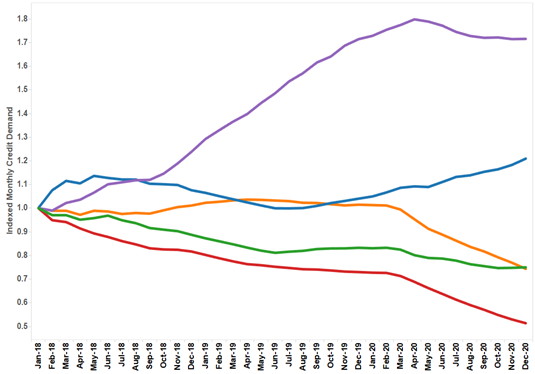
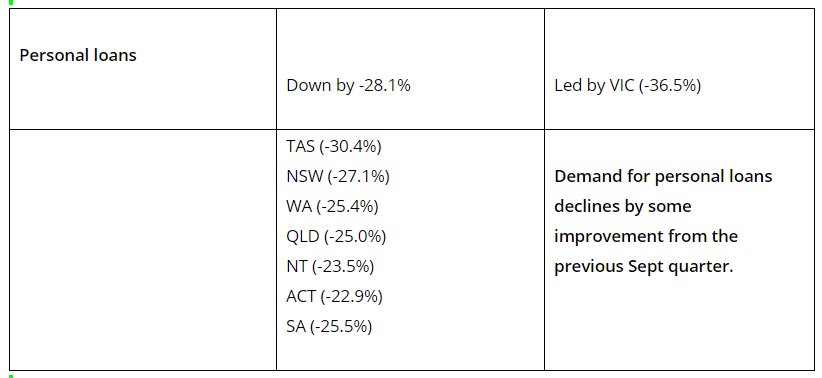
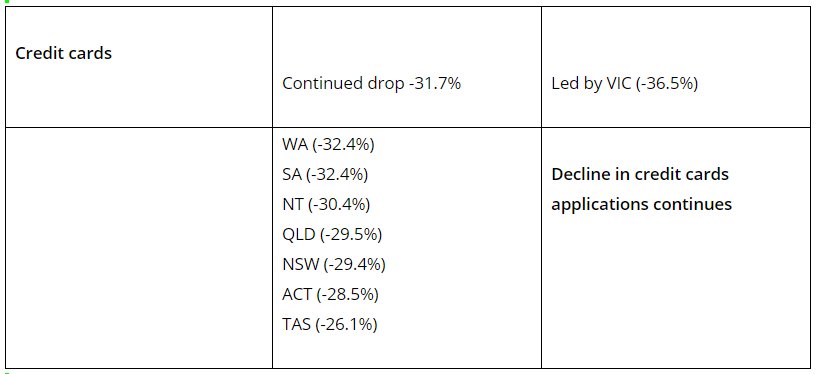
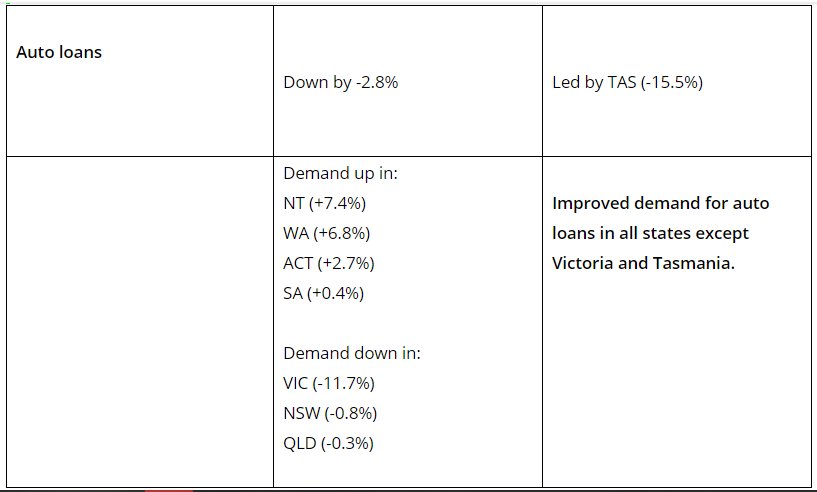
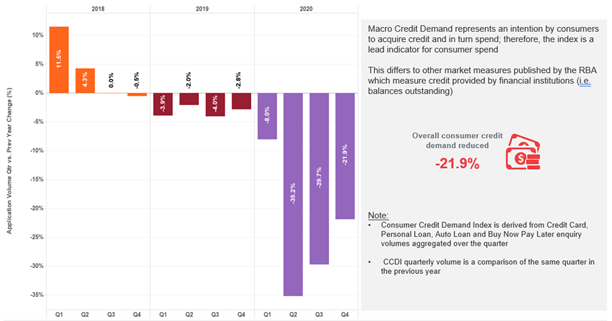
Consumer credit demand continued its decline in the December quarter, down -21.9% compared to last year but the rate of decline is slowing. According to data from the latest Equifax Quarterly Consumer Credit Demand Index (Dec 2020), while demand remained in decline, there are encouraging signs the rate of decline is slowing compared to the prior quarters of 2020. The fall in demand was largely driven by the continued decline in credit cards (-31.7%) and personal loans (-28.13%) with stronger signs of recovery in Buy Now Pay Later and Auto loans.
Released today by Equifax, the index measures the volume of credit applications for credit cards, personal loans, Buy Now Pay Later (BNPL) and auto loans.
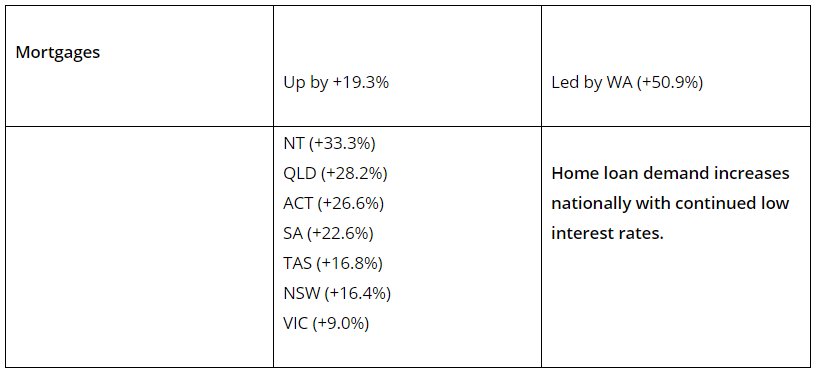
Despite a backdrop of a decline in unsecured consumer credit applications, mortgage demand continued to rise, with home loan applications for the December 2020 quarter up +19.3% from a year ago. The stand-out was Western Australia, recording the highest growth at 50.9%, likely as the result of improved consumer sentiment, government stimulus for first home buyers and a more positive outlook for the mining industry.
Across the nation there was an increase in mortgage applications in the December 2020 quarter compared to the previous year. In addition to Western Australia, strong demand was seen in Queensland (+28.2%) and the ACT (26.6%). While growth in the largest real estate markets was not as strong, NSW increased +16.4% and Victoria showed positive signs with strengthened demand (+9%) versus the December quarter in 2019, as major lockdown restrictions eased.
Mortgage demand includes loans for new properties as well as re-financing. Historically, movements in Equifax mortgage application demand data have led changes in house prices by around six to nine months. Mortgage applications are not part of the Consumer Credit Demand Index but are a good indicator of home buyer demand and housing turnover.
Kevin James, General Manager Advisory and Solutions, Equifax said: “Despite the decline in overall credit demand year on year, we have seen some steady growth from the September quarter which is a positive sign following the more extensive COVID-19 lockdowns. This has been driven by improvement in auto lending in many states, as well as personal loan applications. Across all states, the market showed strong resilience, even in Victoria which was affected by the second wave of COVID-19, with numbers in the last quarter of 2020 improving considerably.”
“Demand for mortgages has now experienced growth for the sixth consecutive quarter driven by low interest rates, stimulus for first home buyers and the HomeBuilder program, as well as Aussies returning home,” James said.
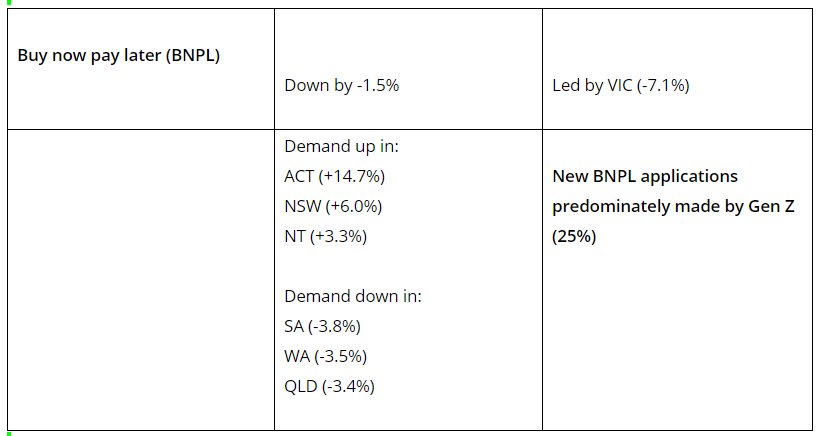
Demand for Buy Now Pay Later applications was relatively flat (-1.5%) in the December quarter compared to the previous year following two consecutive quarters of decline. ACT, NSW and NT all experienced growth which offset reductions in other states. Generation Z continues to be the strong driver of BNPL demand, making up 25% of total applications.
TABLE 1: Consumer Credit Demand by State




Mortgage Demand

GRAPH 1: Consumer Macro Credit Demand – Quarterly YOY

GRAPH 2: Consumer Credit Applications – Indexed by Type