Tas That Was
Tas That Was – Richmond Gaol
Richmond Gaol is the oldest gaol in Australia that is still intact.

Richmond Gaol is the oldest gaol in Australia that is still intact.
Construction and layout

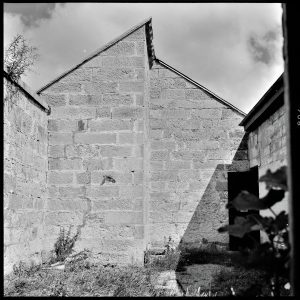
Richmond Gaol’s flogging yard in the 1960s.
The first wing of Richmond Gaol was built by convicts between 1825 and 1827. It has an entrance hall, a lobby, four cells for men, a sleeping cell for women, a javelin man’s room*, a prisoners’ day room, and a keeper’s room.
A gaoler’s house was built in 1833.
In 1835, two new wings were built. They contained a cookhouse, a women’s day room, and solitary confinement cells.
A stone wall three metres high was erected around the gaol in 1840.
There is an airing yard, a flogging yard, and a punishment cell.
Early history
The first gaoler of Richmond Gaol, appointed on 1 February 1826, was an ex-schoolmaster named William John Speed. He was dismissed in 1830 because of bad behaviour and poor treatment of prisoners.
The gaol had specific regulations that were drafted in the 1830s. They called for prisoners to be supervised at all times. Corrupt practices by gaolers were to be prevented; prisoners were to receive adequate medical treatment if needed; a doctor was required to attend all floggings; and prisoners were required to attend Divine Service every Sunday.
Despite all this, many prisoners fought against the system. They tried to escape by removing roof shingles, digging under the foundations, or removing the lintels over the windows. If they were caught, they were punished. They were also punished for offences like faking sickness, refusing to work, and being drunk. Floggings were frequent. In 1834, for example, 142 prisoners received a combined total of 4,425 lashes.

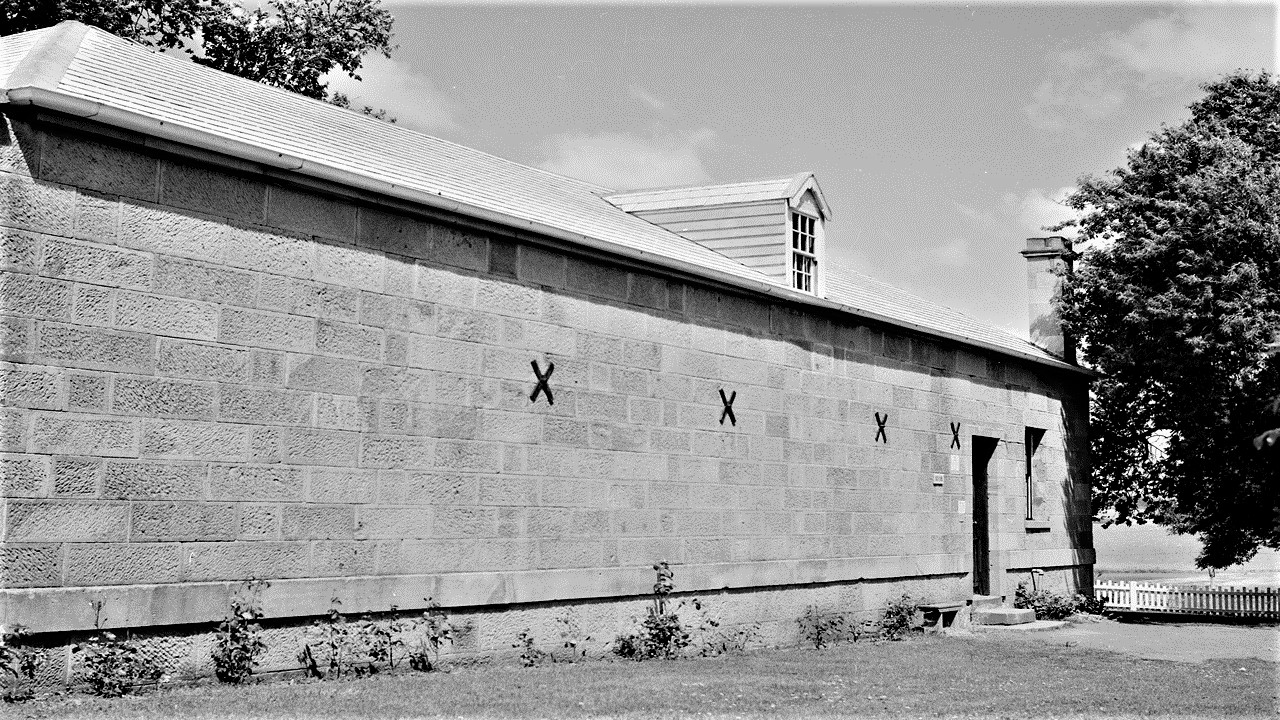
Richmond Gaol in 1969.
Aboriginals were imprisoned at Richmond Gaol
Relations between the British and the Aboriginals had not been great since Van Diemen’s Land was colonised in 1803.
When Aboriginals started waging defensive warfare against the British during the Black War, Lieutenant-Governor George Arthur declared martial law. Roving parties went out and captured Aboriginals, who were then imprisoned at Richmond Gaol.
One detainee was Umarrah, a feared warrior who escaped from the gaol but was recaptured.
After the end of convict transportation
When the transportation of convicts ended in 1853, Richmond Gaol was given over to the police. In 1861, when Richmond became Tasmania’s fourth municipality, the gaol was taken over by the newly-formed Municipal Police.
It continued to be used as a gaol until 1928, when Tasmania’s police force was centralised. It was offered for sale in 1929, but no-one bought it. In 1945, it was given to the State Government as a State Reserve. It was gazetted as an Historic Site in 1970 under the National Parks and Wildlife Act.
Today
Richmond Gaol is now a tourist attraction that is complete with a gift shop.
Fun fact
One of the Gaol’s most infamous inmates was an English convict named Ikey Solomon. It is said that Charles Dickens based Fagin (a character from Oliver Twist) on Solomon.
* A javelin man was a well-behaved convict or ex-convict who guarded prison inmates. Every javelin man was equipped with a long pole that was fitted with an axe blade, spike, and hook.
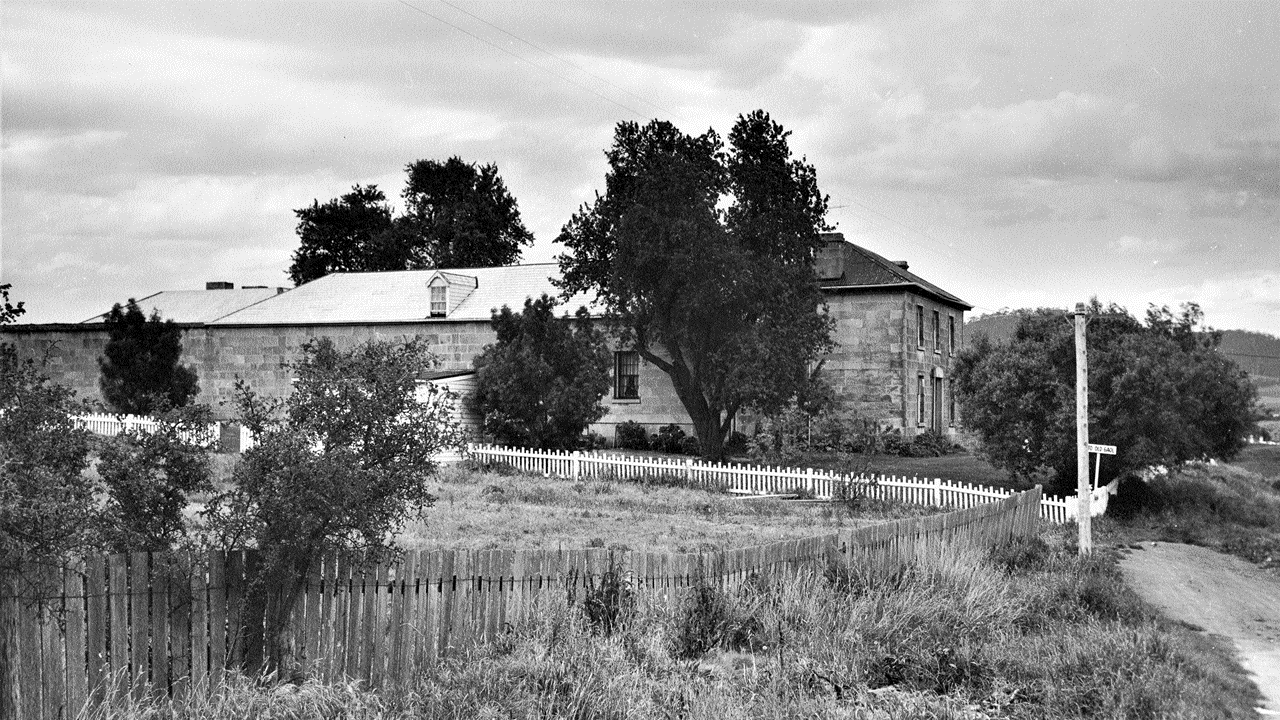
Richmond Gaol in 1966.
Bibliography
- Barnard, Simon (2014), A-Z of Convicts in Van Diemen’s Land, Text Publishing Company, Victoria.
- Governor Arthur’s Proclamation Board (ABC Local).
- Richmond Gaol Historic Site (Tasmania Parks and Wildlife Service).
- Richmond Gaol (On The Convict Trail).
- William John Speed (1761-1838) (WikiTree).
* * * *
Tas That Was is a column that includes:
- anecdotes of life in Tasmania in the past;
- historical photographs of locations in Tasmania; and/or
- documentaries about locations in Tasmania.
If you have an anecdote or photograph you’d like to share with us, please send it to submit@tasmaniantimes.com.