
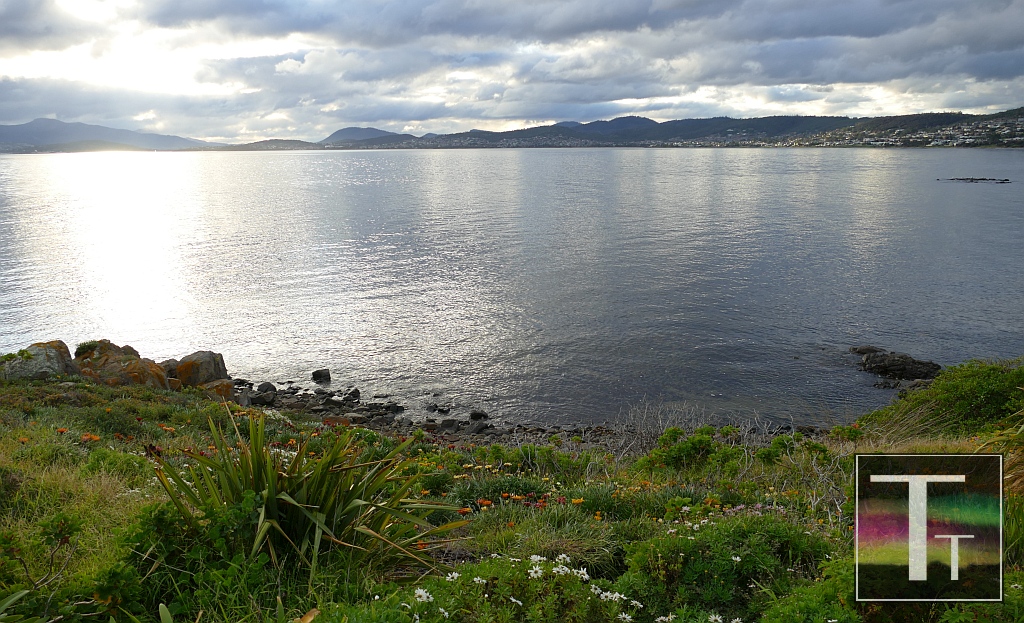
Tasmania in winter 2020: very dry in the north and west
A much drier than average winter for the north and west, however there was above average rainfall around Hobart, and kunanyi (Mount Wellington Pinnacle) had its wettest winter on record, largely due to heavy rainfall during 22-24 June. Days were warmer than average in most parts and a mixture of very cold nights and mild nights meant mean minimum temperatures were mostly typical for winter overall.
Drier than average in most parts
- Tasmania had less than one-third of its typical winter rainfall in 2020; July was second-driest on record.
- It was the driest winter for the state since 2006 (2006 was the fifth-driest winter on record).
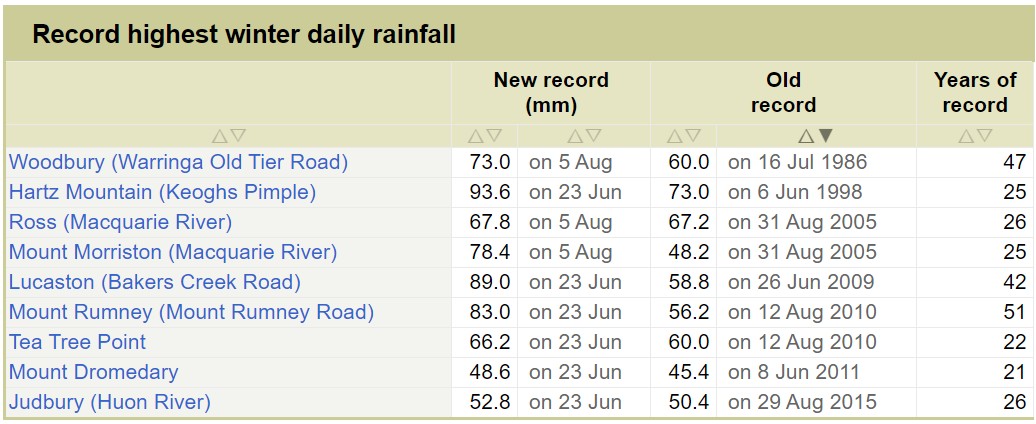
- A small area of the north was driest on record for winter, conversely, rainfall around Hobart was higher than usual thanks to heavy rainfall during 22-24 June which delivered more than double the monthly average for parts of the south-east.
- Numerous sites in the south-east had their highest winter daily rainfall on record and kunanyi (Mount Wellington Pinnacle) had its highest total winter rainfall on record.
- Year-to-date rainfall has been below average for much of the western half of the state and above average for parts of the east.
Warm days, some very cold nights
- Days were warmer than average except in the east where they were more typical for winter.
- There were record cold nights at some stations, but for winter as a whole, mean minimum temperatures were close to average for most areas.
- The mean maximum temperature was 0.30 °C above average, but cooler than the previous two winters.
- Tasmania’s mean minimum temperature (2.82 °C) was almost equal to the long-term average for the state (2.77 °C), and was also colder than the previous two winters.
- Launceston woke to a few centimetres of snow on 5 August, a rare sight for northern Tasmania and likely the most significant snowfall there since 1921.
- Ouse Fire Station had their lowest winter mean daily maximum temperature on record.
- Some sites had their lowest winter temperature on record including King Island Airport, and Liawenee with 14.2 °C on 7 August, setting a new low temperature record for Tasmania.
- King Island Airport also had its lowest winter mean daily minimum temperature on record
- Year-to-date maximum temperatures are close to average while minimum temperatures have been warmer than average in most parts.
The Bureau of Meteorology’s Dr Andrew Marshall talks about the winter and August summaries:
Tasmania in August 2020: wetter than average in the Southeast but drier in most other parts
August was drier than usual away from the south-east district. Both daytime and overnight temperatures were mostly close to average for the month, however there were some very cold mornings mixed with some milder mornings.
Mixed rainfall
- Tasmania had around 15% of its typical August rainfall in 2020 and it was the driest August since 2014.
- Rainfall totals were mixed, with parts of the Southeast district in the wettest 10% of records, while parts of the central highlands were in the driest 10%.
- A slow-moving high-pressure system near Tasmania kept skies clear and meant there wasn’t much rain around from the 7th to the 12th.
- Numerous sites had their highest August daily rainfall on record on the 5th, and for some younger stations it was their wettest August on record.
- Hobart Airport had its highest total August rainfall since 1984.
A new record low daily temperature
- Numerous sites had their lowest August temperature on record including Liawenee with -14.2 °C on 7 August, setting a new low temperature record for Tasmania.
- Launceston woke to a few centimetres of snow on 5 August, a rare sight and likely the most significant snowfall there since 1921.
- Minimum temperatures were more than 6 °C cooler than average for parts of central Tasmania on the 10th and 11th, in contrast they were more than 6 °C warmer than average for parts of the east on the 16th and 17th.
- For August overall, maximum and minimum temperatures were close to average for most parts.
- The mean maximum temperature was 0.27 °C warmer than average, the warmest since 2016.
- The mean minimum temperature was 0.16 °C warmer than average, the warmest since 2013.

Recommended for you





Author Credits: [show_post_categories parent="no" parentcategory="writers" show = "category" hyperlink="yes"]