Current Affairs
Managing Mental Health During COVID-19 Recovery
Mental health – particularly among young people – will require significant resources to help people through the COVID-19 crisis, experts say.

Calls are growing for a renewed and expanded focus on the mental health of the population as Australia begins to emerge from the health and social effects of the COVID-19 pandemic.
AMA President, Dr Tony Bartone, said that the community will need more resources to deal with the widespread impact that the COVID-19 virus and the strong physical distancing measures have had on individuals throughout the crisis.
“The unprecedented nature of the pandemic and the control measures have affected people in different ways – from anxiety and uncertainty to more serious issues that involve people moving into the formal mental health system,” Dr Bartone said.
“For some people, it will take some time to get over the trauma of this pandemic. We must be ready with the expert mental health care and resources to help people get back to a position of normality in their everyday lives.
He expected some people would require specialised mental health care for existing or new conditions, while many could receive more appropriate care and advice from their GP.
Youth issues
Patrick McGorry, a leading Australian mental health expert, warned that young people’s mental health needs during the COVID-19 response require urgent attention.
Professor McGorry, executive director of the youth mental health service Orygen, says in usual circumstances young people are at high risk for mental health issues.
“It’s the period of life where you get the biggest rise [in mental health issues],” he said. “In fact, 75 per cent of mental disorders appear by age 25. So, it’s the main health problem of that age group, by far. And the biggest cause of death is from suicide.”
“But people with existing problems, which is about a quarter of them at any one time, are going to get worse in many cases. So, I think that it increases the risk of youth suicide.”
He has called for a national mental health strategy in response to COVID-19, which operates in a similar way to how the state and territory chief health officers are working with the federal chief medical officer.
“There’s got to be a central command post established for this because this is going to be a very significant,” Professor McGorry said. “And also, not a brief thing. The mental health crisis will be severe and prolonged and it’s going to affect a very large number of people.”
Professor McGorry also urged ‘a fairly significant injection of funds’ to make a switch to online and digital mental health services to allow people to access the help they need while maintaining social distancing.
Tasmanian Response

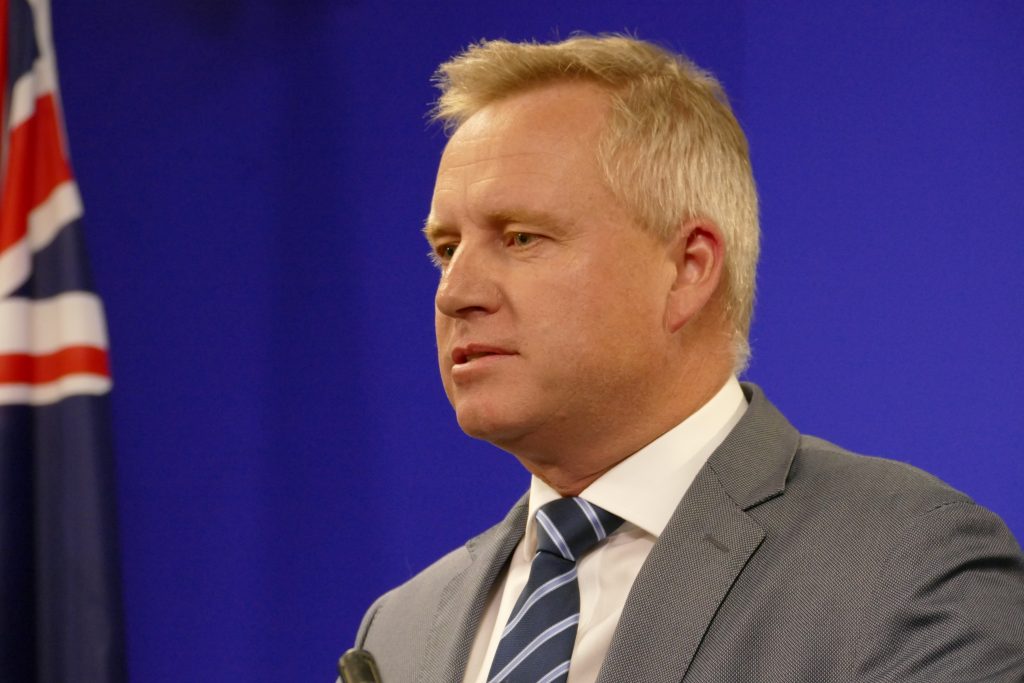
Jeremy Rockliff.
In early May the Tasmanian government established a new phone service 1800 98 44 34 – A Tasmanian lifeline as part of their Social and Economic Support Package.
“This new phone line is for any Tasmanian who may feel stressed about COVID-19, is anxious about the future, finding social isolation a challenge, or simply need a friendly and understanding voice to talk things over with for advice, information, comfort and reassurance,” said Minister for Mental Health and Wellbeing Jeremy Rockliff.
The phone line is now live, and is staffed by Lifeline Tasmania from 8am to 8pm, 7 days a week.
Three types of support are being offered:
Call in: Tasmanians will receive psychosocial support from a trained support worker to discuss their concerns, and if appropriate be linked in to a referral service.
Call out: Contacting socially isolated older Tasmanians identified through existing services, family and friends who are concerned, or by other health professionals.
Reach out: In partnership with industries significantly impacted by coronavirus, identify and reach out to individuals who may need support, counselling or linking in with employee assistance programs.
“I sincerely thank Lifeline Tasmania and their staff for their hard work to establish this new service quickly, so that Tasmanians can receive more support for their mental health and wellbeing when they need it during this period of uncertainty,” said Rockliff.
Schools
Labor is urging the government to adopt its policy of employing mental health workers in every school to help students adapt as the COVID-19 crisis continues to affect their learning.
Labor Leader Rebecca White said the impact on students’ health and wellbeing should not be underestimated.
“With most Tasmanian students learning from home and continuing uncertainty over when schools will reopen fully, we need to plan for extra support to help students through this transition,” White said.
She noted that before this crisis, there were already grave concerns around mental health support for young people, with early intervention known to be vital in protecting a young person’s mental health.
“Labor’s $40 million Mental Health Workers in Schools program would employ a range of mental health professionals including social workers, youth workers and psychologists. This is a tough time for everyone, but the government has an opportunity to put in place the right support mechanisms to help our young people deal with the many challenges they are facing.
White urged the Premier to ‘put politics aside’ and take on board a policy that ‘has students’ best interests at heart.’
Further support is available if you feel like you or a loved one are not coping, including:
- Lifeline Australia (13 11 14)
- Beyond Blue (1300 22 46 36)
- Rural Alive and Well (1300 4357 6283)
- Kids Helpline (1800 551 800)
For more immediate support for people experiencing significant mental health problems, the Mental Health Services Helpline is available 24/7 on 1800 332 388, and in an emergency call triple zero.