State
Premier: Tas Economic and Social Recovery Advisory Council
The Premier has announced an 8-member Economic and Social Recovery Advisory Council to guide the way out of the coronavirus crisis.

Media release – Peter Gutwein, Premier, 30 April 2020
Premier’s Economic and Social Recovery Advisory Council
The Tasmanian Government’s number one priority is to keep Tasmanians safe and secure during the coronavirus pandemic.
As we move towards rebuilding a stronger Tasmania we need to acknowledge that things will be very different and factor this in as we plan for the future.
The Premier’s Economic and Social Recovery Advisory Council has been established to provide advice to the Government on strategies and initiatives to support the short to medium, and the longer term recovery from the COVID-19 pandemic.
The Recovery Council will provide advice and recommendations on how to best mitigate the economic and social impacts of the pandemic. It will also identify opportunities for economic and social renewal.
The Recovery Council will help develop the roadmap to rebuild a stronger Tasmania and will make recommendations to:
- identify additional immediate short term actions, as well as the medium and longer term issues to be addressed by government, the community and the private sector to facilitate sustainable economic growth and mitigate the social impacts of COVID19;
- target sectors in which Tasmania has, or can develop a competitive and brand advantage;
- capture opportunities for, or identify impediments to employment growth;
- support and enable Tasmanians to take advantage of a different way of life and work and business, or to reinvent themselves in new and emerging industries; and
- identify opportunities to address the impacts of COVID-19 on the community through sustainable social initiatives.
The Recovery Council will be chaired by Mr Don Challen AM, an individual that Tasmanians know and trust.
He is recognised as one of Tasmania’s leading business and community figures, and has been widely recognised for his outstanding contributions in the corporate, community, charitable and philanthropic areas.
He was Secretary of the Tasmanian Department of Treasury and Finance from 1993 to 2010 and has held a raft of significant Board roles across prominent Tasmanian businesses.
Mr Challen was made a Member of the Order of Australia in 2013 for his significant work to economics and public administration in Tasmania in the treasury and finance sector.
I am very grateful to Mr Challen for providing his expertise during this most significant time for our state.
I am also very pleased that a number of highly engaged and experienced individuals have also agreed to be a part of this council, from across a broad spectrum of our community, including:
-
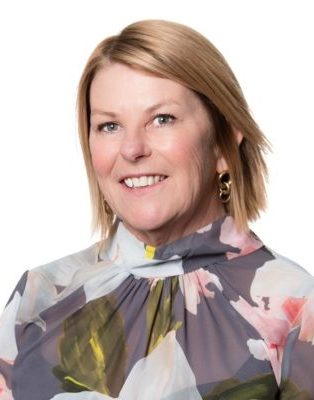
Kym Goodes.
Kym Goodes – former CEO of TasCOSS, whose advocacy work to help those most vulnerable is widely admired across Tasmania.
- Dale Elphinstone – Executive Chairman and Founder of Elphinstone, Mr Elphinstone started his career as a 15 year old apprentice before building one of Australia’s most successful businesses.
- Professor Rufus Black – Vice Chancellor of the University of Tasmania, Professor Black’s private sector experience includes almost a decade with McKinsey & Company, and as a law firm director.
- Samantha Hogg – brings significant executive management experience across the resources and infrastructure sectors, and has national and international experience in finance, marketing and strategic projects.
- Paul Ranson – Chief Executive of the Bank of Us, Mr Ranson also has 25 years’ experience in local government and is a Director of the TCCI.
- Brett Torossi – who is an acclaimed business woman and tourism operator in her own right, with extensive executive leadership experience and board roles across a suite of businesses and industries.
- Tim Gardner – Executive Chairman of Stornoway and Chair of Metro Tasmania, Mr Gardner has significant experience in organisational leadership and culture, with a particular focus on infrastructure services.
- Leanne McLean – The Commissioner for Children, Ms McLean has a wealth of experience as a leader in social policy development, including working for the benefit of and in support of young Tasmanians.

A secretariat will be established in the Department of Treasury and Finance supported by DPAC and State Growth to provide support for the Recovery Council, and will draw on resources from across Government as required.
The Recovery Council will engage directly with industry and community groups, as well as Members of Parliament who will have the opportunity to provide submissions to directly inform the development of the Recovery Council’s work.
The Recovery Council will provide advice on immediate actions and initiatives to the Government by July 2020 and an interim report containing findings and recommendations by September 2020 so that it can inform the development of the 2020-21 Budget later this year.
The timing of other reporting stages will be determined following consideration of the status of the pandemic, towards the end of 2020, as well as timing the final report to inform the 2021-22 Budget.


Labor welcomes Recovery Advisory Council
Labor welcomes the establishment of the Premier’s Economic and Social Recovery Advisory Council, but says it is a missed opportunity to represent all Tasmanians and plan for a fairer future.
Labor Leader Rebecca White said the omission of a representative from Unions Tasmania means workers will not have a voice in crucial planning for Tasmania’s recovery and healing from the COVID-19 crisis.
“The Economic and Social Recovery Advisory Council has a massive job ahead and I wish them luck,” said Ms White.
“But, without a representative from Unions Tasmania, they can’t see the full scale of the job ahead and workers miss out on the voice they deserve.
“We have nearly 20,000 Tasmanians who’ve lost their jobs since the start of this pandemic and many others have had their hours reduced, and that comes on top of the state already having the highest underemployment rate in the country before the pandemic.
“This was an opportunity to support and empower workers in planning for a positive and fairer future as we come out of this emergency and I urge the Premier to consider expanding the scope of the advisory council to give workers a voice.
“This is also the time to be looking at how we support people back into the workforce, and I again urge the Premier to consider Labor’s Free TAFE policy, to help people retrain for jobs in new or existing industries that desperately need skilled workers.
“With different industry sectors looking to the government for leadership about when restrictions might ease so they can plan to resume trade, it’s disappointing that there was no detail about that in today’s statement.
“I would also like to see more detail about planning to help regional areas. People in these areas may not be ready to resume normal operations and will need support to upskill people who have lost work. We need to work together to buy local, build local and employ local.
“It’s pleasing to see the government has taken on board our discussions and provided an additional $10 million for both the Small Business Emergency Support Grant program and the Small Businesses Hardship program.
“However, more is needed to support workers through this crisis, and ensure people don’t fall through the cracks as we start to emerge from the worst of the pandemic.
“We have the chance to rebuild our state, with an emphasis on good, secure jobs, fairness and a strong, resilient economy and society.
“We must take every opportunity to build a better Tasmania.”