Eugene Clark, professor and poet is a wizard or rather a Quiz-ard of OZ.
Eugene’s story might have some parallels to the story of that other Kansas native, Dorothy and her visit to OZ but instead of returning home, like Dorothy, due to a series of serendipitous events, Eugene found himself to this day making his home in OZ.
It’s a rainy afternoon in Sydney when I chat to Eugene. Our meeting is over the phone but there is a surreal sense of being in the same room with him as he suggests we chat in an alternative room, unaffected by the sound of the falling rain. The rain particularly resonates with me on this day as Eugene recently informed me of the passing of a teaching colleague from his time at St Marys. I am reminded in the happiness of reconnecting with Eugene of the loss of a teacher who was a force in my choosing a career as English teacher. I am reminded of Auden’s ‘distant thunder at a picnic’. The poetry reference is apt as we are here, among other things, to talk about Eugene’s passion for poetry.
A native of Wichita, Kansas, a place renowned for its trade, ironic, considering Eugene’s trade of his skills as teacher to a country on the other side of the world world away. In 1975 the Australian government teacher recruitment program made a world-wide call out to redress the teacher shortage in Australia. Eugene was one of those who answered this call and began teaching at Keon Technical School in Victoria. Eugene was innovative, in that, as well as teaching conventional subjects also introduced public speaking and chess to the extra-curricular activities of the school. Eugene’s students successfully competed on a television quiz show ‘It’s Academic’ the only technical school to do so.
Taking some time off teaching for relaxation, Eugene and his wife took a holiday in Tasmania, a place they immediately fell in love with however in 1977 the couple were required to return to the US for Eugene to complete his law degree (one of the five degrees he now holds) and then work for a time in legal aid.
It was another serendipitous event that would see him return to Australia. This time it was the Catholic Education Office in Tasmania, represented in the person of Sister Gertrude Morgan, the Principal of St Mary’s College that was reaching out for teaching staff. Sister Gertrude accepted Eugene’s application as he says ’sight unseen’. Later Sister Gertrude informed Eugene, that it must have been a higher power behind her decision.
At St Mary’s College Eugene taught Legal Studies, Australian History and English. Just as he did at Keon Technical School he introduced a program of public speaking and chess, and again, his tutelage was very successful with the school achieving championship status in public speaking.
Essentially eclectic in his approach to education, Eugene also co-authored a book on softball in this time as St Mary’s College. After leaving the college Eugene continued pursuing his academic career, eventually re-locating to Sydney. Eventually, taking up the positions of adjunct professor at Sydney City School of Law and China University of Political Science and Law in Beijing.
Eugene is also the author of over 100 technical journal articles and to juxtapose this more scientific leaning has made time to indulge in his love of poetry leading him to the realisation that poetry has ‘a spirit of imagination’ that prose writing lacks.
In an article ‘poetry still has its place in the 21st century’ Eugene argues that poetry is ‘an alchemic process’ and ‘that it contains ‘ ancient wisdom that helps resolve today problems and challenges’.
Eugene’s paper informs us that Linguists suggest the first words we spoke were in poetry, coming as they did from the formative section of our brain. It was this language of poetry that provided the vehicle for passing on cultural knowledge to successive generations, with the recognition that rhyme aids memory and so can also be employed in maintaining brain development and helping older people retain their memory. Coming full circle for Eugene is the Celtic belief that the role of teacher was of equivalent status to that of poet. Clearly Eugene has managed to combine the two to an astonishing degree.
Most importantly, of all the benefits of poetry says Eugene, poetry puts us in touch with our emotions in a way no other type of communication is able to do.
In his poem ‘21st Century Children of Narcissus’ Eugene muses on the digital generation, narcissism rather than altruism and the lack of genuine communication between people
A global cold spreading among millions of ‘Facebook’
Fans while true friends, genuine soulmates, are
Joining the list of endangered species.
Oh, bring back the sowers of social fabric
The builders of institutions and galvanizers of communities–
The givers who care about others
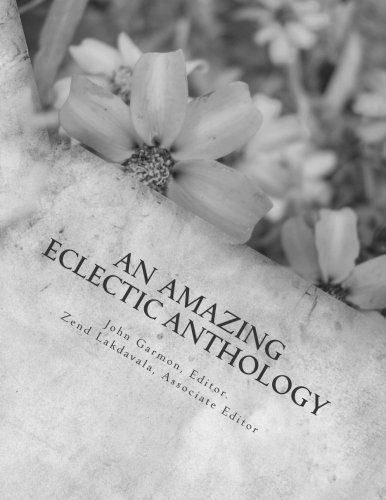
Further examples of Eugene’s poetry can be found in An Amazing Eclectic Anthology: John Garmon, Zend Lakdavala available at https://www.amazon.com/Amazing-Eclectic-Anthology-John-Garmon/dp/153043808X
Dr E Eugene CLARK: is Emeritus Professor, University of Canberra, Visiting Professor, China University, of Political Science and Law. Chairman, International Association for eLeadership