Coroner & Legal
Tarkine Rivers Run Wild and Free

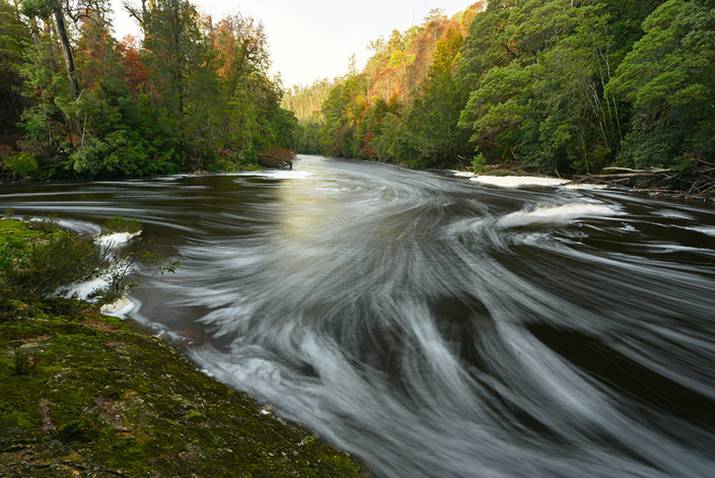

*Pic: The Rapid River in a benign mood after rain. Pic – Ted Mead

The Grand Lower Pieman is one of Tasmania’s most aesthetic river corridors. Pic – Ted Mead

May the Tarkine’s rivers flow wild and free!
Conservation of primeval places in Tasmania has been founded on battlegrounds over the state’s wild rivers. Last century the magnificent Lake Pedder, and many of the wild western rivers were lost through ignorance and indifference, yet the Franklin River was ultimately saved through the commitment of many with the enlightened ideology of – ‘Wilderness is the preservation of the world’.

Map – Raftable Rivers across the Tarkine Region.
From the 1950s, for several decades, the Tasmania Hydroelectric Commission (HEC) built dam after dam inundating numerous pristine waterways across the western wilderness. This was all for the state government’s dream of encouraging big companies to move to Tasmania under cheap industrial power contracts.
The Tasmanian premier Eric Reece (Electric Eric) held his authoritative position from 1958 to 1969 & 1972 to 1975. In that time he was obsessed with the HEC’s rule and demand to inundate everything possible for the sake of power generation.
With regards to the flooding of the Serpentine River & Lake Pedder National Park, Eric Reece claimed in parliament –
‘There was a National Park out there, but I can’t remember exactly where it was … at least, it wasn’t of substantial significance in the scheme of things. The thing that was significant was that we had to double the output of power in this state in 10 years in order to supply the demands of industry and the community. And this was the scheme that looked as though it could do a greater part of the job for us”.
Eric Reece will most possibly be remembered for his myopic statement: “No river in Tasmania should flow unharnessed to the sea”.
Fortunately for wilderness his dream never became a reality, though the HEC did essentially have conceptual plans for most of the rivers out west. The Tarkine was no exception of this, as dams on the lower Pieman, Huskisson, Wilson, Whyte and Arthur Rivers were all on the drawing board for possible construction.
Only the middle sections of the Pieman River fell to the Reece government’s doctrine, and it could have been almost the entire Pieman River had the HEC been able to find stable geology to build a dam wall on the grand gorge downstream of Corinna.
Legendary adventurer Olegas Truchanas referred to the Pieman River as Tasmania’s best river for canoeing, and stated he did many trips with friends like Peter Dombrovskis down its long bouncy and pleasurable rapids.
With the exception of the middle Pieman River, which bounds the Tarkine’s southern extent, most of the river corridors remain in a relatively primitive state, and only a few have been scarred by mining activity.
New mines in the Tarkine area are a constant threat as mineral exploration licences and leases have been granted over much of the region, albeit and fortunate, most of them will never be economically viable in the foreseeable future.
Mines around the Middle Savage River, Luina on the Whyte River and Mt Bischoff near the upper Arthur River continue to contribute silt run-off into the adjacent rivers after heavy rainfall.
However for the purist and serious adventurer there are still many wild rivers to explore and paddle amidst some of the most aesthetic rainforest-lined corridors imaginable.
Prior to the controversial Western Explorer road construction, the Donaldson River was one of the state’s most remote rivers, and today the Arthur River continues to be one of the last extensive wild rivers that eluded inundation at some point.
Without the protection of the Tarkine’s stunning waterways the campaign to protect the greater region will be insignificant because it is the rivers that deliver that extraordinary natural energy throughout the heart of this exquisite region.
So just as was emphatically vocalised throughout the Franklin River campaign –
‘Let the Tarkine’s wild rivers run free’
*Ted Mead is convinced that rafting wild rivers is the most pleasurable and aesthetic way to travel within Tasmania’s remote country. Ted has explored many of the wild waterways in Western Tasmania, and has paddled comprehensively throughout the Tarkine’s rivers.