

Festival to shine a light on Indigenous rights, gender equality, conflict, people movement, rehabilitation and retribution, and the environment.
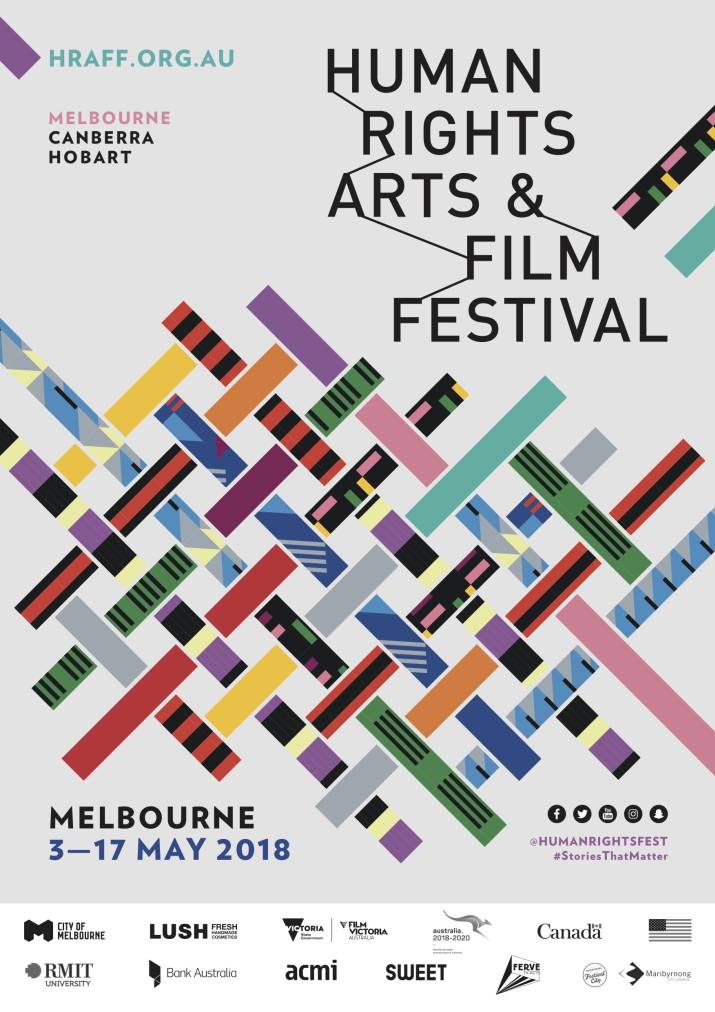
The Human Rights Arts & Film Festival (HRAFF) has launched its 2018 program of over 50 films and events. The festival starts in Melbourne on Thursday May 3 and runs through to May 17. This will be followed by a tour to Canberra on May 29 through to 2 June and co-program with the Tasmanian Breath of Fresh Air Film Festival on 19 and 20 May in Launceston.
The Human Rights Arts and Film Festival aims to make human rights relevant, accessible and engaging to Australians through film, art, music and forums. HRAFF attracts a diverse audience of 15,000 – 20,000 people each year, many who would not normally engage in human rights.
The festival has become one of the leading and largest public human rights events, telling meaningful stories that help create a different world. In the past twelve months, it has been recognised by the Graham F. Smith Peace Foundation and the Future Leaders Justice Prize.
The 2018 festival aims to create awareness on pressing human rights issues across five major themes: conflict and global people movement, gender equality, Indigenous rights, rehabilitation and retribution, and the environment.
Opening night in Melbourne is headlined by Australian film After the Apology, directed by Larissa Behrendt. Behrendt is an Indigenous (Eualeyai/Gammilaroi) filmmaker, novelist, lawyer and academic. Her landmark documentary After the Apology explores the practise of Aboriginal child removal.
Aboriginal children are being removed at almost double the rate of the time of Rudd’s Apology speech. After the Apology also reveals that Indigenous children are ten times more likely to be placed in out of home care than non-Indigenous children.
“Film provides a mechanism for telling real stories that highlight the need for change,” says Behrendt. “More than statistics, research and legal arguments, personal stories show the real reasons for the need to protect human rights”.
HRAFF will also globally premiere the ground-breaking documentary Border Politics, directed by Judy Rymer. The feature-length documentary follows human rights barrister, Julian Burnside, as he travels the globe examining the increasing compromises to human rights in Western democracies occurring via the exploitation of fears around border protection.
In 2016, the UNHCR identified 22.5 million asylum seekers in the world. Just 19 per cent were resettled around the globe.
“If we continue to abuse human rights in Australia the way we’ve been doing for the last 15 years we run the risk of completely devaluing the human rights fabric in Australia” Burnside said.
The festival also shines a light on the issue of gender equality. Her Sound, Her Story, directed by Claudia Sangiorgi Dalimore, examines sexism within the Australian music industry. By showcasing over 40 women from different areas of the music industry, Her Sound, Her Story provides insight into the pressures of being a female musician.
Other leading picks from the festival are: Jackson, an insight into reproductive rights in America; Jaha’s Promise, about the practice genital mutilation, A Better Man, an intimate look at violence against women; Food Fighter, about food waste; Guilty, investigating capital punishment; The Grown-ups on rights of people with disabilities and Last Man in Aleppo about the remaining besieged citizens in Aleppo, Syria.
“We know that statistics change policy but film and arts change people’s hearts and minds, and that’s enduring change”, said Aleta Moriarty, the CEO of HRAFF.
Tickets can be purchased at www.hraff.org.au
Georgia Rowles










