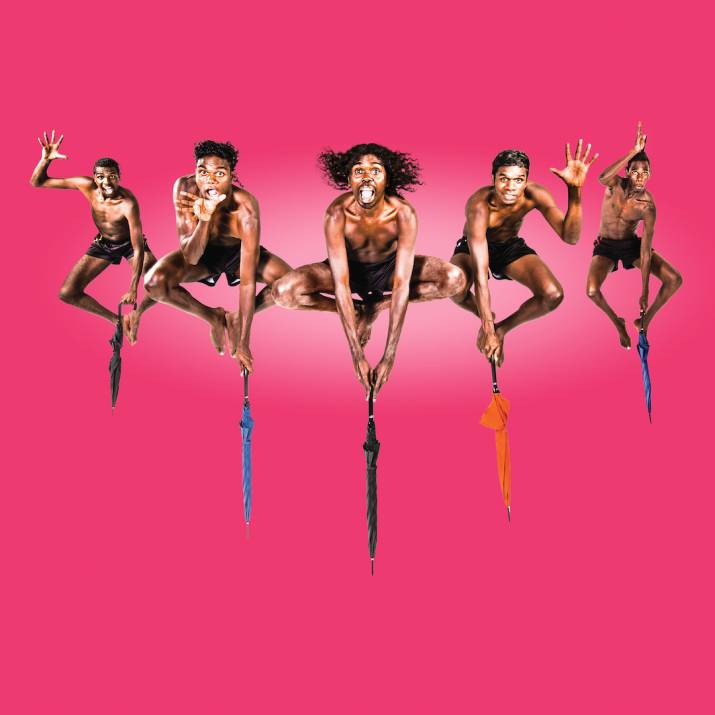
In Yolngu Indigenous culture ‘Djuki’ means ‘bird’ and ‘mala’ means ‘group’ or ‘mob’ and so in Djuki Mala we have a group of dancers that like their bird moniker literally take flight in dance. I spoke to Josh Bond, art director of Djuki Mala, indigenous dance performers and winners of a host of awards. So popular are Djuki Mala they have had to put on an extra performance in their upcoming appearance at Spiegeltent, Hobart.
The aim of the show says Josh is to entertain and inform, especially those with little knowledge of Indigenous culture through dance and to dispel the colonial perception of Indigenous culture. The history of Indigenous lives and culture is brought literally kicking dancing and leaping into modern times. They don’t stop there however, part of the brilliance of the group is that they fuse traditional culture with contemporary ‘pop’ culture and by doing so allow audiences to see the similarities rather than the differences between cultures.
The young men in the troupe originate from Elcho Island in north east Arnhem Land and are here to teach about an indigenous culture very different from the western anthropological interpretation. This teaching is blended with an exciting journey through popular culture from A to Z or at least C to Z. Cabaret and Circus performances to Zorba the Greek. The latter, a performance which went viral on YouTube. Zorba the Greek became part of the performance after one of the group member’s sister was unwell and a Greek lady cared for her. Zorba was a tribute to the Greek lady and a way of thanking her for her care. The guys even bring out brollies for their interpretation of ‘Singing in the rain’.
Even though the performance is by the young men, the indigenous elders are represented by way of multimedia.
You can see Djuki Mala as part of Spiegeltent Hobart on Friday the 30th of March at 4,30pm and Saturday 31st March at 2.30 pm and 6.30pm.
EARLIER on Tasmanian Times …
• Djuki Mala: Djuki Mala: 3 shows only at SPEIGELTENT Hobart
Paula Xiberras