Coroner & Legal
James Thornton: Saving the planet, one court case at a time

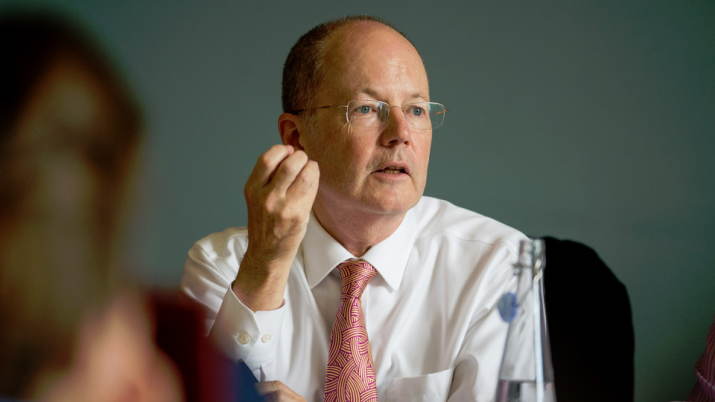

Meet lawyer James Thornton, the soaring force in environmental activism. His foe: recalcitrant governments and big industrial polluters. His battleground: the courtroom. His client: the planet.
Extract …
… The day I met Thornton, the Financial Times reported that both British Petroleum (BP) and Glencore, which has mining interests in Australia, had been warned by ClientEarth about “bullish” forecasts of the demand for fossil fuels. “Their annual reports forecast growth of 45 per cent,” says Thornton. “We pointed out that other analysts, including Shell Oil and OPEC, have a very divergent view. We wrote to 100 of BP’s and Glencore’s biggest shareholders to say that if a court were to decide that this forecast was fraudulent, then they could be liable for stocks going down, and possibly millions in damages. We thought shareholders might want to consider this.”
It must be tough getting them to believe it? “Oh, it’s always tough,” laughs Thornton, “but climate change is so real that people in charge of other people’s money need to understand that it is now a financial risk.”
In 2014, the Chinese government invited James Thornton to help its judiciary frame environmental laws. At his suggestion, costs would be pegged so that environmental groups could afford to bring cases to court; judges would be encouraged to collect evidence themselves where necessary and there would be scientific and legal expertise on hand to advise. “This is an exemplary way of ensuring access to justice for citizens on behalf of the environment,” Thornton tells me. China’s avowed ambition is to build what it is calling an ecological civilisation. “It is the new story there,” says Thornton, “a new foundational myth, and the money always follows the story.”
But China is still building coal-fired power stations. How does this square with the country’s new-found environmental conscience?
“They are installing more renewable energy than anyone else,” Thornton says, “and they are moving to peak coal [in terms of consumption] – they predict by 2035, but it may be earlier. Some smart analysts think they may have already hit the peak.”
This has big implications for Australia as a resource exporter. “It’s brilliant,” says Thornton happily, “because Australia won’t be able to sell so much coal to China and can move to building a cleaner, first-world economy, instead of remaining a third-world extractive one. Australia has assumed that India and China will go on eating coal forever, but both countries are almost in a race to reduce dependency on fossil fuel.”
Adani’s proposed giant Carmichael coal mine in Queensland, strongly supported by both a Coalition federal government and Labor state government, is a crazy idea, says Thornton: “If it is ever built, it will be the biggest subsidised white elephant in the world.”
So Australia should be looking at other forms of energy? “Let me tell you how much they should be doing that,” says Thornton. “Saudi Arabia has just invested hugely into alternative energy even though they have loads of oil, which is cleaner than coal. They are looking at becoming producers of solar energy. Australia is bigger and has even more sun – it could be doing that, too.”
Justice Brian Preston, who worked with Thornton training the Chinese judiciary, says that when Australia’s Environmental Defenders Offices (EDOs) acted against powerful mining interests, there was a backlash. “They were identified as an enemy of the public and both their Commonwealth and State funding was severely restricted or stopped,” he says. “They’ve tried crowd-funding and bequests, but it’s slim pickings. Here, wealthy people may give money to the arts or a cure for malaria. But access to environmental justice? Not so much. It’s a hard one to sell.”
Preston adds that EDOs cover some of the same work as ClientEarth, but Thornton is a diplomat and expert at getting funding: “For an NGO, they are reasonably well off and that’s rare, very rare.” Another Australian-trained ClientEarth lawyer, Sophie Marjanac, is here for four months advising EDOs on constitutional arguments in the Carmichael mine case.
The 2015 Paris Agreement on climate change committed $US100 billion a year towards mitigation of greenhouse gas emissions and adaptation measures. “Paris was a turning point in history,” says Thornton. “All of the signatories agreed to come up with an action plan; the next stage must be a legal framework and enforcement, otherwise citizens can go to court to accuse their government of not implementing law – and we will help them do so. When the law is passed, the work begins.”
President Donald Trump’s withdrawal from the 2015 Paris climate accord is not so bad, according to Thornton: ‘If America had kept a seat at the table, they would have kept trying to water down resolutions.’
The upside of President Donald Trump’s withdrawal from the 2015 Paris climate accord, according to Thornton: ‘If America had kept a seat at the table, they would have kept trying to water down resolutions.’ Photo: Pablo Martinez MonsivaisBut what of President Donald Trump’s threat to take the US out of the accord? Not such a bad thing, according to Thornton. “If America had kept a seat at the table, they would have kept trying to water down resolutions, making life very difficult for the other 194 signatories. Now China becomes the world leader on climate change and US economic interests will be hurt.”
The Paris accord has been criticised as too little, too late and some analysts have calculated the chance that climate change will cause a “rolling collapse” of civilisation at 50/50. Thornton, though, is an optimist. “Even if they’re right, that’s a 50 per cent chance of survival,” he says, “and we are doing something about it.” He is inspired by a marine biologist who noted the loss of 90 per cent of the world’s sharks: “She said, ‘Great news! Ten per cent are still there and if we stop murdering them, numbers will come back.’ ” …