Arts
Art of the Bull …



Hobart Town by Knut Bull … from the Tasmanian Museum and Art Gallery

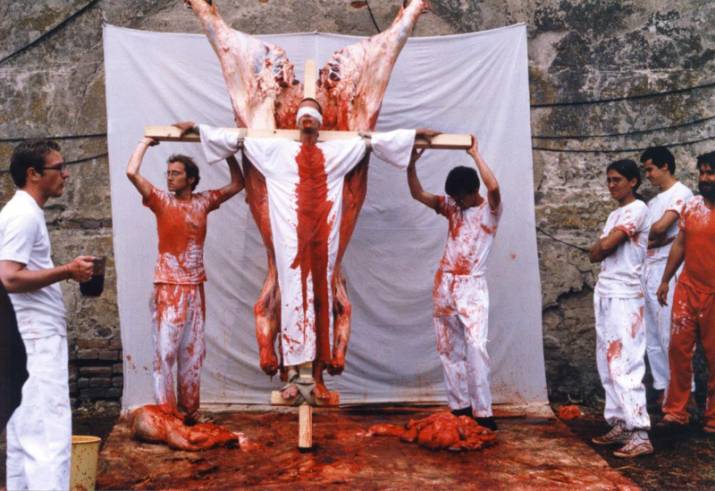
The bovine blood-letting has been cancelled ( TT here ), because of determined efforts by animal rights activists to stop Hermann Nitsch’s 150.action for Dark Mofo – displaying a slaughtered bull, its entrails, plus 500 litres of its blood. There were those eager to embrace this “artistic” show, loathsome as it would be to many more. But may I suggest another Bull display, in which nary a drop of cattle claret would be spilled.
To wit, works of early Van Diemen’s Land painter – Knut Bull. The paintings are held by the Tasmanian Museum and Art Gallery in Hobart. Perhaps they could be presented as a peaceful antidote to that other “exhibition”.
Knut Geelmuyden Bull (to give him his full name) was born in Bergen, Norway, in 1811. He had an illustrious musician brother, Ole, who became a famous violinist. Knut, on the other hand, studied art in Copenhagen and then Dresden, Germany. But a visit to London in 1845 landed him on the wrong side of the law and being shipped out to the other side of the world as a convict. He was arrested and convicted for the forgery of a foreign $100 note. He was sentenced to 14 years’ transportation, going first to Norfolk Island in 1846, then here in 1847 to the Saltwater Station, followed by a brief time in Bagdad, then Hobart in 1849 where he was assigned to various people.
There was an eventual ticket of leave, conditional pardon, marriage and while there are various interesting episodes in his VDL life the focus of this item is his paintings, which include an impressive Hobart Town, of 1855, bought by TMAG in 1952. It shows vessels on our waterfront, and majestic Mt Wellington as the backdrop. The colonial painters loved to depict the mountain, unadorned as it is today by man-made structures.
And from that lofty perch there was Bull’s 1856 Entrance to the River Derwent from the Springs, Mount Wellington, which is also with TMAG. Wrote Hendrik and Julianna Kolenberg in Tasmanian Vision, the art of nineteenth century Tasmania of Bull: “His romantic landscapes are evocative of the long glowing twilights of northern Europe”. Another description says his Tasmanian oil landscapes are of “melodramatic mood and vivid colour”. Entrance is mentioned as particularly so “with its hot reds, purples and browns and large brooding bird in the foreground, conveys a menace absent in any other representation of the Tasmanian landscape before or since”.
The Allport Library also has his local landscapes, so perchance it could be a combined showing?
Should I be Bull-ish about the prospects? Certainly the viewing of his art would be a better visual than a wallowing in beastly blood.
*The Old Bear is known to the Editor
EARLIER on Tasmanian Times …