

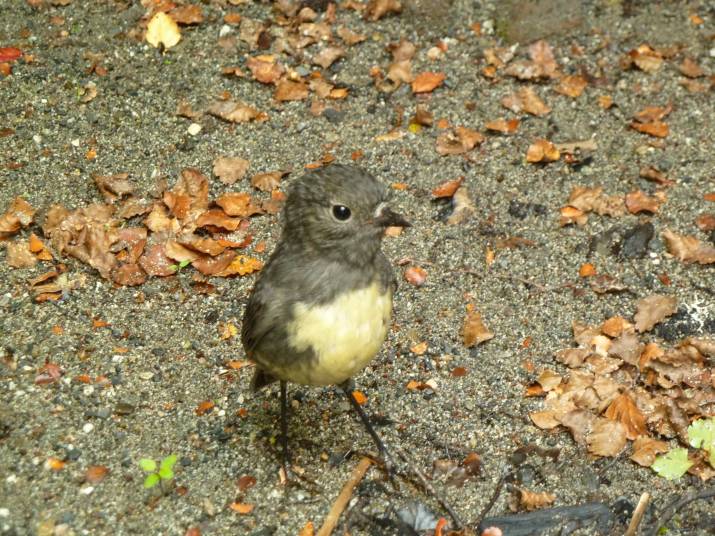
Native birds like the South Island bush robin die a slow death from 1080 and brodifacoum

Bill Benfield
Ben Hope outlines a new chapter in New Zealand’s controversy over 1080 poison as government moves to pull all the strings and thereby stifle public opinion and democratic rights.
New Zealand’s raging controversy over 1080 has taken on a new phase as government moves to take over total control of the dropping of 1080 and brodifacoum poisons by announcing local regional councils will no longer vet the use of 1080 and that the only power to do so, will be with central government.
Co-chairman of CORANZ, conservationist and author Bill Benfield said it gave government extreme sole power to spread 1080 and brodifacoum.
“Basically it’s government wanting to ram-rod anything about poison chemicals through.”
He said the move diminished people’s right to protest at the use of these chemicals in the environment.
The use of poisons including 1080 and brodifacoum will be subject to new rules after concern about inconsistency between different regional rules.
New Zealand’s Environment Minister Dr Nick Smith made the announcement while visiting Tiritiri Matangi Sanctuary in the Hauraki Gulf. He said he was aware of opposition to poisons like 1080 and brodifacoum but the toxins were essential tools to saving New Zealand’s natural heritage.
Smith said the new approach would standardise the rules for using poisons like 1080. Currently there are different rules according to what region the poison is used in.
The change was advocated for by New Zealand’s Parliamentary Commissioner for the Environment, Dr. Jan Wright who expressed concern about the duplication and inconsistency between regions. She has also called for greater use of 1080.
Bill Benfield said the move by government was to arrogantly effectively impose state control and was echoing the Parliamentary Commissioner for the Environment’s call for more 1080.
“To put things in true perspective, the PCE’s doctorate is in public policy, basically an administrator’s qualifications – not environmental,” said Bill Benfield.
Meanwhile the Sporting Hunters Outdoor Trust (SHOT) also reacted calling the move by Minister for the environment Nick Smith as “blindly arrogant”. SHOT convenor Laurie Collins who had many years in the use of poisons among them the first trials in the late 1950s, with 1080 in the Caples Valley at Lake Wakatipu, warned that while 1080 received most publicity due to the aerial broadcasting over thousands of acres and was a potent poison, brodifacoum was even more dangerous. Brodifacoum takes over 20 days to kill a creature whereas 1080 – cruel enough – takes over 24 or 48 hours. Secondary poisoning occurs with both where carcasses remain toxic and poisonous to scavenging or predatory birds such as keas, native falcons, wekas and others.
Laurie Collins took issue with the government move effectively removing the public’s right to comment.
“It should not be forgotten Nick Smith and his colleague Minister of Conservation Maggie Barry were guilty of topdressing the public’s lands with 1080. It’s public property they are mistreating. The public deserve the right to have a say,” he said.
He said hunters had first hand, long term experience of the mountains and bush.
“They know and understand the ecosystem and see the damage done by 1080 with birds like moreporks, keas, falcons and others annihilated,” said Laurie Collins. “Besides 1080 and brodifacoum are shockingly cruel poisons taking days and days to kill. No creature deserves that callous treatment.”
He said the case for 1080 was unsound, often backed by commissioned, paid biassed science.
Many countries ban 1080, he added.
Note: Bill Benfield’s two book “The Third Wave” and “At War with Nature” deal with toxins. Both are available on-line from Tross Publishing, Wellington, NZ.
*Tony Orman (MNZIS) is a former town planner, life-long conservationist (‘wise use of resources’), journalist and author of over 20 books.
Tony Orman*










