Economy
Tasmania … and culling deer


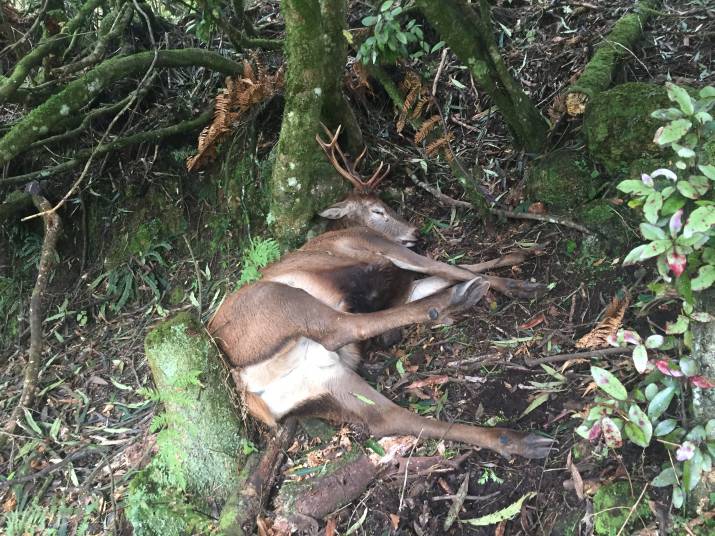
Pics: Michelle Terry

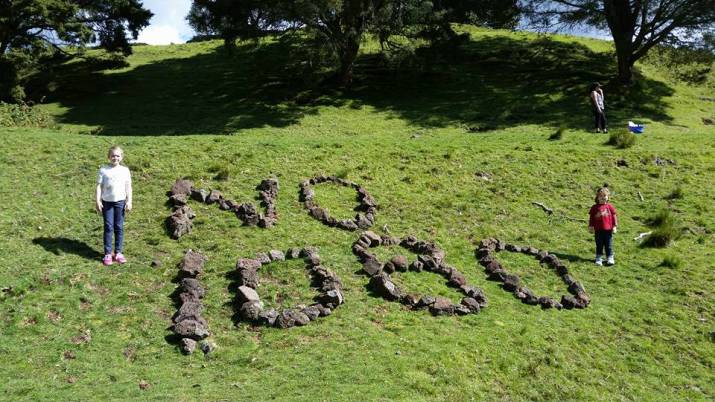
Pic: Naani Abercrombie

New Zealand’s 100% Pure Credibility Deficit
New Zealand journalist Michelle Terry poses questions about the lack of credibility and logic behind the New Zealand government’s persistence with blanketing the country’s wilderness with poisons
The topic of deer culling in Tasmania has recently been raised again, comparing the option of adopting New Zealand’s management of pest species as a successful program – Mercury (August 20). HERE
The truth is that it is far from successful:
In a submission to the Parliamentary Inquiry looking into Tasmania’s wild fallow deer population, Dr Bob Brown has suggested culling should take place as a matter of urgency. Dr Brown points to successful culling in New Zealand, which has included helicopters and the use of 1080 poison. “Helicopter culling is a best available option for Tasmania,” Dr Brown said.
As a science, wildlife management did not come about until the 1930s and, even then, it focused purely on the development of natural resources for the benefit of mankind. (Steer, J. 2015) Deer were originally prized as game animals that helped to encourage the tourist trade. And so our relationship with introduced species is built on inconsistencies. It is driven by culture, financial benefits, and our national identity. We use science as the tool to endorse our choices about which species to ‘conserve’, which to ‘control’, and which ones we mark for ‘eradication’. Deer have, at various points in their existence here, been in all three categories. And yet studies have found that they enrich our experience of Nature. Many of us know this without ‘studies saying’. What’s more, science has found deer are not the cause erosion, and that browsing is actually of benefit to the native forests in the absence of moa browse. Makes sense doesn’t it?
For those who know New Zealand’s wilderness and who aren’t weighed down by illogical ideology such as “anti-exotic wild animal phobia” there are questions to New Zealand’s government that remain unanswered. Indeed, government cabinet ministers and government employees such as those within the Department of Conservation (DoC), treat questions from the public with disdain or rude silence. But politicians and civil servants should recognise that they are fundamentally public servants to serve the public interest first and foremost.
For example, when will the New Zealand public finally receive the acknowledgement from the Department of Conservation that their poison programme is not working?
Landcare Research have said that they don’t know what the long term effects of sub-lethal doses of 1080 will be on animals or humans. New Zealand health officials acknowledge many data gaps and the lack of required research to assure the public that their health is safeguarded. Those two points on their own should demand credible research, answers and a ceasefire on the escalating poison drops over vast tracts of wilderness.
Why the reluctance or indeed refusal to answer? Why does DoC treat public, or Crown land, as though it’s exclusively DoC-land? What really is the endgame for the invasive animal policy that is being played out in New Zealand?
New Zealanders are witnessing something that is unsustainable at best and catastrophic for New Zealand at worst, particularly if it continues. The long term ecological damage will be enormous and is likely to be irreparable.
Firstly, is there a “pest problem”?
Is there a need?
Does New Zealand need to “control” possums, rats, and stoats over large landscapes? Do “alternative methods” need to be found? Well, an increasing number refute the notion of “pests”. This seems a complete full-on confrontation with an ethos that has been preached for decades – even to primary school children. But there are a few fundamentals to ponder on. Rats (kiore) are recorded as being brought by Maori migrants to New Zealand during the 14th century. Possums have been in New Zealand for 200 years, and stoats for a similar length of time. Ecosystems evolve and settle into a balance with predator-prey relationships and “food chains.”
Native birds, which the government’s poison anti-pest programmes purport to protect, were still, in many cases, abundant through the 20th century until towards the millennium. Then, government departments were shuffled and there emerged the Department of Conservation. Around that same timeframe, the large scale aerial-1080 poison programmes first began, with a visible decline in native bird numbers, most notably, the kea.
As for possums, this slow breeding marsupial became the scape-goat for the spread of bovine Tb and was made guilty too of insatiable appetite, defoliating native forests, and predating native birds. Over the last few years, it has been revealed New Zealand has been (by international standards) Tb-free for years. The question is why do we persist with anti-possum poison programmes?
Possum numbers are low as populations have followed the biological “bell curve” graph of liberation then rise to a peak and fall to a low stable level.
“Road-killed” possums are rarely seen compared to 25 years ago.
Bureaucracy and the survival of the budget
In the absence of answers from authorities, I am forced to assume the answer lies in the nature of bureaucrats. Create a problem and it creates jobs and collectively builds empires. It’s a well-used business model. Once established, the bureaucrats will resort to justifying their existence – even if that means creating a mythical problem while ignoring questions from the public, who ironically at the end of the day, pay the salaries of bureaucrats.
We’ve seen too that research interests are linked to the those who are holding the purse strings (whether government or private sector). One glaring credibility gap is that omissions in knowledge often correlate with information that is not useful (or desirable) to the parties funding research. There are many areas left unstudied, data gaps that are self-explanatory when you start to look. This is policy-based evidence-making and is put into practice in both New Zealand and Australia.
Possums are not “pests”. The possum is potentially an important resource. It can provide fur worth 30 times farmed sheep wool and meat for pet food manufacture or human consumption; valuable to a world of increasing numbers of human mouths demanding protein. Possum fur is already earning well in excess of $100 million in exports despite the wastage by poisons.
However, 1080 and brodifacoum poisons, because of lingering toxicity in carcasses, render the resource unusable. What’s more, the cruel, slow-to-kill nature of these two poisons, means animals crawl away to die, often seeking out water.
Possums can easily be trapped. Trapping is effective and is often used to ‘back-up’ aerial-1080 creating the illusion of effectiveness. In real terms, trapping out-competes the allegedly “cheap” aerial-1080 pest control. Information received from some revealing Official Information Act responses from the Department of Conservation have shown the real costs of aerial-1080 to be far higher than we are told. There are many people who are willing and able to trap for their livelihood or to supplement their incomes, but it is proving to be a competition for the dollar-return per hectare with the government poisoning agencies.
“Pest” Misnomer
Accusations are often levelled at trappers and hunters that utilizing possums instead of wasting them to poison will mean that they are “never got rid of”. That it is ‘farming’ in its intent, and that it is basing an industry on a “pest” species.
Even assuming possums were a “pest”, what are the Government’s State-Owned Enterprise, Animal Control Products, and the other pest control companies within New Zealand doing if not basing an industry on a pest species? From poison companies through to TBFree (a ‘charitable trust’), helicopter companies and even scientists – there clearly is a poison “gravy train” at work in NZ that sells its poison products and so-called technological know-how too.
Hunters are accused of bias in their outspoken dismay over the after-effects of an aerial-1080 drop. Hunting may be their recreational sport, it may even be an income, or way of supplementing their family’s diet. So what is the excuse then for the agencies who base their operations and continuing budgets on poisoning the wildlife? Is money an admirable or acceptable bias?
Next we have the excuse of benefiting the tourism industry by poisoning wildlife. Prime Minister John Key has made it known that he believes visitors will spend longer holidaying here in New Zealand if there is more native wildlife to experience. Yet many tourists are left wondering about the poison signs everywhere. They notice still and silent forests in areas of repeated 1080 poisoning. Tourists can end up ‘Googling’ 1080 poison and return home with stories about the poison at the heart of the “fairy tale”. The one that was sold to them about a “clean and green” and “100% pure” untouched world. John Key, presiding over escalating aerial-1080 bombardment is killing the “wildlife experience.”
Gagging orders try to stifle questions. For example, TripAdvisor shut down a thread involving backpackers from Europe and America airing their concerns about the possibilities of 1080 in water supplying the huts they visited. New Zealand newspapers and government-owned television channels spin the “invasive pests” image. But there is no invasion. Remember these animals have been in New Zealand for centuries – just as humans have. In fact, for many of us it may be surprising to learn that our treasured iconic native and endemic birds are ‘invaders’ from Australia that evolved over time to become different from their ancestors across the Tasman. (McDowall, 1969)
Tighten the Lid
New Zealand can keep trying to jam the lid down tightly on the dirty secrets but there is a growing awareness in the rest of the world that all is not as “100% Pure” as Brand New Zealand depicts.
Scientists called upon to back up the use of aerial-1080 are in an awkward position. Do they bite the hands that feeds them? A Landcare Research scientist in 1994 told the Department of Conservation that possums were not “rapacious consumers” of forest foliage. Yet Landcare Research is often commissioned by government to back up these poison policies. Research is pathetically lacking. No one for example fully knows the real effect on freshwater ecosystems. Yet trout and native fish (e.g. whitebait, eels) numbers are declining. Is it coincidence or catastrophe?
Despite the stifling of public information and research, will word keep on spreading of the tonnes of deadly poison dropped into the environment each year?
Growing Concerns
There is a groundswell happening now. The story has got out and it has a snowball effect. Public awareness and concern is undoubtedly growing. What’s more, after approximately 60 years of efforts on the part of the government to poison the ecosystems into submission, there is still no data to support any credible net gain in native bird numbers. Monitoring has shown high percentages of birds killed by 1080 operations. Shouldn’t overall success be measured over all native species and the ecosystem as a whole? But again, the studies simply have not been done. What is likely is that native bird numbers are limited by something other than predation. Their numbers may be limited by food supply, territory, or competition with other birds.
Favoured species are in decline. Government blames “pests”. The increasingly knowledgeable public places blame on “blanket” poison programmes.
The ironic twist to the whole sorry saga is that mass poisoning of fast breeding species like rats causes massive disruptions with tsunami ripple effects within a few short years. At least two credible research studies – again ironically because they were done by Landcare Research – showed within four years, the inevitable surviving rats, mushroomed in numbers by 300%. Stoats that prey on rats, with bountiful food, in turn soar in numbers. So the two species which 1080 and brodifacoum aim to eradicate, are within four years, over 300% of pre-poison levels.
Government is not eradicating rats and stoats – to the contrary it is stimulating tidal waves of these two species.
Human Health
If the government’s ambitions of another 40 years of aerial-1080 towards a PredatorFree NZ are met, then New Zealand will have experienced over a century of broad landscape aerial-1080 poisoning.
New Zealand’s infertility and cancer rates are extremely high. So is sudden cardiac arrest in rural areas. Is there a link to 1080 poison? Where are the safeguards that need to exist in order to protect public health? The late Dr Peter Scanlon publicly pin-pointed 1080 as a major factor in New Zealand in those of Maori ancestry experiencing unusually high rates of cancer.
Government has a strong democratic obligation to respect requests. It should – but doesn’t – respect the growing numbers of people who are worried, and for good reason. Their questions remain unanswered.
We are witnessing an age of mass killing and waste that’s based on nothing less than biological xenophobia – the belief that “introduced species” are evil. Yet humans, our domestic animals and our plant crops are introduced too. This idea of the ancestral right of abode in this country is an ideal of incredible and ignorantly practised hypocrisy.
Now what?
Our government is allowing itself to continue along its bloody-minded course of overkill, animal cruelty, and public health risk in an unprecedented act of entrenched ecological blundering. An “innovation death spiral” is being enacted in the name of “conservation”, where the very thing they claim to be seeking to protect is also being driven further to extinction by this programme of poisoning the environment in order to ‘save’ it.
We welcome the moment when the government’s exit strategy is finally announced and we hope that there is something left to salvage. The clock cannot be turned back but must run forward now towards a future which embraces biodiversity and overall ecosystem health.
New Zealand has a history of linking nature with financial gain. The original wild introductions were done in the name of game hunting.
So what’s the priority here? Primary industries, tourism, or pest control?
*Michelle Terry lives in sunny Hawkes Bay, on the East Coast of the North Island with her three children, and a variety of animals. She has bred Arabian horses in the past and Australia is now home to one of her horses. Michelle is an independent writer & researcher. Born in New Zealand, she has lived in Australia, the UK and France. She ‘came home’ to NZ in 2006. Michelle’s background is in pharmaceutical PR and advertising.
• Tony Orman in Comments: Michelle Terry has summed up the ludicrous situation well. There is no pest problem, there is no deer problem in New Zealand. Dr Bob Brown in Tasmania has it all wrong. In late 1950s, a Californian professor Dr William Graf visited NZ and concluded government departments were afflicted with ‘an anti-exotic wild animal phobia’. The bureaucrats were enraged. Why? Because their fat salaries and empires although founded on a fallacy, were under threat. In short it’s a pig’s trough of public funds. Dr Bob Brown should read my book “About Deer and Deerstalking” which details deer and the NZ environment. Create a problem even though it’s fictitious and you create jobs. -Tony Orman, Marlborough, NZ
• Ian Rist in Comments: … All my years at the Game Farm turned me right off hunting and killing of living creatures, so much so I wouldn’t kill a Deer now if you paid me, in fact I find it abhorrent. I don’t think there was ever a Deer I didn’t feel sorry for after it was shot, that said I do not object to other people hunting Deer for personal use. We all get older and wiser.
• SMH: Baird government ‘declares open season’ on native animals