Economy
World’s Wilderness Gone By 2100 …

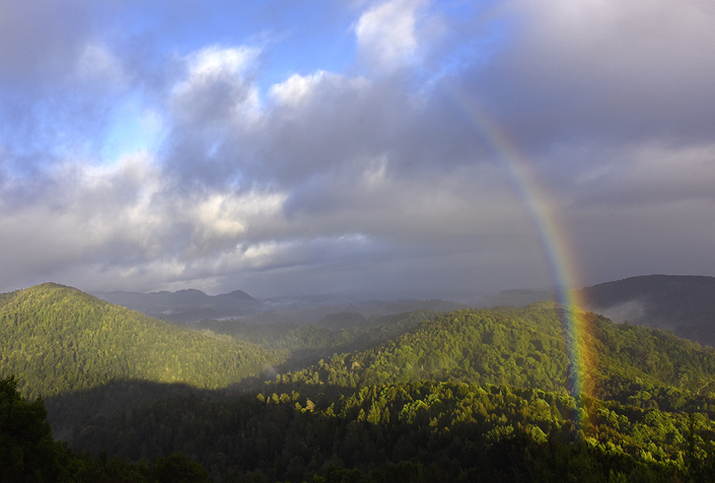

*Pic: The Rainforest Wilderness expanse of Tasmania’s Tarkine. Pic:Ted Mead
… Unthinkable? But a recent study compiled by Australian and United States co-authors have identified that through human growth and the insatiable demand for natural resource extraction, the wild expanses of nature across the globe will be diminished to isolated pockets of primitive country in only a few nations by the end of this century.
In Tasmania alone we have relatively small wilderness zones across the Western extent of the island, and although these areas are protected by IUCN agreements, and federal/state legislation, the threats from conservative governments for resource extraction and inappropriate tourism developments continue.
Other wilderness areas in Tasmania are being lost and degraded every year. The last notably high wilderness zone on the Tasman Peninsula was recently diminished through the Tasmanian Greens supported – 3 Capes project. Whilst in the Tarkine, the remaining wild enclaves are under constant threat from mineral exploration, proposed mining, forestry and associated roading.
It’s a sure bet that when the Tarkine becomes a National Park or World Heritage area, then along with that recognition, the region will be targeted by tourism developers assisted by state and local government initiatives to open the region up for the benefit of a few entrepreneurs.
It has been estimated that 3.3 million square kilometres of primeval land has been developed and cultivated in the past two decades. That’s about the size of Alaska, and at that rate of loss of over one million square kilometres of wild country every decade through land clearance for agriculture, mining and forestry. This will see very little pristine land remaining over the next half decade.
The rainforest regions on earth are already rare and only cover about 7% of the land surface. Half of the world’s plant and animal species are endemic to these forests, with many thousands of highly endangered species being lost each year.
Beyond the importance of protecting large tracts of biodiversity, the rainforests of our earth create about 20% of our oxygen. They also contain numerous medicinal plants that provide about 90% of our pharmaceutical products.
Australia’s laureate and expert on tropical forests, Professor Bill Laurance claims that revegetating rainforest after clearance is a challenging task. He cites research conducted on a Malaysian forest that was cleared and reseeded almost a century ago. “ Not nearly the amount of biodiversity and regeneration has been observed in the 90 year-old rainforest as one would hope.” Researches say it could take 1000 years to have as many tree species as the original forests, which this experiment was meant to replace.
The broadscale loss of these types of ancient forests is considered irreversible. Urgent global action is needed to protect and preserve the extensive biodiversity of a primeval rainforest that have taken millions of years to evolve.
Such a global recognition to the value of rainforest supports the urgent need to protect the core temperate rainforest country of Tasmania’s Tarkine, its wilderness, and its ongoing ecological processes that have essentially remained undisturbed for countless centuries.
Without question, wilderness areas protect biodiversity and contribute significantly to our ongoing health.
For a better world and valuable posterity, we need to act and preserve the wild reaches of the Tarkine’s rainforest now …