Economy
Kiwi Government ‘in Denial’ Over Rivers Crisis

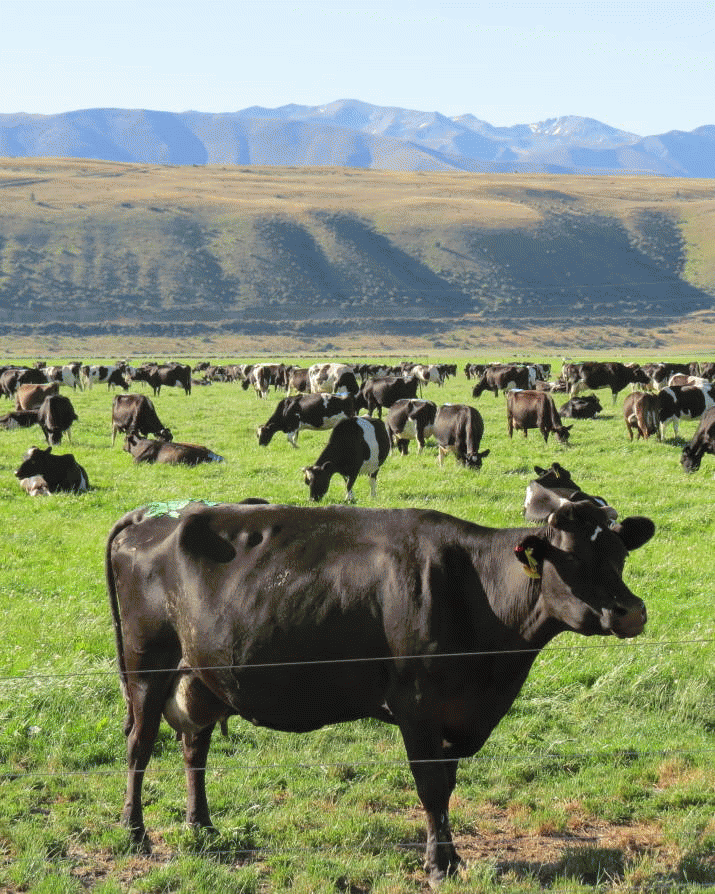

*Pic: Dairy farming with heavy water use from irrigation has turned low rainfall areas into lush green fields
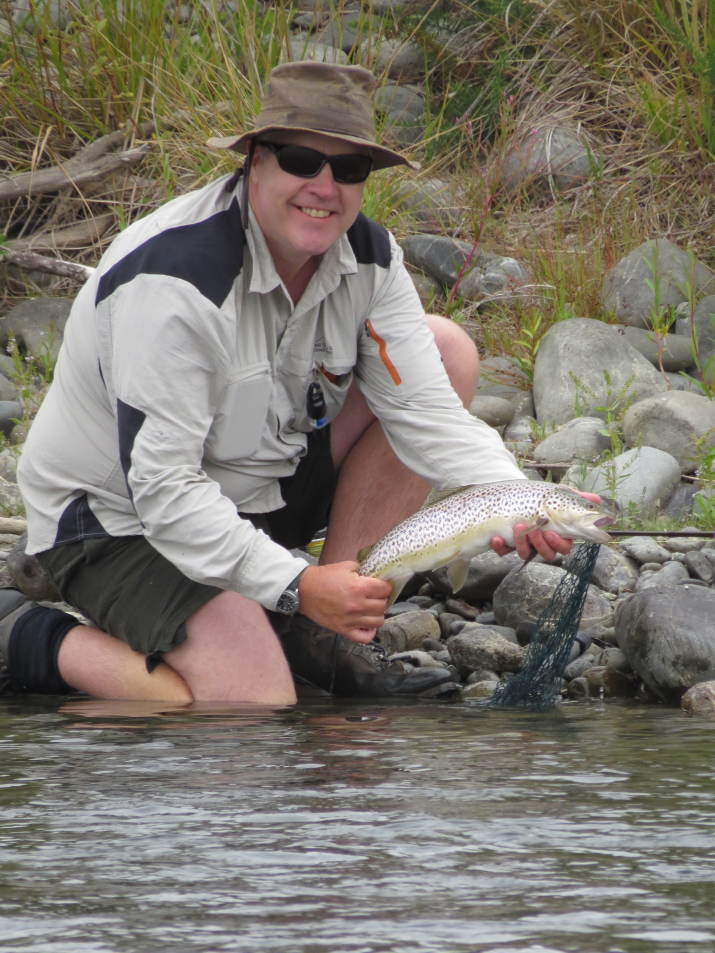
Trout anglers on rivers have noticed diminishing of water in both quantity and quality.

A warning for Tassie …
The New Zealand government is in denial over the deteriorating state of New Zealand’s water resource and rivers, says a national trout fishing organisation.
Recently a North Island town, Havelock North, suffered contaminated water supplies with induced illness amongst residents. Residents were forced to boil water before use. The nearby Tukituki River has become severely degraded with a Massey University ecology professor saying its water quality index rating was the lowest he had ever seen.
The Tukituki River flows through farmed country, much having been sheep farms converted to dairying and also for years had been receiving sewage effluent from two towns.
“During a television interview about Havelock North water supply crisis, Prime Minister John Key said on television, that the country could still claim a ‘100 percent pure’ status,” said Tony Orman, author and media spokesperson for the New Zealand Federation of Freshwater Anglers.
“That’s denying the real situation that our water standards have withered to approaching that of a Third World state. If that isn’t enough, Minister for the Environment Nick Smith has set a low bar for river quality,” he said.
He said examples like the Tukituki River meant everyone – both town and country plus politicians – had to face up the reality of the water crisis. Importantly the New Zealand government had to “shed denial and procrastination” and act positively to remedy the aggravating situation.
New Zealand rivers have been progressively declining in quality and flow for the last two decades. In 2015 two-thirds of more than 160 monitored river swimming spots in New Zealand were deemed unsafe for swimming.
However last week, Environment Minister Dr Nick Smith presented a state of the environment speech at Lincoln University where he outlined the Government’s objectives towards freshwater management and said a target of making rivers swimmable, was “impractical”.
“Yet bizarrely Minister Smith at his Lincoln address, reportedly outlined one of the goals for freshwater management was improving water quality,” said Tony Orman. “How the yardstick can be lowered to ‘achieve better water quality’ is sleight of the mouth stuff. It’s all self contradictory.”
In Canterbury in New Zealand’s South Island, the government sacked the elected environment council and replaced it with one of its own choosing. Canterbury, a low rainfall area, has seem a major farming shift to dairy farming from traditional sheep and mixed crop farming and the installation of giant irrigators to create lush dairy pasture.
Tony Orman said Minister Smith’s praise during his address, for the government’s hand-picked Environment Canterbury council was not unexpected. Government removed the democratically elected ECan Council in 2010, replacing it with its own six commissioners. It then suspended reinstating elections but next month (October) will partially restore elections by having seven elected and six government-appointed commissioners. A fully elected council has been promised for 2019.
“It remains to be seen whether government breaks that assurance for 2019 after promising fully elections before this,” said Tony Orman. “In any case it was insulting to the public and democracy to replace an elected council with a government puppet council.”
Government’s disappointing responses of denying the country’s growing and precarious state of water quality and flows, should be assessed in the light of New Zealand’s relatively small population of less than five million people.
“As a country we are less than one Australian city (Sydney) yet we have declining water quality and rivers and stream flows severely depleted and increasingly so,” he said.
“Trout anglers are on the rivers and have noted the diminishing freshwater resource. In essence – trout and other freshwater species are the canaries in the coal mines.”
An awareness was needed that aquifer flowing beneath the ground and rivers flowing visibly above the ground are one and the same – “deplete the aquifer and the river flows decrease” said Tony Orman.
*Tony Orman (MNZIS) is a former town planner, life-long conservationist (‘wise use of resources’), journalist and author of over 20 books.