

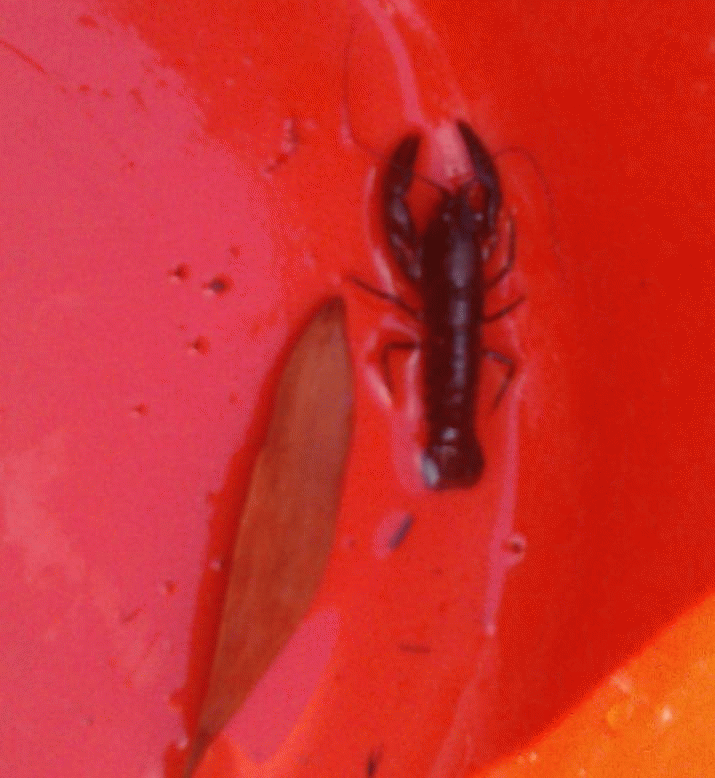
*Pic: Claire Gilmour’s March 2015 of a rescued freshwater crayfish baby …
Earlier in August the Tasmanian Conservation Trust made a submission to the Australian Government in response to the ‘Draft Recovery Plan for the Giant Freshwater Lobster (Astacopsis gouldi)’.
Overarching assessment
The Draft Recovery Plan is generally inadequate and significantly inferior to the previous plan. A key reason for this, we believe, is that the current draft was prepared by the Australian Government, with very limited consultation with the responsible state agencies and no community consultation. Traditionally recovery plans have been drafted by the relevant state agency and the recovery team for the species and the Australian government has merely provided input. We have no idea why this change has occurred but it clearly has led to a decline in standard.
Status not property reviewed
The Draft Recovery Plan concludes that the Giant Freshwater Lobster’s (GFL) status remains unchanged as vulnerable. However, the assessment of conservation status that was done as part of the review of the previous plan is overly optimistic and gives undue emphasis to the apparent reduction in fishing pressure that has probably led to improvement in average size and maximum size. What is not given adequate consideration are the numerous ongoing threats, including habitat disturbance in the north east (that the review found justifies those populations being ‘considered endangered’) and ‘major declines in some north west catchments’. Also, climate change impacts are not specifically considered in the assessment of status.
The TCT believes there is a prima facie case for consideration of the GFL as endangered (it’s current status is vulnerable) and as such a thorough reassessment of the species’ status should be done.
Inadequate consultation
No non-government conservation organisation was involved in the review of the previous recovery plan, even though the TCT had been a long-time member of the recovery team that prepared the previous plan. The review of the previous plan was done through a single forum held on 30 April 2015. Surprisingly, Forestry Tasmania was not involved in this forum.
Given the restricted consultation, it is disappointing to read in the Draft Plan that it ‘has been developed through extensive consultation with a broad range of stakeholders’.
Climate change not addressed
The Draft Recovery Plan identifies climate change as an ‘overarching threat’ to the GFL but provides no strategies or actions in response to this. While this is a very complex area it deserves greater attention than it receives in this draft.
Priority populations not identified
The Draft Recovery Plan fails to identify priority populations, concluding that ‘all populations of GFLs require protective measures’. The TCT believes this is a cop-out that will make it much less likely that new reserves will be created and make it harder to direct management effort to priority sites.
Objectives and strategies
Unlike the previous plan and all recovery plans the TCT has been involved with, this plan does not include an overall recovery objective or performance criteria linked to this. It is vital that the plan identifies an overall objective to down list the species to non-threatened (or at least hold its current status) and that performance criteria are included, as with the current plan. This is why these plans are called ‘recovery plans’.
This omission makes performance of the plan very difficult to measure.
Reserve status
No analysis was made of the current reserve status of the GFL nor was any attempt made to set specific reserve targets. The Draft Recovery Plan should include an analysis of what gains, if any, have been made in terms of reservation since the previous plan was finalised, in 2010, what obstacles have hindered this, opportunities for future action and recommendations for further actions.
Agricultural
The action in regard to agricultural impacts only seeks to inform agricultural communities about lobster conservation whereas it should seek to achieve an improvement in management by agricultural industries. Section 2.2 of the current plan should be adopted and revised where necessary.
Forestry
One positive element of the Draft Recovery Plan is the recognition that recent research has demonstrated that disturbance from forestry practices high in a catchment may negatively impact the GFL much lower in the catchment and that improved management practices are needed. The TCT supports this recommendation but we suggest that the Forest Practices Authority’s work should be assisted by the Australian Government committing to providing funding.
Fishing – preventing road access
While we support the actions to protect the GFL from fishing, it is frustrating that no actions are recommended that aim to prevent or restrict road access to important populations of GFL. This is despite the Draft Recovery Plan identifying the threat posed by new roads, especially forestry roads, by providing access to previously unfished areas.
We recommend a specific action aimed at preventing new roads in GFL habitat and identifying existing roads that can be closed and rehabilitated or have access controlled though gates and other barriers.
Peter McGlone has been the Director of the Tasmanian Conservation Trust since 2009. Peter was a member of the Recovery Team for the Giant Freshwater Lobster from its formation in 1997 and contributed to the production of the current Giant Freshwater Lobster Recovery Plan 2006-2010. The first draft plan was produced in 1997 but the final plan was only approved in 2006.

Little orphan: Claire Gilmour’s piccie of a baby devil …
• Todd Walsh in Comments: Hi Peter, The last time the state government ran the Recovery Plan, half of those involved were excluded from meetings for almost 2 years. Those excluded were the community-based groups, if you think that was a higher standard of community consultation then we are on different planets.










