Economy
Port Arthur archaeological dig uncovers prisoner tokens for gambling



THE first physical evidence of illicit gambling by convicts has been uncovered at the Port Arthur Historic Site.
The World Heritage Listed site, which was recognised as the best tourist attraction in the country at last year’s national tourism awards, has kicked 2016 off with a bang.
On January 5, the site broke its record for most visitors in a single day — 4785, which included 2477 passengers from Golden Princess cruise ship — and now work is under way on its biggest ever excavation.
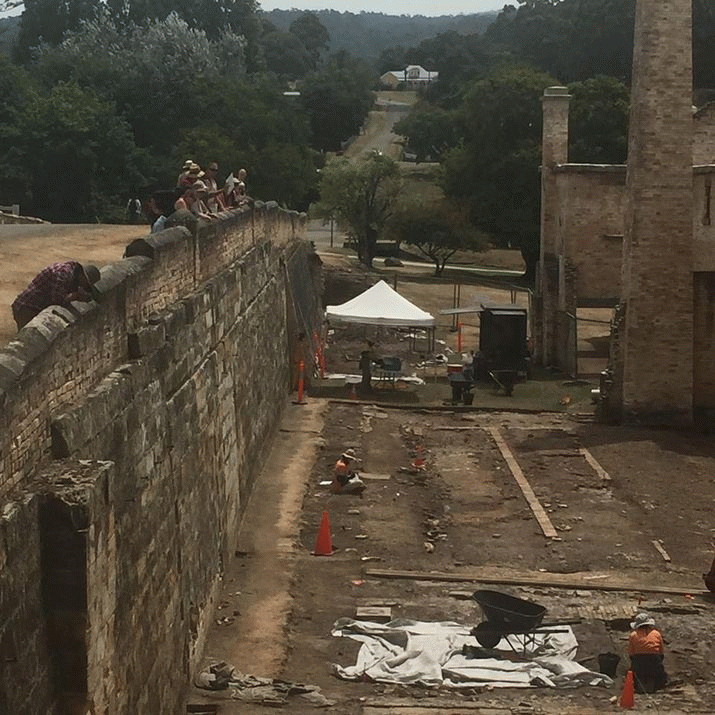
Archaeologists are painstakingly making their way through an excavation of the 500sq m of land behind the iconic penitentiary building.
Project archeologist Richard Tuffin said they had uncovered handmade lead and ceramic tokens, which supported stories from convicts about gambling and trading for the first time.
“The official history tells us convicts didn’t gamble — that it was heavily controlled — but accounts from convicts themselves told of this black market economy going on where services and rations are all being traded between themselves and gambling and gaming would have been part of that,” he said.
• What Port Arthur says on on its Facebook page HERE
We stopped by for the trench-side talk this afternoon to find out the latest from our trusty archaeologists and as evidenced by the first photo, they have certainly been hard at work.
Last week we mentioned that they felt it would still be quite some time until they reached the artefact phase of the dig but much to their surprise and delight, they have started uncovering a couple of gems.
The next two photographs feature gaming tokens which were highly prized by the convicts and as such, were considered contraband by the soldiers.
The first lot of tokens have been fashioned from Willow Ware and as you can imagine, quite some effort would have gone in to filing this lovely porcelain in to round gaming chips!
The really interesting thing about this lot of gaming tokens is that they were all found together so the current thinking is that they had been stashed somewhere in the building and were all lost together.
The last photograph features gaming tokens that have been fashioned out of lead – a much more pliable material to work with.
• geoff hewitt in Comments: Congratulations on your PA dig. At the risk of being a wet blanket over your story, I would suggest that gaming pieces are not necessarily gambling tokens. I note that the pieces seem to be either essentially circular or square, which may represent the more usual black and white of draughts (checkers) pieces. Certainly players may have gambled on the outcome of a game of draughts but that can hardly be assumed. The ceramic tokens are more likely to be earthenware than porcelain and they are more likely to have been ground against a convenient stone wall than filed as your report implies.