Coroner & Legal
Uruguay shows the way by leaving secret trade deal

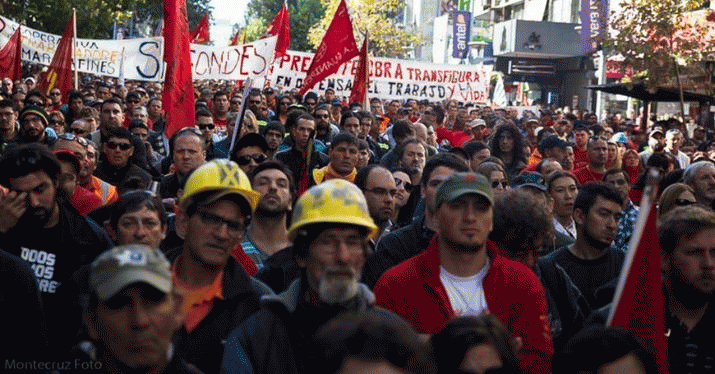

*Pic: Thousands in Uruguay participated in protests against TISA earlier this year. (Photo: Courtesy of Montecruz Foto/CC BY 3.0)
A strong coalition of trade unions, environmentalists and farmers working together on an effective public campaign were able to take on the interests of the world’s biggest companies and win.
The China Free Trade deal and the Trans Pacific Partnership are being strenuously pushed by Trade Minister Andrew Robb. There is another way …
Last week the Uruguayan government decided to end its involvement in the secret negotiations of the Trade in Services Agreement (TISA), signifying an important victory in the global fight against bad trade deals.
TISA is a radical new deal that aims to go far beyond current trade rules and force States to further open their markets to foreign corporations, privatize public services and reduce regulations. These measures often mean job losses, less environmental protection, and less accessible healthcare and education.
Uruguay has created a blueprint for how to stop this corporate-driven agreement. It is time for other countries to follow the lead and end TISA once and for all.
After months of intense pressure led by unions and other social movements—including a general strike on the issue—the Uruguayan President listened to public opinion and left the US-led trade agreement. The overwhelming majority of members of the ruling Frente Amplio party believe that the deal would undermine the government’s national development strategy and therefore considered it “unadvisable to continue participating in the TISA negotiations”.
The little-known TISA negotiations involve 52 nations, who together comprise around two-thirds of the global economy: the United States, European Union and 23 other countries, including Turkey, Mexico, Australia, Pakistan, Taiwan and Chile. It relates to the ‘services sector’ of the economy, which in the EU makes up approximately 75% of the total economic activity.
The agreement being negotiated aims to do away with “domestic regulation” of services with a special focus on certain sectors where free exploitation by corporations would increase at the expense of public interest, such as: finance, telecommunications, internet and e-trade, government procurement, transportation, energy services, postal services and the so called “environmental services.” For example, this means prohibiting countries from adopting privacy laws that limit cross-border data flows of sensitive information or require strong data protection.