Coroner & Legal
A renegade trawler, hunted for 10,000 miles by vigilantes

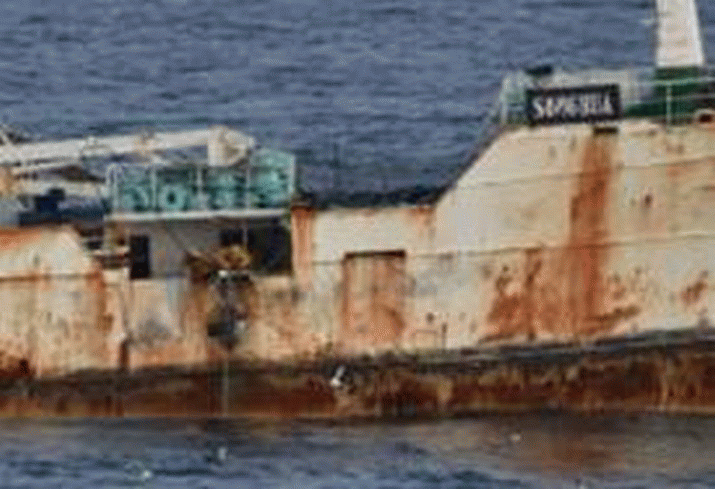

or 110 days and across two seas and three oceans, crews stalked a fugitive fishing ship considered the world’s most notorious poacher.
ABOARD THE BOB BARKER, in the South Atlantic — As the Thunder, a trawler considered the world’s most notorious fish poacher, began sliding under the sea a couple of hundred miles south of Nigeria, three men scrambled aboard to gather evidence of its crimes.
In bumpy footage from their helmet cameras, they can be seen grabbing everything they can over the next 37 minutes — the captain’s logbooks, a laptop computer, charts and a slippery 200-pound fish. The video shows the fishing hold about a quarter full with catch and the Thunder’s engine room almost submerged in murky water. “There is no way to stop it sinking,” the men radioed back to the Bob Barker, which was waiting nearby. Soon after they climbed off, the Thunder vanished below.
…
Illegal fishing is a global business estimated at $10 billion in annual sales, and one that is thriving as improved technology has enabled fishing vessels to plunder the oceans with greater efficiency. While countries, with varying degrees of diligence, typically patrol their own coastlines, few ever do so in international waters, even though United Nations maritime regulations require them to hold vessels flying their flags accountable for illicit fishing.
That leaves room for organizations like Sea Shepherd, which describes itself as an eco-vigilante group, flies a variation of the Jolly Roger on its ships and often cites the motto, “It takes a pirate to catch a pirate.” In chasing the Thunder, Sea Shepherd’s goal was not just to protect a rapidly disappearing species of fish, its leaders said, but to show that flagrant violators of the law could be brought to justice.