Economy
Health threats of Climate Change …

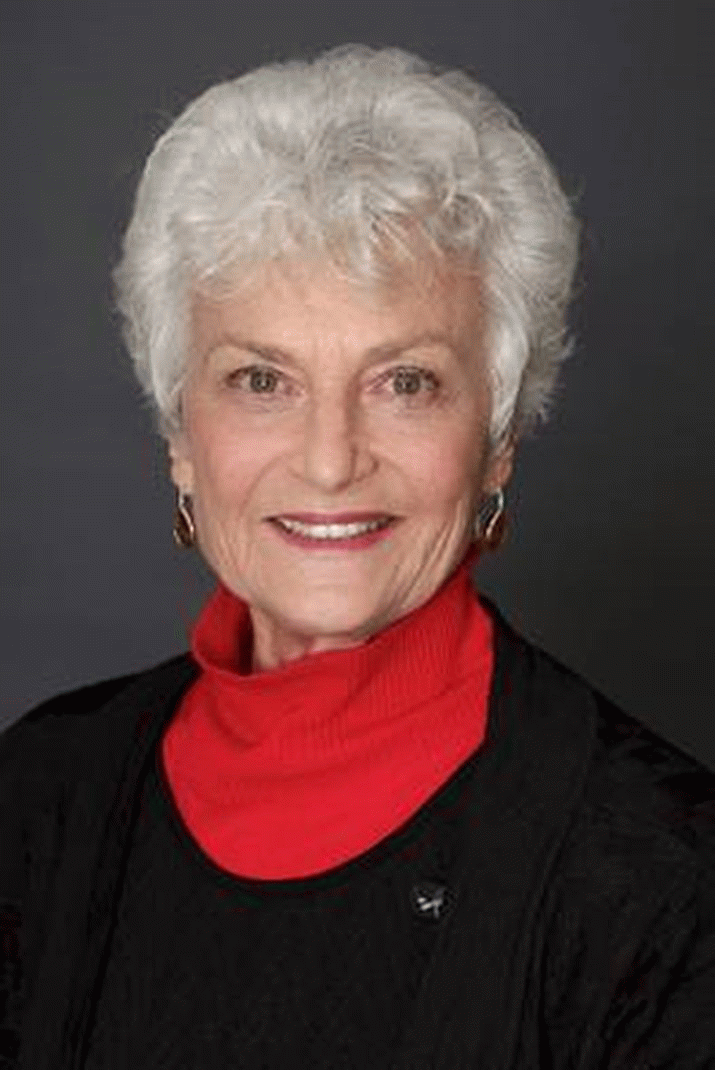

Leading paediatrician and former Australian of the Year, Prof Fiona Stanley, launches new report on the impacts of climate change on children’s health
Australian children are the ones who will be most likely to suffer from increased cases of disease and infection as a result of climate change, former Australian of the Year and leading paediatrician Professor Fiona Stanley has warned.
A new report by Doctors for the Environment Australia (DEA), a national organisation of medical doctors which raises awareness about the link between health and the environment, finds changing weather conditions are expected to make some illnesses like gastroenteritis and asthma more common or more severe and more likely to threaten the lives of Australian children.
The report also says that children in particular will suffer psychological or physical trauma from increasing bushfires and floods, and they are more at risk from diseases that have been previously uncommon in Australia, such as dengue fever.
The report, No Time for Games: Children’s Health and Climate Change also highlights the need for GPs and hospitals to start preparing health systems to cope with the increasing impacts of climate change.
The report comes ahead of the Government’s soon to be released emissions targets which it will take to the global climate change summit in Paris in December later this year.
Professor Stanley will launch the report in Perth today (Sun 31 May) at 9.30am WA time in the Federal seat of Curtin, held by Foreign Minister Julie Bishop who is expected to be Australia’s lead negotiator in Paris.
Spokespeople will also available for comment in other states.
The report makes four key recommendations to tackle climate change:
• Strong targets in the Paris climate change meeting in December
• Urgent transition to clean energy sources
• Realise the potential local benefits of curbing climate change, such as reduced air pollution and better designed cities
• Government measures to help health and emergency services prepare for the demands placed on infrastructure by climate change
“Our children top the list of those most likely to suffer from climate change,” says Professor Stanley. “It falls on today’s generation to act in their best interests. Their future, their health must be our number one priority. “
The report’s principal author Dr Sallie Forrest emphasises the major risks to children’s health if greenhouse gas emission levels do not start falling this decade.
“As this report makes clear we are already seeing changes from the impacts of changing temperatures and if we continue along this path, science tells us we will see 4°C of warming this century which opens children up to risk of water and food shortages and social and economic disruption,” Dr Forrest says.
“This is why we as doctors have a duty to speak up as we have against tobacco and asbestos. This report is about raising our voices about the urgent need to act to protect our children.”
Report available
http://dea.org.au/images/general/Children_and_climate_change_report%3A_No_Time_for_Games_web.pdf
DEA is supported by a Scientific Advisory Committee:
Professor Peter Doherty, Professor Fiona Stanley, Rosemary Stanton, Professor Stephen Boyden, Sir Gustav Nossal, Professor Bob Douglas, Professor Michael Kidd, Professor Davidde Kretser, Professor Steve Leeder, Professor Ian Lowe, Professor Robyn McDermott, Professor Peter Newman,Professor Hugh Possingham, Professor LawriePowell, Norman Swan, Professor David Yencken.
www.dea.org.au