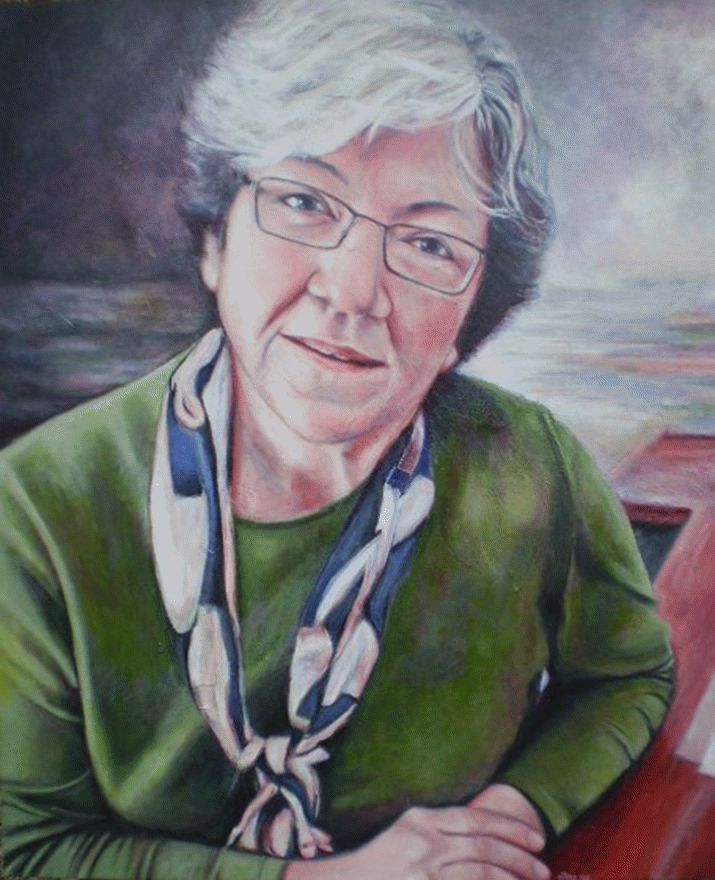
*Pic: Portrait of Dr Carmen Lawrence, Subject: Dr Carmen Lawrence, Artist: Deanne Haddow. From here
I first met Carmen Lawrence at a major charity fund-raising event in Perth, WA, when, deputising for my boss, I found myself seated beside the then Premier of WA, and Patron of the charity.
We chatted about many things during the course of the evening, finding that we had at least one thing in common: we were both raised in remote rural communities, our parents struggling to eke out a living, farming small land holdings.
I recall that even then, she had concerns about the harm farming practices were doing to the land – particularly large-scale clearing, and the widespread use of pesticides. She also made what I thought at the time to be a rather provocative comment: that she hoped mining would leave a far smaller footprint on fragile eco-systems than agriculture.
I was to bump into Dr Lawrence a number of times during her tenure as Premier and although never on first-name terms, she would always acknowledge me with a friendly greeting and smile. A gracious lady no doubt.
It was against this backdrop that I read her Essay in the latest edition of the Griffith Review (no 47) titled “The limits of Dominion”. Reflecting on it after first reading, it occurred to me that she could well have been writing about Tasmania.
Writing specifically about WA in this case, she professes at the outset to be less than enthusiastic about “the siren call of economic growth which looks too often like wanton destruction”, observing that what our forebears apparently saw was a land of plenty with no limit to what human ingenuity could achieve in pursuit of ‘progress’.
In this headlong rush to progress, clearing and overstocking have decimated the fragile earth and had a devastating affect on native fauna and flora. In recent times, developers and mining companies alike appear to see the land only as a resource to be exploited for profit and wealth (for some at least), ignoring what should be protected, and treasured – including aboriginal heritage values.
She quoted Author Paul Cleary: “Mining dominates our society, our economy, and even our political system” (a disturbing thought for those of us who value democracy).
The final paragraph of this Essay is repeated here almost wholly because it is a sobering reminder of the struggle ahead – of the contest between exploitation and conservation:
“The official line still gives priority to digging it up and shipping it out no matter what the affect on other values that are important to us. Short term economic imperatives almost invariably prevail when contests about land use emerge. To point out cumulative harms, or to indicate the possible gains from – alternative uses – is still to invite ridicule. But it seems increasingly clear that unless we reweigh the balance between economic activity and what remains of our heritage, priceless natural and human assets will be lost forever and the well-being of all Australians further compromised. Priceless places should be valued for their deep intrinsic value – they are not just places ripe for unrestrained exploitation. We need to be able to talk frankly about the long-term effects on us, on the quality of our lives of such a single-minded focus on what we can wrest from the land.
Instead of seeking dominion over all the earth, perhaps its not too late to recast ourselves as its custodian”.
What a revolutionary thought! And the notion of limits to our dominion over the land and all its resources would no doubt send our political class into convulsions.
This is an Essay well worth reading.