Economy
The Plight of the Orange-bellied Parrot



The Orange Bellied Parrot’s range …

Can We Save it? Yes We Can!
Listed on the Commonwealth EPBC act 1999, and classified on the IUCN red list as critically endangered since 2000, the Orange-bellied Parrot almost reached extinction only a few years ago!
But now there seems new hope.
Weighing at only 45 grams, this tenacious ground-feeding parrot migrates a perilous route across Bass Strait twice a year between the breeding range of Western Tasmania, and the non-breeding territory of south-eastern Australia.
Recognized as one of the few migratory parrots in the world, it occupies a narrow strip of heathland along the west coast of Tasmania in summer, and principally inhabits the saltmarsh/heath habitats of the mainland during the winter months.
Throughout last century the OBP was broadly sighted across south-eastern Australia, but in 1983 when it was observed that the bird numbers were on a serious decline the OBP Recovery program was established. This program comprised of individuals from wildlife agencies within Tasmania, Victoria and South Australia.
The biggest threats to the OBP have been the loss of mainland habitat, predation by feral animals, the inactive mosaic burning of their foraging habitat, drought, and competition with introduced birds.
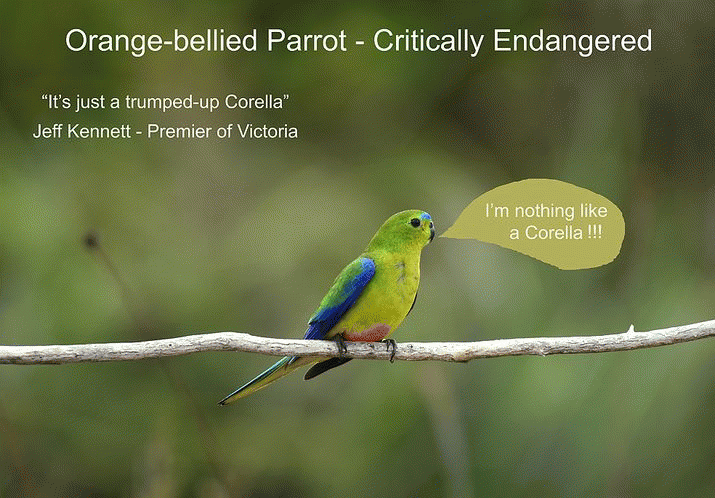
In 1997, the OPB arose to fame through the halting of a development for a chemical storage facility at Point Lillias in Victoria. Subsequent injunctions against wind-farms invoked irate comments from the then Premier Jeff Kennett to regard the OBP as “it’s just a trumped-up Corella”
Throughout that decade the loss of OBP numbers was a worrying sign.
In 1990 there was about 100+
By 2000 there was less than 50
In 2013 only about 20 adults returned to the breeding areas near Melaleuca.
Without a major recovery program the OBP seemed doomed to extinction.
Fortunately for the OBP’s future, a captive management group from the Adelaide Zoo, Healesville Sanctuary and Taroona Hobart set a target to breed 400 birds. So far this objective is well on track with additional breeding installations due to be operating soon. Other conservation groups such as Save the Orange-bellied Parrot and the Friends of the OPB have raised the public profile of the plight of the OBP.
The current population in the wild is about 50-60, with another 360 birds in captivity. 26 birds were released this season to the Melaleuca Breeding region, and present monitoring indicates that this has been successful.
It seems likely that with the ongoing of a captive breeding program of the OBP, the numbers released will increase in future years, though one of the greatest challenges to the program will be to maintain a healthy wild population by ensuring a broad genetic diversity of the species.
Crisis with funding is not new to conservation issues, and more pressure should be put on governments to protect our threatened wildlife. As it stands there are about 200 endangered fauna species throughout Australia. Only around $3 million is spent annually on conserving threatened taxa in Australia. This is less than 1% of the weekly defense budget of our nation, and clearly shows where the priorities lie in our conservative governments.
Redistributing funding from just one of the proposed Navy submarines to be built, and allocating it into wildlife conservation would bring back a majority of the threatened wildlife species in Australia to healthy populations of the past.
Without realistic financial assistance, it will remain as usual, to the hard work and commitment of conservationists to soldier on in the plight to save one of our most elusive and alluring creatures.