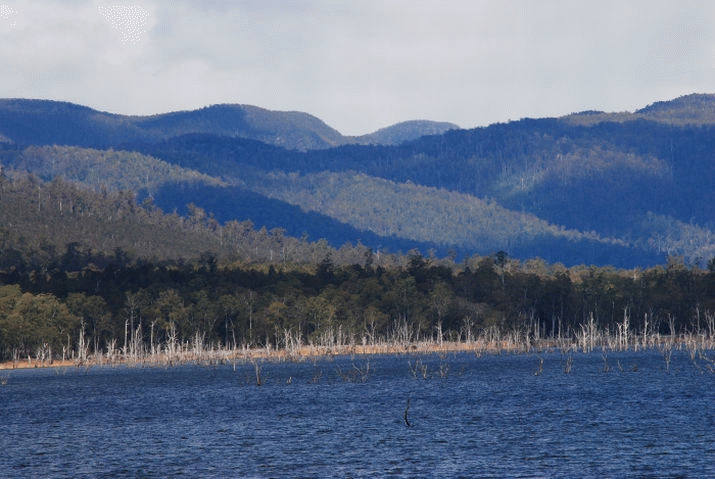
Hydro Tasmania’s pic of Lake Rowallan … when full
Published on Jan 2, 2015 Flying the entire Howells Main Drain, South to North. A distance of 3 km. The ditch was dug by hand about 1911. What a backbreaking job it must have been. Howells Plain has been at the bottom of Lake Rowallan for about 50 years. The lake is drained while repairs are done to the dam. Job will be finished about May.
• Chris Sharples, in Comments: # 3. You are peddling a misconception. Hydro lakes are not ‘full of silt’ as you imagine, because they are not being fed by rivers full of sediment. The point about the draining of Lake Rowallan is precisely that it shows the lake has not filled with silt. And as far as Lake Pedder goes, in fact divers have been to the old Lake Pedder beach beneath the Fake Pedder impoundment, and do you know what they found? A millimetre or two of fine fluffy organic (algal) debris on the bottom (which if exposed would wash away in the first rain), and all the sandy landforms perfectly preserved, even down to old 1972 aircraft tyre tracks on the sand. Peddling the false notion that Fake Pedder is ‘full of silt’ simply demonstrates that you do not understand geomorphic processes. For real information on this and related topics, see the symposium volume I edited entitled: Sharples, C., (editor), 2001: “Lake Pedder: Values and Restoration”; Occasional Paper No. 27, Centre for Environmental Studies, University of Tasmania. (copies in good libraries etc, not sure if its available online).
• Chris Sharples, in Comments: Funny thing is, just last week I spent six days paddling my sea kayak around Fake Pedder observing the state of the current shoreline, the lack of dead trees in most areas, and the intact nature of the drowned fibrous organic soils. I also previously have convened a symposium on the lake and edited a volume of scientific papers on the state of the lake and its prospects for restoration. I suggest you read that volume (see #4 & #5 above) before you peddle further uninformed mis-information.