Economy
Reducing Youth Homelessness

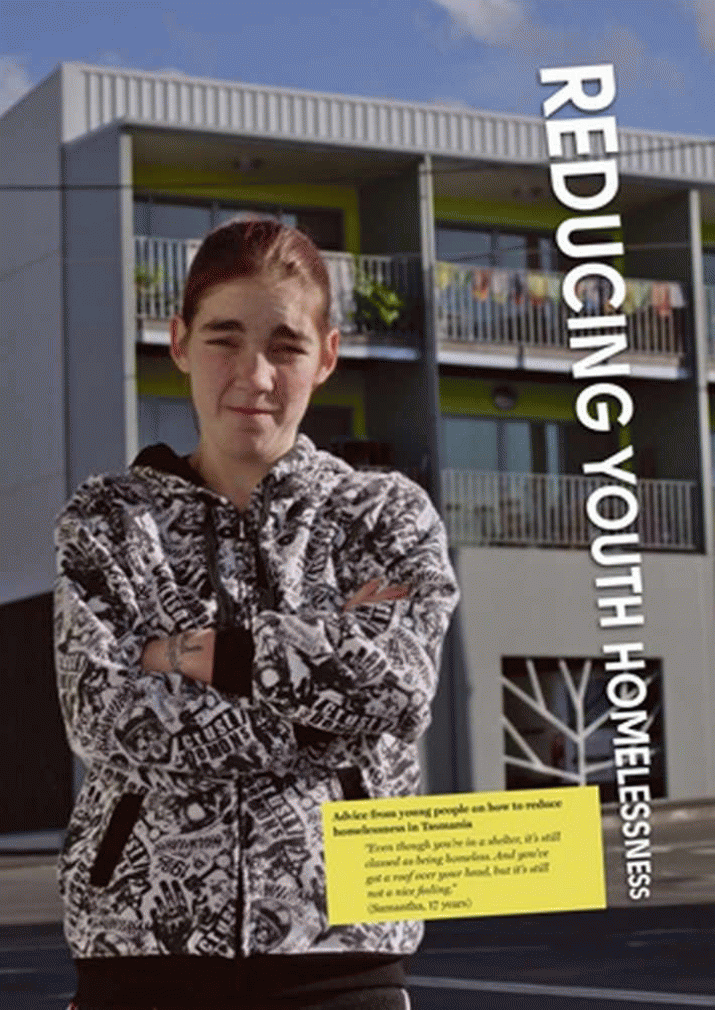

Advice from young people on how to reduce homelessness in Tasmania Even though you’re in a shelter, it’s still classed as being homeless. And you’ve got a roof over your head, but it’s still not a nice feeling. (Samantha, 17 years, not pictured)
Anglicare Tasmania’s latest publication, Reducing Youth Homelessness was launched today as part of National Homeless Person’s Week (4-10 August).
This report explores youth homelessness in Tasmania from the perspective of young people themselves. Twenty-two young people aged 14 to 20 years were asked for their views on what leads to homelessness and what can be done to reduce or prevent it. All had been homeless and most been involved with the child protection or youth justice systems.
Rather live at home
Most of the young people said they became homeless for reasons relating to their parents and family life. These reasons included abuse, parental mental ill health, poverty and hardship.
Despite these hardships, many of the young people said that rather than leaving the family home, they would have preferred that supports were brought in – giving the family access to useful measures such as parenting courses, counselling and mediation.
Feeling safe
In cases where living at home was not a safe option, young people told us that they needed access to safe accommodation options. However, a key finding of the research was that young people often have nowhere else to go than to cycle in and out of short-term accommodation and in and out of repeated homelessness because of a lack of long-term options for them.
The report recommends additional emergency beds be provided in all regions, including remote areas, as well as small public housing units and community housing allocated to youth. For youth with bail or probation conditions, Anglicare recommends establishment of bail hostels.
Support for the whole family
The young people interviewed expressed the need for both support and protection and felt that the child protection system currently struggles to do both.
They recommend that support needs to actively engage the whole family to make the changes needed to ensure a safe home environment and to maintain or improve relationships.
They wanted better support and follow up from Child Protection Services for the whole family when they are removed and requested that assistance from child protection continue until independence is reached.
Change needed
Other important recommendations include:
• extra support for unemployed parents, single parents, stepfamilies and large families; alternative and flexible education options;
• more foster carers, for longer periods, in more locations, and with greater capacity to take all children from one family;
• adequate income support payments (including for children under 16);
• practical support such as the provision of blankets, warm clothing, food, electricity and basic hygiene products; and
• education and support about mental health, alcohol and other drug use, sexual health and family relationships.
Download the full report:
http://www.anglicare-tas.org.au/docs/default-document-library/youth-homelessness-report.pdf
• Cassy O’Connor: Anglicare Youth Homelessness Report Paints Confronting Picture