Tasmania, Big Supplier to Drug Companies, Faces Changes
Now is the sowing season for opium poppies in the Australian state of Tasmania. Tractors chug up and down paddocks, pulling elaborate machinery that drills pairs of adjacent, miniature holes in the dirt, and then drops a dozen tiny kernels of fertilizer in one of the holes and a tiny poppy seed in the other.
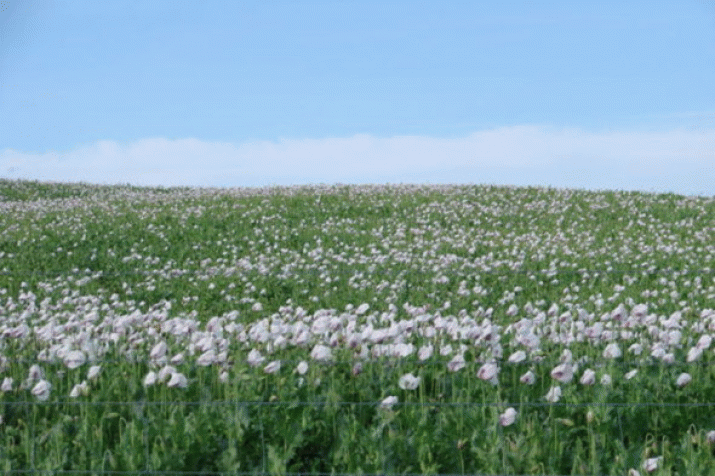
By November, the fields will be carpeted in pink flowers with an occasional splash of white or mauve. Then the flowers will drop away, leaving behind distinctive, cup-shaped pods packed with tiny poppy seeds along with the opium latex that surrounds them. When the latex dries two months later, the pods are harvested and hauled to factories, where machinery separates the seeds and grinds up the rest to extract the valuable narcotic alkaloids.
Tasmania, an island off Australia’s southern coast, is the start of a global supply chain that encompasses the biggest drug companies and produces $12 billion a year of opiate painkillers.
Nearly a half-century of assiduous plant breeding, a gentle climate and tight regulations have given Tasmania a hammerlock on production of one of the pharmaceutical industry’s most important raw materials. Tasmania, which is about the size of West Virginia, grows about 85 percent of the world’s thebaine, an opium poppy extract used to make OxyContin and a family of similarly powerful prescription drugs that have transformed pain management over the last two decades. It produces all of the world’s oripavine, another extract, which is used to treat heroin overdoses and shows promise in controlling other addictions. Tasmania also accounts for a quarter of the world’s morphine and codeine, two older painkillers from opium poppies that are still widely used, particularly outside North America.
But the global pharmaceutical industry is increasingly worried that it is hooked on the island’s opium poppy supplies.
The two manufacturers that dominate Tasmanian opium extract production have begun twin battles to diversify supply sources and alter the plant’s genome to produce a stronger, more productive crop. The manufacturers, GlaxoSmithKline and Johnson & Johnson, provide narcotic alkaloids to their own painkiller units and to other companies worldwide, which have started demanding that the two giants act to ensure reliable supplies.
“They look at the map of the world, see Tasmania at the bottom, and say, ‘Are we taking a hemispheric risk, and putting all our eggs in one basket?’ ” said Steve Morris, the general manager of opiates for GlaxoSmithKline.