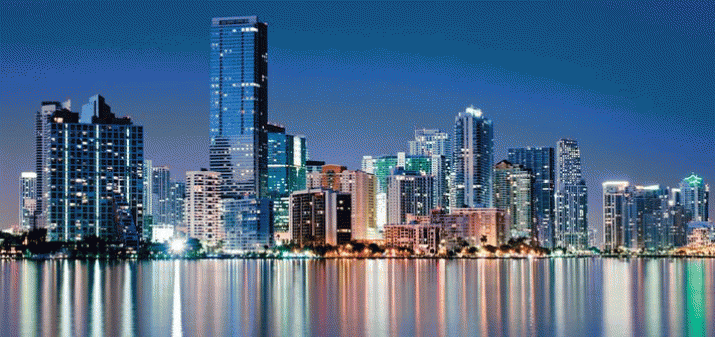
*Image: Charles N. Abbott: http://99cnaclasses.com/miami/ ; http://99cnaclasses.com/
Low-lying south Florida, at the front line of climate change in the US, will be swallowed as sea levels rise. Astonishingly, the population is growing, house prices are rising and building goes on. The problem is the city is run by climate change deniers
A drive through the sticky Florida heat into Alton Road in Miami Beach can be an unexpectedly awkward business. Most of the boulevard, which runs north through the heart of the resort’s most opulent palm-fringed real estate, has been reduced to a single lane that is hemmed in by bollards, road-closed signs, diggers, trucks, workmen, stacks of giant concrete cylinders and mounds of grey, foul-smelling earth.
It is an unedifying experience but an illuminating one – for this once glamorous thoroughfare, a few blocks from Miami Beach’s art deco waterfront and its white beaches, has taken on an unexpected role. It now lies on the front line of America’s battle against climate change and the rise in sea levels that it has triggered.
“Climate change is no longer viewed as a future threat round here,” says atmosphere expert Professor Ben Kirtman, of the University of Miami. “It is something that we are having to deal with today.”
Every year, with the coming of high spring and autumn tides, the sea surges up the Florida coast and hits the west side of Miami Beach, which lies on a long, thin island that runs north and south across the water from the city of Miami. The problem is particularly severe in autumn when winds often reach hurricane levels. Tidal surges are turned into walls of seawater that batter Miami Beach’s west coast and sweep into the resort’s storm drains, reversing the flow of water that normally comes down from the streets above. Instead seawater floods up into the gutters of Alton Road, the first main thoroughfare on the western side of Miami Beach, and pours into the street. Then the water surges across the rest of the island.
The effect is calamitous. Shops and houses are inundated; city life is paralysed; cars are ruined by the corrosive seawater that immerses them. During one recent high spring tide, laundromat owner Eliseo Toussaint watched as slimy green saltwater bubbled up from the gutters. It rapidly filled the street and then blocked his front door. “This never used to happen,” Toussaint told reporters. “I’ve owned this place eight years and now it’s all the time.”
Today …
• The Telegraph: The Fossil Industry Danger The cumulative blitz on energy exploration and production over the past six years has been $5.4 trillion, yet little has come of it