Letter to the Editor, Mercury
In reference to your article on eco-lodges (Mercury 29/5/2014) and the Tourism Industry Council wish-list for resorts in wilderness areas in remote areas of Tasmania … it seems it is not very practical.
Good access to your resort is critical factor in determining the viability of your tourist venture.
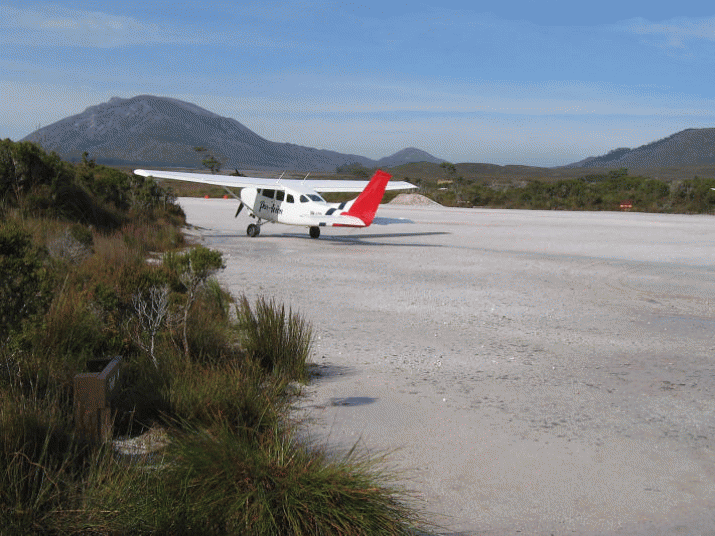
Wilderness lodges are often accessed either using a helicopter or a light plane. In many parts of the planet (such as tropical areas) such access is generally pretty easy as flying conditions are benign.
The one thing high end customers that use these small luxury resorts (being proposed in the article in Tasmania’s remotest locations) want most of all, is being able to come and go when they please as they are very time constrained. They are constantly checking the clock.
The Tasmanian flying conditions (weather wise) are simply not reliable enough. Tourists will either be locked in or locked out of their accommodation because of this constraint.
Can you imagine a tourist being happy when being told they will be spending an unplanned week at Melaleuca, as their aircraft simply could not land?
I have worked in wilderness areas indentified in the article and when I use helicopter access, I expect to get a call from the pilot cancelling the trip on at least 50% of the bookings. This is usually because it’s either too windy or there is or too much cloud to land. These work trips are often programmed in to take place in the better times of the year (statistically speaking) for weather, for at least half the year the odds of making a successful landing or pick up would be even worse.
If there is no road access or at least a fairly short walk, such ventures are most unattractive. While bushwalkers are used to walking long distances or waiting for breaks in the weather (which requires a special kind of tolerance) the average tourist is not fond of delays. Standing camps, can work (because of the lower capital costs), lower staff ratio, more flexible cliental. However a bricks & mortar lodge is a poor fit for such locations.
The remote luxury resort business case does stack up in Tasmania and that’s why many similar proposals in the past have failed (when they have factored in the transport issues). A large capital investment where it can’t be guaranteed that your clients will be able access the facilities is no investment at all.