This year Kim Peart will be flying to Los Angeles to participate in the International Space Development Conference in May and promoting work on the composition of a manual for the maintenance of starship Earth.
INTERNAIONAL SPACE DEVELOPMENT CONFERENCE
This is the annual conference of the National Space Society ~
http://isdc.nss.org/2014/
When joining the L5 Society in 1976, inspired by the concepts of Gerard K. O’Neill to build cities beyond Earth, solar power stations in space that drew energy from the Sun and launch industry among the stars, Kim thought he was on a winner with a future that was soon to appear.
Decades went by and the promised future failed to happen as advertised.
Meanwhile, the health of the Earth began to decline as humans became an increasingly unsustainable presence on third rock and Kim wondered if there could be a link between the two.
Views of the driving force of evolution, space futures and how we can win back a safe Earth were committed by Kim to a document in 2006, revised in 2012, called ~ Creating A Solar Civilization ~
http://www.islandearth.com.au/index.php?option=com_content&view=article&id=46&Itemid=64
The document was intended as a blueprint for action.
The action included the Tasmanian Space Centre in 2007, where the first First Step event was held, remembering the Moon Landing ~
http://www.sunshinecoastdaily.com.au/news/virtual-footprint-to-land-on-moon/1953480/
The action came to include building a presence in the virtual worlds, including Second Life, as a place to meet globally to plan local action toward building celestial futures.
Weekly meetings are held in the torus Space Station that Kim has built in Second Life, including members of the Overview Institute and the Kepler Space Institute.
Kim sees the key step beyond Earth as building solar power stations in space, so that we will have the power available to build our space future ~
http://www.sunshinecoastdaily.com.au/news/our-futures-in-space-solar-panel/1831009/
The energy of the Sun could also be brought down to Earth to meet our energy needs, which would be far healthier than burning coal and oil or fracking the Earth for gas that poisons groundwater.
“If anyone worries about draining the Sun dry, forget it,” Mr Peart said, “as our star has so much fuel in reserve, it will burn fiercely over the next 5 billion years, until expanding to the orbit of the Earth as a red giant.”
When Kim travels to the International Space Development Conference in Los Angeles in May, he will be making a presentation with Bob Frantz of the Kepler Space Institute, exploring how the virtual world can be used to promote space development.
Living in Space Track ~
http://isdc.nss.org/2014/tracks-livinginspace.html
During the conference, Kim will be running a space art workshop and all going well, will be posting images of works made in his virtual world gallery in Second Life.
Kim’s wife and partner in space action, Dr Jennifer Bolton, will be participating in the Los Angeles event from their home on the Sunshine Coast, using Second Life over the Internet.
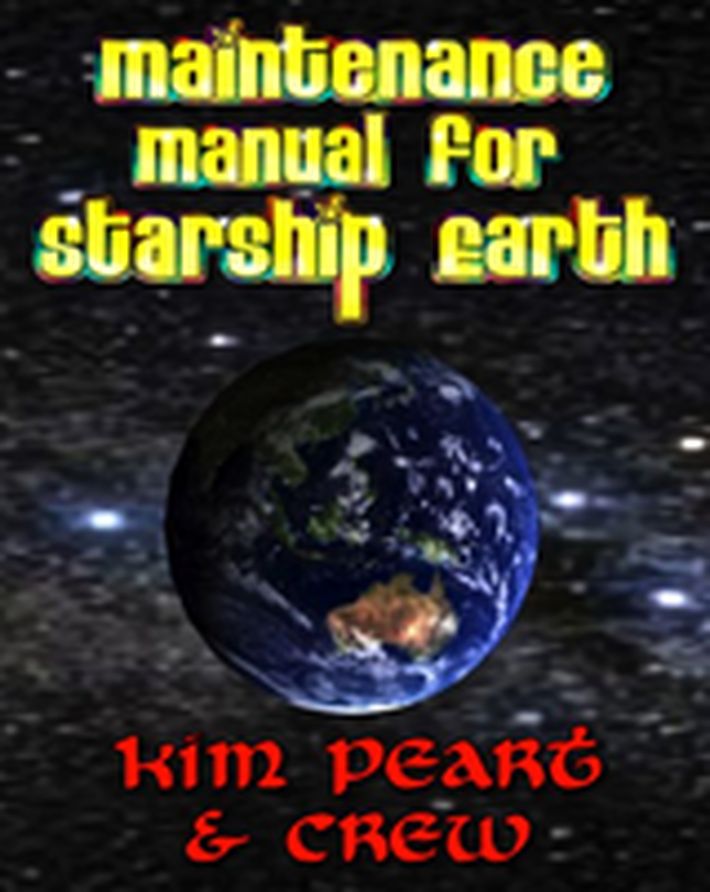
MAINTENANCE MANUAL FOR STARSHIP EARTH
Kim will also be promoting the vision of building the maintenance manual for our starship called Earth, which Mr Peart’s document ~ Creating A Solar Civilization ~ offers the first step in describing the great challenge that lies before us.
Our Earth is a starship travelling through space and we must care for our vessel, or risk it becoming a hulk adrift on the space ways.
The Earth has no lifeboats and these we must build, in case of any catastrophe that may strike our ship, like the asteroid firestorm that wiped out all human communities in North America only 12,800 years ago ~
http://www.spacedaily.com/reports/Comprehensive_analysis_of_impact_spherules_supports_theory_of_cosmic_impact_12800_years_ago_999.html
Only with an industrial presence beyond Earth, can we hope to build our planet’s defences against the ever present threat of asteroids and there are trillions of objects flying around the Solar System.
We must now face the threat of satellites crashing into each other becoming a cascade of space junk, that could destroy all satellites in Earth’s orbit and block our access beyond Earth for hundreds of years ~
http://www.abc.net.au/news/2014-03-07/new-research-centre-to-remove-space-junk-save-satellites/5306286
“We must consider how we will keep all our life-support systems on this planet working and what we must do to secure a safe planet,” Mr Peart said.
The manual will describe the essential importance of building a sustainable presence beyond Earth, so that we will be able to maintain a sustainable human presence on Earth.
“The Maintenance Manual for Starship Earth will include many contributors, to hammer out a form of text book that anyone could refer to and be inspired by,” Mr Peart said.
Like any good text book, the manual will be updated and improved as our knowledge grows.
“We could have begun building our space futures in the 1970s, but we ignored this option and now we face the price,” Mr Peart said, a matter explored in his article, ~ A Deeper Level of Denial ~
http://oldtt.pixelkey.biz/index.php?/article/a-deeper-level-of-denial/
Kim believes that we must get back to the future and catch up with where we should be, before our past catches up with us.
REBUILDING THE CARBON BALANCE
“The past is now catching up with us, as we have destabilised the planet’s carbon balance, leading to global warming, climate change, sea level rise and ocean acidification,” Mr Peart said.
Some scientists, including James Hansen, fear that we are setting the stage for a runaway greenhouse on Earth, which could turn this planet into a second Venus. ~
the Venus syndrome, page 223, ‘Storms of My Grandchildren’
In his 2009 book ~ The Vanishing Face of Gaia ~ James Lovelock warns us all that if our plant is pushed too far, it could swiftly change to a permanently hotter environment, with the loss of billions of lives (page 102).
In his 1998 edition of ‘The Overview Effect’ author Frank White urges us all to “become a crew member on spaceship Earth” (page 169).
“As crew of this Starship Earth, we must all learn to cooperate and know the actions that we must undertake, on Earth and in space,” Mr Peart said.
BACK DOWNUNDER
Upon returning from the United States later in May and working under the banner of Space Pioneers, Mr Peart hopes to see a space information centre set up on the Sunshine Coast, providing information on career opportunities in the global space industries.
“The proposed space centre could also serve as a virtual technology lab, providing access to the virtual worlds, new technologies like the Oculus Rift and hands-on work with robotics,” Mr Peart said.
Robots are seen in the virtual worlds now, where they one day may be trained for work in real life and in space.
As we look toward the future in our Great Southern Land, knowing the key to progress is energy, shouldn’t we be investing in solar power stations in space?
With energy from the Sun, we could be extracting excess carbon from the biosphere, as the first step in winning back a safe Earth and even process extracted carbon into a useful resource for Earth and space industries.
“Rather than lamenting the loss of our car industry in Australia, we should be planning for the unlimited increase in our prosperity, by reaching to the stars.”
Kim’s most recent article explores celestial values and is published in the peer reviewed Journal of Space Philosophy ~
http://www.bobkrone.com/node/120
HISTORIC NOTE ~
The earliest known reference to Earth as a spaceship is by Henry George in his 1879 book, ‘Progress and Poverty’ in which he wrote, “It is a well-provisioned ship, this on which we sail through space.” In 1965 Adlai Stevenson said in the United Nations, “We travel together, passengers on a little space ship.” Buckminster Fuller explored the concept in his 1968 ‘Operating Manual for Spaceship Earth.’ ~
http://en.wikipedia.org/wiki/Spaceship_Earth
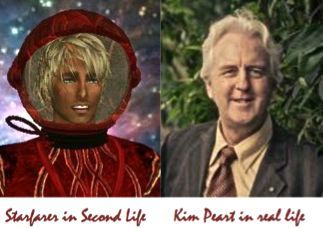
About KIM PEART ~ Born in 1952, Kim was raised on the Australian island state of Tasmania, where he trained as a visual artist, launched a Viking Society in 1975 and became a life-long space advocate in 1976 when joining the L5 Society. Kim founded the Southern Cross L5 Society in 1981, now the National Space Society of Australia, which was given its national launch in the Observatory on The Rocks in Sydney in early 1982. After a journey to India in 1986, he became a human rights defender and urban environmentalist, gaining an entry among Tasmania’s top 200 movers and shakers in 2007 at number 115. Tasmanian born Princess Mary of Denmark came first in that list. In 2006 Kim wrote a document called ‘Creating A Solar Civilization’, seeking a blueprint for action on Earth and space issues. His last project in Tasmania was the Tasmanian Space Centre, located in an old general store on Rosny Hill, where the first First Step event was held, remembering the Moon landing at the moment it happened around the World in 1969. In late 2007 Kim moved north to Queensland, met his partner and collaborator, research scientist Dr Jennifer Bolton, with whom he founded a new group called Space Pioneers. In March 2012, working in the virtual world called InWorldz, they solved the problem of building a virtual orbital space settlement (VOSS), which would allow any number of people to occupy the virtual world, as if living in a torus beyond Earth. When they discovered that Second Life had activated the RayCasting function, it became possible for an avatar to walk around the inside of a torus space station, as if in space. Responding to this new potential, they built a torus space station above Nautilus in Second Life, to further develop the virtual space program. Kim and Jennifer now look toward the potential of the Oculus Rift and the Omni to provide a more realistic virtual experience of space, as well as the development of a more advanced form of the virtual world with High Fidelity, where workers and students could one day train to be astronauts. Over the past couple of years Space Pioneers have been working with members of the Overview Institute, seeking to develop a virtual experience of the Earth from space. They are also pleased to build a relationship with the Kepler Space Institute, seeking ways to develop space studies in a global context in the virtual world. They see a unique opportunity with the virtual world environment, for people to meet globally and plan local action toward building celestial futures.
Kim Peart