Environment
My, how you’ve grown … an update on the Peregrines


An update on: An extraordinary Picture Essay: The nesting Peregrine Falcons …
OCTOBER 24:

Mum comfortable brooding


Female off getting food from male. The oldest is a week old

Female tangled trying to shade chicks from the intense sun

Fast asleep with female on guard

At last asleep, they can be brooded

Watching a blowfly … brooding adults will catch and eat them if they can

Male, preening

Male arriving for brood duties

All the male can do now is squat over the chicks
OCTOBER 26:

First light

First peek of the sun

First snooze of the day

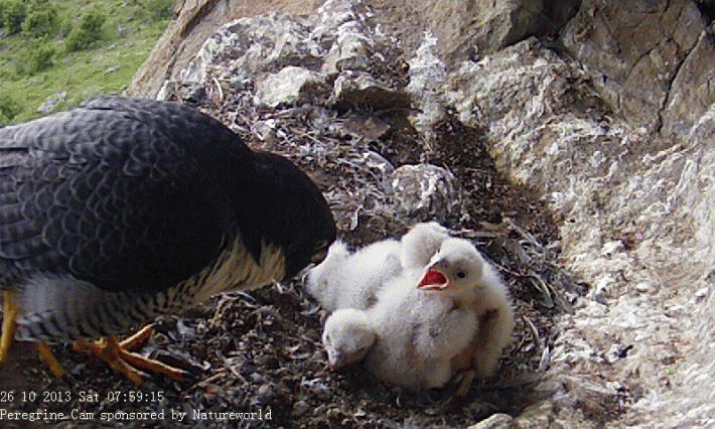
Female stands waiting for food; the hungry chicks peck and beg at each other

After the first feed they watch something overhead


Female preening primaries

Starting to look like two females and a male chick

Dad back to check

Male cleaning his talons

A hot day and female arrives with a wet breast from bathing

She broods the chicks; maybe deliberately cooling them

Suddenly the female jumps up to receive food

It’s an unlucky rosella, partially plucked and eaten by the male

After feeding the female stretches her right wing and leg

Female alighting
OCTOBER 27:

Adult female brooding in early morning

Brooding female with feather stuck to her beak

Female feeding very small bird, possibly a goldfinch, to chicks

Female half brooding. Note the egg tooth still on the chick’s beak tip

Twinkle-toed

Another very small bird being fed to chicks. Note the bird foot about to be consumed

The dapper male feeding young a starling

The kids watch another starling about to be served

Antics … avoiding treading on the chicks

Even the female has trouble brooding

Although their airframe is very rigid, peregrines have long, flexible necks

Female about to launch

Female retrieves yet another starling. Note the typical yellow beak of the starling

And down the hatch it goes

Female gagging on a stuck bone
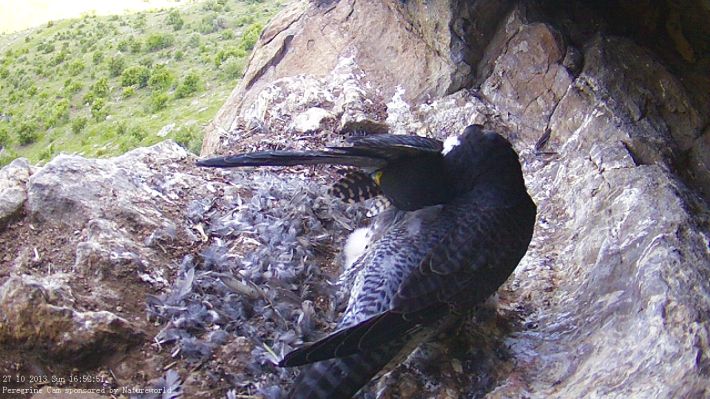
Preening the underside of the left wing

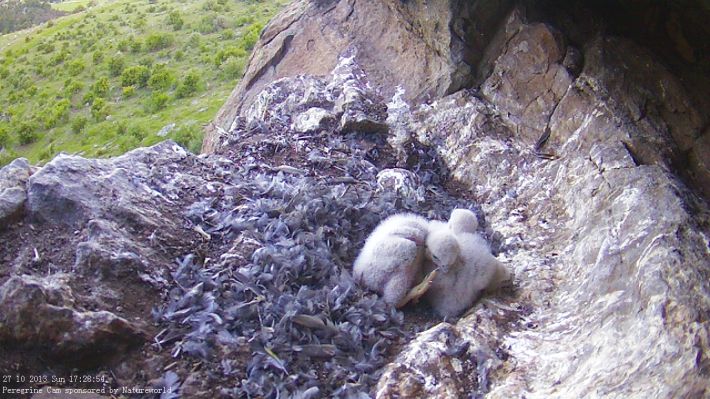
Chick scratching
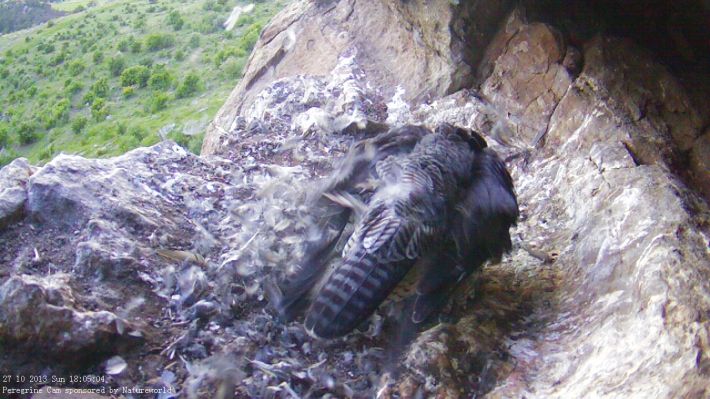
Female ruffling … a sign of wellbeing. Note the long banded vent and rump feathers
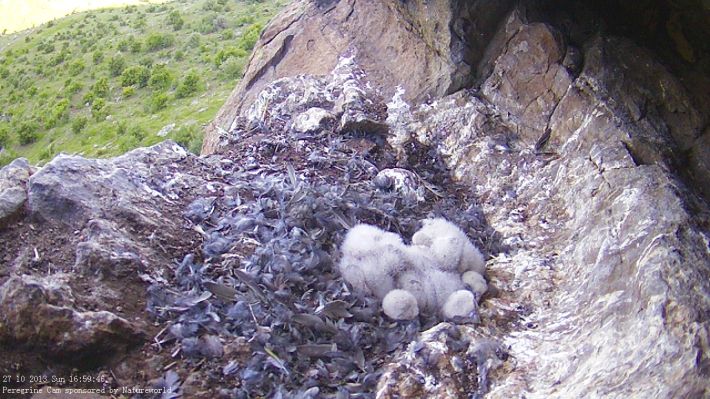
Exhausted brood … looks like two males and a female by head size
OCTOBER 28:

Her very own silly walk

Partly-eaten starling taken off the male

Adult male arrives at sun-up. Note the highly-contrasting breast; very rich orange/yellow coloured legs, cere and eye surround of the female.

Tip-toeing around the brood

All comfortable

Starting to nod off basking

Out like a light

Bit of a preen

A bit more

Standing waiting for food

Another starling for the big-bellied brood

Note the hint of primary pin feathers already

Adult male arrives with, yes, another starling

Female takes the starling

… and re0rientates. From this age the male will have to increase his provisioning rate and in another 10 days food demands will be (huge)

Female’s favourite brooding posture … partly propped on left wing
.jpg "My, how you've grown ... an update on the Peregrines 183")
Adult male at speed over Stanley (Pic: Adam Hardy)