Dear Editor
The consequences of the Gunns, and other tree plantation Managed Investment Schemes (MIS), collapse for Franklin landholder David McGrath and 250 other Tasmanian landholders, 35,000 grower investors across Australia, and 10,000 shareholders, is depressing reading. (Nick Clark, The Mercury on Saturday, August 31).
It is also an important cautionary tale that bears close examination.
At the heart of the problem were companies, like Gunns Ltd, with most, if not all, the features of a corporate psychopath. Gunns’ overriding governing principle was a ruthless and exclusive interest in its own financial bottom line and never mind the consequences for the “externalities”; that is other people, society, and the environment.
Forensic psychologists working the field of workplace psychopathy are sometimes asked if it is possible that the lack of empathy or conscience that defines psychopathic behavior could be good for business.
The short answer is no, not in the longer term. This has proven to be the case with Gunns and with the plantation forestry MIS schemes more generally.
Not only is the psychopathic company very likely to go broke but, more regrettably, many innocent people will be severely damaged; financially, emotionally, and in their personal relationships.
Arguably the most distressing feature of this sorry situation is that it occurred in slow motion over many years and despite many, unheeded, warnings by people who were bullied and derided as scaremongers.
It happened with the explicit and/or implicit support of all levels of government, financial advisers, accountants, real estate agents, senior public servants, business leaders, and lawyers.
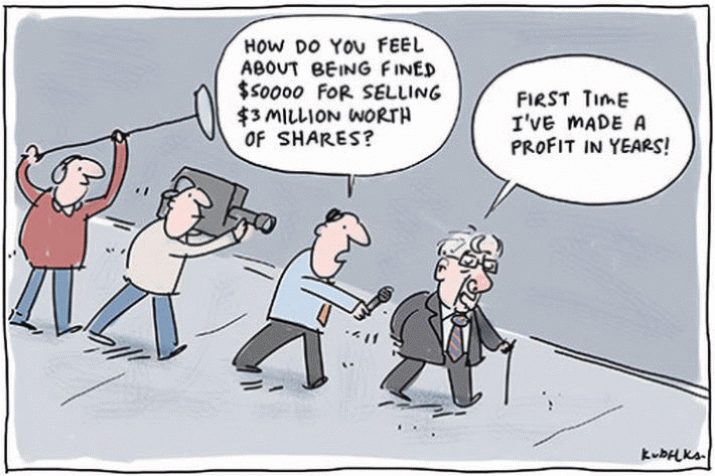
Incredibly, a Tasmanian Supreme Court Judge recently described John Gay, former Gunns CEO and Chairman, a confessed inside trader, as of “exemplary” character and “noted for his honesty”.
Pull the other one!