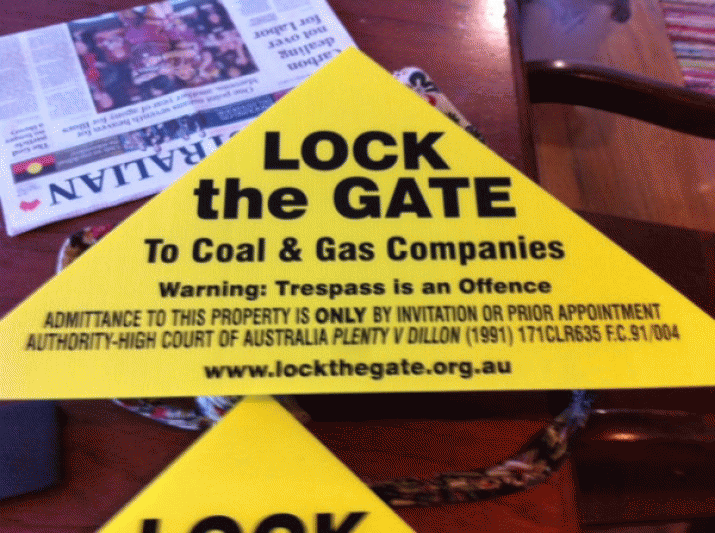
The Tasmanian Climate Action Council today urged the Government to act with great caution around the extraction of so-called ‘unconventional’ natural gases, such as coal-seam and shale gas deposits.
“The Council’s advice to government on actions to reduce Tasmania’s greenhouse gas emissions has consistently emphasised the broad economic and environmental benefits of investment in genuinely clean energy technologies. Expanding fossil fuel investments in unconventional gas is in itself economically risky, while also undermining the strongest growth opportunities for the Tasmanian economy – clean, green agriculture and tourism.” Council’s Deputy Chair, Jess Feehely, said.
“Natural gas is often referred to as a ‘transition fuel’, on the basis that it produces fewer greenhouse gas emissions than other fossil fuels when burned. However, the primary component of natural gas – methane – makes a higher contribution to global warming than carbon dioxide. Scientific investigation is continuing into the rate and impact of fugitive methane emissions during the extraction process, but it is clear that these methods are not ‘climate friendly’.”
There is a real risk that investment in gas in Tasmania would damage the economy. Globally even conservative bodies like the International Energy Agency have now concluded that two thirds of existing reserves of coal, oil and gas will never be able to be burnt if we are to stabilise the climate. Finance experts from banks like HSBC, Citigroup and Deutsche Bank have all warned of the risk of “stranded assets” in this area – investments that will be deserted when what is known as the “carbon bubble” bursts.
“Through its long-term investment in renewable energy Tasmania has earned an enviable reputation as a low-carbon, clean energy powerhouse. This complements our growing reputation in the areas of high quality clean food and sustainable tourism. Given the concerns of the farming community about the potential environmental impact of gas drilling on agriculture, mining unconventional gas threatens rather than enhances our economic prospects. It also makes it more difficult for the State to achieve its legislated target to reduce greenhouse gas emissions.
“Rather than support mining of unconventional gas, the Government should do everything it can to retain and build on the environmental, clean-green image and economic advantages associated with the State’s renewable energy mix,” Ms Feehely concluded.