Economy
For the rest of the year humans will use more resources than the earth can provide

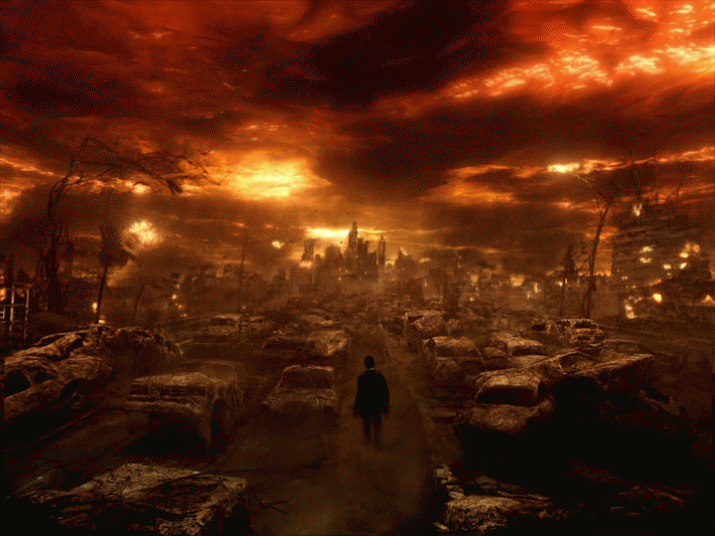


For the past several years, as the days of summer start getting just enough shorter for you to realize that fall is coming, I’ve received an email announcing that Earth Overshoot Day has arrived.
Every year it comes a little bit earlier—which is the essence of the problem.
Calculated by the folks at the Global Footprint Network, Earth Overshoot Day is a best estimate of when we collectively—this vast human civilization that’s ever growing in numbers and appetite for things—begins to use more of the planet’s resources than can be annually regenerated.
We go into ecological overshoot.
In absolute terms, on vast geologic timescales, it’s too much to say that we’re permanently depleting the planet’s ability to support life, but on a human scale we’re doing just that. Put in the language of ecological economics, we’re depleting natural capital.
This year Earth Overshoot Day arrived on August 20th, two days earlier than it did in 2012. In 2011, the Day arrived on September 27th, with the vast jump between those two years representing differences in calculation rather than a directly comparable changes in resource consumption. Quantifying this, all of human civilization consumes 1.5 Earth’s worth of resources. We need another half-planet to support us sustainably into the future. By 2050, on our current trajectory, we’ll need another entire planet.
There’s a natural concern with the concept: It is difficult to quantify worldwide consumption and compare it to world ecological productivity. The 1.5 Earths figure is for all nations, but there are wide discrepancies in consumption. China is currently has the world’s largest total ecological footprint, due to its world-leading population, but even as such, on a per capita basis its impact, while still unsustainable, is far lower.