History
The hero at the heart of the Royal Commission

Detective Chief Inspector Peter Fox – the lifetime copper whose revelations finally triggered PM Julia Gillard’s decision to launch a Royal Commission into child-sex abuse (TT here) – is a classic whistleblower whose career is now over. He has had no contact with his chiefs in the NSW Police Force and is now isolated within the NSW Force, a not unfamiliar context for whistleblowers. Here is his latest interview on Lateline …
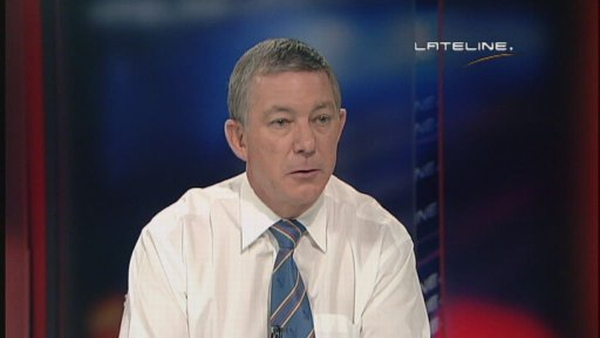

Lateline
Interview with Detective Chief Inspector Peter Fox
Australian Broadcasting Corporation
Broadcast: 12/11/2012
Reporter: Emma Alberici
Interview with the policeman who helped trigger the Government’s plan for a Royal Commission into the abuse of children in the nation’s institutions.
Transcript
EMMA ALBERICI, PRESENTER: We’re joined now by Detective Chief Inspector Peter Fox, the senior police officer who took a stand on the issue and called for a royal commission here on Lateline last week.
It was on this program that Inspector Fox first made the allegations that his investigations were hindered by interference from within the police force and within the Catholic Church.
Detective Fox has driven from Newcastle tonight to be with us again, and I thank you so much chief inspector Fox for coming in again.
PETER FOX, NSW POLICE: It’s a pleasure, Emma.
EMMA ALBERICI: Now of course as we just mentioned, you were the one calling for this royal commission last week. You must be feeling quite vindicated.
PETER FOX: I don’t think I was the only one. I just wanted to add my voice to the many thousands out there that were already calling out for it over the last decade and more. You know, when you’ve sat down with these people, I just don’t feel that you can turn up and walk away and think, “Well, I’ve got so much knowledge about what’s gone on,” and walk off and have an easy conscience thinking, “I could have done more, but I didn’t.”
I’ve made the comment that the turning moment for me was a forum at Newcastle where Peter Fitzsimmons, the radio DJ from down here, made the comment, “Evil flourishes when good men do nothing.” And I sort of felt that perhaps he was directly talking to me. And I thought, “Well I’m not prepared to sit back and keep my mouth zipped.”
EMMA ALBERICI: Now it took obviously so much courage for you to come here and talk as candidly as you did last week. What’s the reaction been from within your own police ranks?
PETER FOX: Mixed, I think as most people would expect. I have been inundated with fantastic calls from ex-police and current colleagues that are thrilled to bits with this happening. I’ve had calls from some police that I don’t know, wanting to share their frustrations and stories with me.
Conversely there’s also been the uglier side of it where – I don’t want to go into it too deeply, but this is the end of my policing career. I realised that from the moment that I decided to speak out last week. As much as it’s denied, the culture within the police force would never allow someone like me to move back into it. So, I’ve …
EMMA ALBERICI: What do you mean, the culture?
PETER FOX: Ah, you know, I think the Wood Royal Commission uncovered it years ago and I’m sorry to say that very little has changed. And ostracisation and things of that nature continue to go on within the police force.
I think if anyone has followed the history of it all, whether it be Tim Priest or Glen McNamara, many others that have spoken out of turn, the police force isn’t accepting of that. They might smile and say they are. But, you know, Emma, that’s not the point. I’m getting towards the end of my career anyway, 35 years.
EMMA ALBERICI: But the rest of us in society want to be encouraged by the idea that others like you will also see fit to speak publicly and tell it as it is.
PETER FOX: Well I hope so, and, you know, don’t get me wrong: I’m not bitter with the police force. They’re a minority, those individuals, but they exist everywhere, whether it’s the police force or wherever else in society that they may be.
We’ll probably unfortunately never change that. If any of my grandkids ask, “Pop, what do you think if I join the police force?” I will encourage them right up to the hilts. Because it’s been a wonderful job. I’ve met some wonderful people. I’ve been able to make changes and do things.
EMMA ALBERICI: I have to say that I’ve heard from a policeman I spoke to myself over the weekend that among those in the police you’re considered mentally unstable.
PETER FOX: Yes, a couple of people have rung me up. I’m trying to hold myself still with all that going on, but I am aware of a fair bit of mischief going on behind the scenes. And that was expected, Emma. Like, I’m a big boy. I knew that was coming. That’s what happens when you speak out of line.
And it’s just very sad that I’ve had some terrible things occur to my family and I over my stance on another matter and the church matter over the last six to 12 months, from threatening letters on police letterheads to myself. My wife suffered a complete nervous breakdown after she was sent one of those threatening letters.
EMMA ALBERICI: Who sent the threatening letter?
PETER FOX: We don’t know. Obviously some disgruntled police officer somewhere in the job that was unhappy with the stance I was taking. You know, that’s the way it is. As I said, I made the decision that I need to speak out once that happened because I’m not prepared to sit back and see my family tormented in that way.
And my wife’s listened to my stories. I’ve investigated murders – you name it. And she shared all that with me over many years. I remember the night of my daughter’s seventh birthday where I should have been hosting the party and I was at a murder in the Watagan Mountains of a mother and two children.
So, my wife has shared all that over the years and been a fantastic support for me. And when I start to see her being harmed in the way that she was being harmed, I’ve got to make a decision what’s better for me. I love my career in the police force, but am I prepared to subject myself to more of that? No.
But I don’t want it to be focused on that. I suppose the good news for the day is that we’ve seen a wonderful result so far as the announcement that was made today on the royal commission.
EMMA ALBERICI: Is it in your view a lack of will on the part of police? Is it not enough resources? Or is it the lack of cooperation by the Catholic Church that hinders these investigations?
PETER FOX: I think there’s a mixture. Personally I think it’s a mixed component. Resources are always a big issue when you start to get to management level. I know, I’ve sat in there myself. I know sometimes you’re very stretched. It’s a case of priorities; what comes first when you’ve only got so many to share around and you’ve got to make those difficult decisions.
You know, there’s a lot of pressure that does come down from the top and some of that’s political, some of that’s from within the upper echelons of the police force. You need to make those tough decisions.
But, you know, I said last week to Tony that I have been outspoken and a lot of police that know me will say exactly that: I’ve gone out on a limb a few times. A lot of police hate me for that. A lot of police love me for it. It’s like anywhere else in society: there will be the good and bad. The police force is no different. We’re a real example of the cross-section of society. It doesn’t change when you join the police. But, you know, all you can do is strive to do what’s right as much as you can.
EMMA ALBERICI: Where do you think the royal commission’s focus should be?
PETER FOX: A number of areas. I think that it needs to look at a lot of areas of law that need to have been changed and we should get those right right across the country, not just in each state. We need to focus on things such as: should priests that are telling other priests in confessionals be allowed to keep the fact that they’re abusing children – they’ll come back two days later and, “Listen, I got to confess again. I’ve just done this to four more girls.” And that priest knows he’s going to come in again in three days’ time and confess to some more.
So, we need to get laws to stop that happening and to compel those priests that are hearing those confessions to say, “Listen, God doesn’t want this man to commit more crimes. He wants me to come and tell the police to stop him.” That’s …
EMMA ALBERICI: But it’s been longstanding, hasn’t it, that even if they confess to murder in the confessional – it’s been a long-standing issue, hasn’t it?
PETER FOX: Um, perhaps they’re antiquated rules where society in the Middle Ages bowed to the will of the Church. You know, I heard George Pell say earlier today is that he’s basically capitulated to this royal commission on the basis that the media has all been one-sided. I’ve listened to the arguments for the last 10 years. It certainly has been one-sided because it seems to be the Church that has been continually screaming out the message that we don’t need a royal commission, “There’s nothing going on here. Move along.”
We’ve had enough from that one side, Mr Pell. Now we’re going to start listening to the victims and start listening to their families and we’re going to start doing something about the problem. The big problem is that denial, when you’re not prepared to sit down and actually start to acknowledge that there’s a problem and look at ways of fixing it.
There was a very prominent cardinal in Rome unfortunately that has recently passed away that Mr Pell would’ve known, Cardinal Martini, who just recently came out and I think in August and made a comment about, “We need to make radical change within the Catholic Church on how we are dealing with paedophilia and priests.”
And he then went on to point out, he said, “We have wonderful big churches, we’ve got wonderful places of worship and they’re ordained with jewels and they’re all empty.” They need to start asking why are they empty? Because if you can’t change, that’s not going to change. If the Church really is genuine, they need to stop making the comments that Cardinal Pell made today.
If he can’t stop moving them – saying those comments, move along and let someone else come in that is a little bit more conciliatory, that has got more of a compassion, an open ear. The way Cardinal Pell treated the foster family in Melbourne whose two daughters suicided after abuse was nothing short of disgraceful.
I think he needs to have a real hard look in the mirror and go back and say, “Why did I want to become a priest? Somehow I’ve got into this position now where it seems to be all about how much money can I save through the compensation schemes? How can I protect the reputation of the Church? How can I protect this priest that I used to go through the seminary with?”
That doesn’t matter. It should be: “How can I protect these little children? How can I look after these victims? How can I care for them and give them compensation and help them get over the trauma?” That’s where we should be looking. So I’m hoping that the royal commission will do some of that.
In addition to that, you know, other areas we need to look at – and again, if I can use Mr Pell as an example: the Fosters and others in 1997 pleaded with him to remove five other priests that were involved in, or believed at that stage to be involved in paedophilia, away from being in schools and contact with young children. And his comment to them on that occasion was, “It’s all gossip until it’s proven in court.”
Now, I arrested Jim Fletcher in 2002 and I went to the bishop at Newcastle, Michael Malone, and I asked him to remove the priest from the school, saying, “He will eventually be charged. I just haven’t got enough yet.” The response I got is, “He’s innocent until proven guilty.” Jeez, it sounds very, very regimented.
EMMA ALBERICI: The brother who was arrested this evening, we know he’s been in the Blacktown community as a community leader for the past 18 months when the bishop knew.
PETER FOX: I don’t think anyone’s naive to what’s going on and, you know, people are smarter than that in this day and age. You know, social media, everything else, it’s all getting around and I think most people are wise enough to make their own determination. But there’s so much good that can come out of this.
I don’t want to be heavily critical. I’m aware of some wonderful, wonderful priests that are out there. And during the Wood Royal Commission detectives like myself probably walked around with our heads down seeing the scandal that was going on down in Sydney. That’s probably given me some empathy for a lot of the good priests out there because at the moment they’re ashamed to walk out with that collar around their neck.
A lot of them are damn good people. I’ve spoken to some of them. And some of the younger ones especially. They’ve confided in me how frustrated they are with the old boys’ club that exists. That they’re not allowed to speak out of turn or to make changes. And I think that’s what Cardinal Martini was talking about: we need to move the old faction on and get some of this young blood in there and let’s start afresh.
EMMA ALBERICI: Chief Inspector Peter Fox, thanks so much for coming in again. We really appreciate it.
PETER FOX: Thank you, Emma.
• The Conversation: Royal Commissions: How they work
• Christine Milne
Australian Greens Leader
Sarah Hanson-Young
Greens spokesperson for the Murray Darling
And
Mark Parnell
South Australian Greens MLC
Tuesday 13 November 2012
Press conference
Transcript
Subjects: Royal Commission into child abuse, World Energy Outlook report, Murray Darling
CHRISTINE MILNE: The International Energy Agency has released the latest World Energy Outlook. It says very clearly that two-thirds of the world’s fossil fuels need to stay in the ground if we’ve got any hope of constraining global warming to less than 2 degrees. That is in complete contradiction to the Energy White Paper that’s been released by the Gillard Government, which is a dash for gas, dig up the coal, ship it away as fast as possible. It’s in complete contravention also of Obama’s push for massive shale oil in the United States. The world has to get serious about global warming, we are currently on track for 3.6 degrees of warming. That is devastating for the planet and devastating here in South Australia when you consider the Murray Darling. We have to make sure that climate change, the impacts of climate change are taken into account when you consider any Murray Darling plan into the future. And I’ll get my colleagues to speak about that in a moment.
I just wanted to comment on a couple of other things. With the World Energy Outlook showing overnight we need to completely constrain fossil fuels and rev up the renewables, in Australia the Greens achieved the Clean Energy Finance Corporation, 10 billion into renewable energy, but we have to make sure that that’s on top of the Renewable Energy Target. We can’t afford to make sure we put money into say, solar thermal and squeeze out wind. We need them both. And the good news is that there would be hardly any difference in the cost in terms of power bills if we did make any projects funded under the Clean Energy Finance Corporation additional to anything funded under the Renewable Energy Target. It would be a win-win for Australia and particularly necessary when you consider we are currently on track for 3.6 degrees of global warming.
On another story today, the Royal Commission, the Greens have been calling for a Royal Commission into child abuse in Australia for a long time. I first wrote to the Prime Minister about this in 2005, the then-Prime Minister, and more recently a couple months ago. I’m very pleased that the Prime Minister has said yes to a Royal Commission and I’m really pleased that at last the nation’s parliamentarians are saying to the victims of child abuse we believe you, we are listening to you, we want to hear from you how this was covered up for so long, how the perpetrators of this abuse got away with it for so long, how they managed to shift people state to state, institution to institution, and continue to have the community listen to the institutions and not the children being abused. This is a situation which is going to take many years to resolve, I don’t think it’s appropriate that we put a timeframe on how long this Royal Commission should operate for, what we need to do is get it set up, get the broadest terms of reference so that it has every capacity to fact-find across all of those areas. I was concerned when I saw that the Catholic bishops had put out a statement saying that they are looking forward to being consulted in terms of the terms of reference for this inquiry. I think it is critical that the terms of reference are framed in terms of what the victims are saying happened to them, and the systemic problems that led to this being covered up for so long. I don’t think it’s appropriate for the Prime Minister to consult with the institutions through which that abuse was perpetrated and determine terms of reference based on what they say, because this is a fact-finding exercise, that’s what a Royal Commission is, to uncover all of the facts, and we need to make sure that all of the facts are genuinely uncovered in this Royal Commission.
JOURNALIST: Do you think the fact that the Catholic bishops have said they’re looking forward to being consulted, does it show that they’ve have had it their way for too long, that they believe that they need to be consulted when in fact what they need to be done is to be investigated?
CHRISTINE MILNE: Well it’s interesting that the bishops have asked to be consulted in terms of the terms of reference for an inquiry into child abuse. Did we go and talk to the painters and dockers before the commission of inquiry into the union? Did we go and consult with say bikie gangs before there was a Royal Commission into those activities? The issue here is, it is the victims who need to be listened to. The whole purpose of the Royal Commission is to say we are listening to you, we are hearing you, we believe you. And so the terms of reference have to be framed in such a way that we do hear them, and not constrained so that we can’t get a full picture of what actually occurred.
Now, I just wanted to introduce the issue of the Murray Darling. Australians love the Murray Darling and we want to save the Murray Darling system, but so much has been said about what will save the Murray. The Greens want to come back absolutely to evidence-based science. And that means taking into account the climate impacts on the river system, but it also means that vague promises about achieving 3200 gigalitres need to be firmed up beyond vague promises and actually be guaranteed in legislation. It has to be a minimum. Jay Wetherill has said he wants it to be a minimum and yet the figure that turns up constantly is the 2750 gigalitres. My question to the Prime Minister is what is so set in stone on 2750? Has any deal being done up until now so that anything additional is just possible, may be, we’ll consider it later down the track? Why is 2750 set in stone? Has a deal been done with Tony Windsor? Has a deal been done with somebody else? It’s time for the Government to say if that is the case, if it’s not then the Government should be absolutely open to guaranteeing the minimum 3200 gigalitres that such a fuss was made about in Adelaide only a few weeks ago. In the Senate we’re now are going to move on this and I’ll just ask Sarah to come and indicate specifically what we’re going to do in the Senate.
SARAH HANSON-YOUNG: Well we know that both the Federal Government and the State Government here in South Australia want to see a returned amount to the river of 3200 gigalitres. Well let’s do it, let’s actually guarantee that that will be returned. To do that we need to amend the two bills that are currently before the Federal Parliament. The Greens are announcing today that next week we will move those amendments, we will guarantee that South Australians will get what they have been promised, 3200 gigalitres as a minimum. If both the State and Federal Governments believe this is important, then let’s deliver it, upfront, real water, right now. That’s what we need to pass through the Parliament. There’s no use having empty promises, this is a plan that must save the river, not just for South Australia but for the rest of the nation, and South Australians who care the most about the long-term outcomes of this river system. They want the amount of water returned that science argues, we want the 4000 gigalitres, but the Government says they’re happy to deliver 3200. Well we will help the Government deliver that, we’ll work with the Government , we’ll put forward the amendments, and it’s a call to all South Australian MPs both state and federal that if they really believe that this is the time to save the river, if they really want to do it, let’s guarantee 3200 gigalitres, back the Greens’ amendments in the Parliament next week, and here in State Parliament Mark is going to be putting the pressure on the State Government.
MARK PARNELL: I’ll be moving in State Parliament this afternoon for Jay Weatherill to go to his Labor federal colleagues and make sure that the legislation delivers what Jay Wetherill says South Australia needs in terms of water down the river Murray. It’s not good enough just to have aspirational targets, we’ve seen even today professors of law coming out, experts on the constitution saying it’s not guaranteed, this extra water, so Jay Weatherill needs to stop popping champagne corks and pretending that the battle is won, and he needs to get into the ear of his federal colleagues and make sure that we do have enough water coming down the Murray, to keep a healthy and vibrant river system alive.
JOURNALIST: So what is it that you’re introducing today?
MARK PARNELL: The Greens are introducing a motion into State Parliament that will be calling on the Premier to get in touch with his federal colleagues and make sure that we do get enough water to keep the Murray alive. Because so far the extra water has been aspirational, it’s been a promise, but it’s not in legislation.
SARAH HANSON-YOUNG: It’s an opportunity for the State Government to send a very clear message to their federal counterparts to back the Greens’ amendments. And if South Australian politicians are serious about saving the river, they’ll vote for the Greens’ amendments, we can work together to deliver a system and a plan that will save the river.
• Paul O’Halloran, Wednesday: TASMANIA MUST GUARANTEE FULL CO-OPERATION WITH ROYAL COMMISSION INTO CHILD ABUSE
Paul O’Halloran MP
Greens Children’s spokesperson
Wednesday, 14 November 2012
The Tasmanian Greens today reiterated that the State needs to be prepared that it may be called on to provide support, including possible legislation, to ensure that the proposed federal Royal Commission into child sexual abuse can undertake its investigation fully and unhindered.
Greens Children’s spokesperson Paul O’Halloran MP said that for many affected by the horrors of child sexual abuse in the past, this Royal Commission of Inquiry comes years too late, and it would then add further unacceptable insult to injury should there be any indication that its inquiries are being hampered.
“The announced federal Royal Commission has been broadly welcomed across the community, however words of caution have been raised in some quarters that in some areas States may need to pass their own legislation to ensure the federal investigation can occur within their respective jurisdictions,” Mr O’Halloran said.
“For example, Tasmania has already had the situation in the case of our previous state Commission of Inquiry into the police shooting of Joseph Gilewicz, where the assigned Australian Federal Police investigating officers required specific recognition under the State’s Listening Devices Act.”
“History shows that these requests at the time were not fully complied with by the then-state government.”
“Until the Royal Commission’s Terms of Reference have been finalised we will not know for certain whether such action is required, but there is absolutely no reason why Tasmania can not commit now to guaranteeing full and compete co-operation to ensure this long awaited Royal Commission can conduct its investigation without hindrance.”
“The Greens urge all Members of the State Parliament to commit that they will provide all appropriate legislative, or other identified forms of, assistance for the federal Royal Commission of Inquiry into child sexual abuse,” Mr O’Halloran said.
Text of Greens’ Motion tabled by Paul O’Halloran MP today:
That this House:
1. Welcomes the Prime Minister’s commitment for a national Royal Commission to be held into the handling of child sexual abuse claims across church groups, schools and state care providers;
2. Recognises that some Tasmanian churches and support groups have welcomed the announced Royal Commission and have undertaken to co-operate fully;
3. Calls for the development of the Terms of Reference process to fully engage and consult with community and support groups for their input into the Terms of Reference;
4. Notes that although the Terms of Reference for the Commission have yet to be finalised, concerns have been raised that the States may also need to provide legislative or other support to ensure the Commission when underway can fully operate unhindered in those jurisdictions; and
5. Commits to ensuring that all necessary measures and tools, including specific legislation, as identified as necessary for the Royal Commission to fully operate as it deems appropriate within the context of its Terms of Reference, and provided in a timely manner.