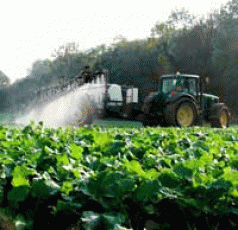
Use physics in spraying
GREGOR HEARD
01 Nov, 2011 04:00 AM
FARMERS could be forgiven for not thinking in terms of physics when confronted with the mundane task of crop spraying, however a visiting UK spray application expert said remembering some fundamental laws of physics would boost herbicide efficiency.
“It’s simple, the higher your boom, the slower the droplets are going when they hit the crop and the less energy they will have to work their way through the canopy,” said Tom Robinson, Syngenta.
“From an efficiency perspective, you want your boom as low as you can get it.”
“Obviously, this is more difficult – its easier to spray with the boom up a little higher as there are less potential obstacles, but it is well worth it.
Mr Robinson said work had been done which found 5pc yield gains simply from running the boom at the correct height and with tyre pressure down.
The other crucial factor in having the boom positioned correctly was in minimising spray drift.
“If you double the boom height, then you can expect drift to increase ten times.”
He acknowledged with larger booms, there was the potential to have variance in height from side to side, but said precision agriculture technology now allowed an even height across uneven ground.
“It’s becoming increasingly important to ensure there is no spray drift, so its important to get your spray operation right.”
He said the UK had already evolved a complex regulatory system for spraying, which meant aerial application, while not banned, was difficult, and that Australian farmers needed to self-regulate to ensure they had the widest range of application technologies available.
Speed is also critical in minimising drift.
“Obviously, the temptation is to go as fast as you can, but as speed goes up, so does air turbulence and the potential for self-generated drift.”
Timing of application is also important, with the potential for inversion layers to be created, especially during the evening.
Droplet size is another thing to be considered.
“There’s different nozzles for different jobs – large droplets are good in certain applications, while in other circumstances you will want a finer mist of droplets.
“Larger nozzles can be good, as they have higher energy and can run down the plant, so they can be useful in no-till systems with standing stubbles.”