The earthworks currently being undertaken at the Conservation and Heritage site at Longreach on the Tamar River by Hazel Brothers contractors are not permitted. As the permits for work had expired at the end of August, the movement of machinery and small infrastructure onto the site at the start of September led to multiple arrests of protesters. One of these citizens, Mr Ali Alishah, is still incarcerated weeks later for repeatedly acting on his conscience and bravely taking non-violent direct action.
That these illegal works at Longreach are allowed to continue, perverting evidence of failure to achieve substantial commencement by the permits expiry date, is testament to the Tasmanian Government’s abrogation of their responsibilities.The failure of the Tasmanian Government to exercise due process, the failure to fulfill their duty of care to their electorate and environment and the failure of legislative and regulatory authorities creates a situation where people feel compelled to act to exercise precautionary measures to prevent the risk of additional damage and failure.
Recent calls from some politicians to further criminalise citizens exercising their democratic right to protest are unnecessary and counter productive. It must be understood that it is never the intention of non-violent direct action activists to cause fear, risk or hazard and care is taken to not damage machinery. The argument that protests interfere with the contractors’ legal right to work ignore the fact that the act of protest and subsequent court proceedings are contesting that legality, as legislative review for a range of environmental and social issues is clearly imperative.
Legitimisation of coercive and intimidating behavior through unprincipled legislation is used as a pretext to justify attacks on the public and criminalises citizens acting on their conscience. This, together with smear campaigns against activists, seeks to shift the blame from the perpetrators.The real risk at any direct action comes from the reactive random acts of the corporate associates, employees, contractors and some Police, dictated to by a government that continues to serve private corporate interests at the expense of its own electorate.
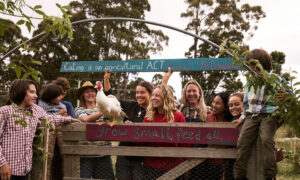
Our community’s volunteer grassroots non-violent direct action environment organisations do not undertake stop work actions without due cause or care. We have a wide range of activities such as education, reports, scouting, surveys, skill-shares, fundraising, networking, rallies, vigils, community open days, guided walks, film nights, concerts, presentations, exhibitions and media, all of which contribute to community awareness of and engagement in issues that effect everyday lives.
There is ongoing liaison with other groups and our communities to ascertain what actions may be relevant where. Banner drops, rallies, open days, walk ons and media events all highlight issues and may prevent works for a short time.There are times and places when it is indeed justifiable to intervene in work by corporations and their associated contractors, work that is damaging our ecosystems and society and is deemed to have dire consequences.
Occasionally a more interventionist peaceful approach must be employed in which case structures, tree-sits, drag-ons and lock-ons, may be used to ensure that contractors cease and desist from their harmful activities. Hard times call for hard measures and when a stronger stand needs to be made some people feel that the personal risk to themselves is nothing compared to the greater risk of allowing corporations in collusion with governments to continue down the path to destruction.
As our work pertains to risk and precautionary measures, we are aware of the need to cooperate in a mindful and conscientious manner to minimize harm with the actions we take. Non-violent direct action crews prepare, plan, practice and have protocols and procedures for actions with most roles generally being non-arrestable. Passionate commitment and common values such as open communication, honesty and trust help to make this work. It matters not just what we do, but how we do it.
While grassroots activists generally operate on a local level, they seem to come from all round the world.The modus operandi and culture of groups of activists may be unfamiliar to people, certainly there can be discrimination and stigma attached, with activists being treated either as gods or demons when in fact they tend to be very human, practical, resourceful and resilient people. Grassroots activists are self-funding and work voluntarily for and in cooperation with their communities. Having very public lives, they strive to maintain decent standards at camps, at actions and in their behavior.
Dedicated activists, who forgo comfort and security as they juggle study, jobs and family commitments trying to maintain the threads of ‘normal’ life, make many sacrifices. Frontline life is very arduous and activists have high expectations of what they can endure and achieve, they push themselves to do the best day and night. It can seem that they do not have an “off” button.
The type of work these activists do means they may experience sleep deprivation, a constant state of hyper-vigilance, repeated incidents of displacement and dispossession, are at high risk of burnout and are exposed to events that may be traumatising. Long-term activists often also experience discrimination, systemic violence and systemic disadvantage.
Despite realising the real consequences of participating in direct action many continue to act on their conscience and are prepared to take responsibility for their actions as demonstrated by commitment to appearances at court dates and payment of fines, or even, as in Mr Alishah’s case, imprisonment. Direct action by a group of people with the will to peacefully intervene to prevent damage directly may end in police charges relating to their actions. Matters can then be taken through the court to contest unjust and inequitable laws and legislation while lobbying for legislative review.
Forest industry corporations in Tasmania have a demonstrable disregard for the welfare of their workforce and the health and wellbeing of the Tasmanian community. The past 40 years of industrial scale forestry on this Island has culminated in the harm and degradation of our soil, air, water, endangerment and extinction of flora and fauna and disruption of our communities. Many believe that this harm cannot continue unchallenged and that it is their civic duty to intervene.
Cecily. A. Edwards. 23-09-2011