Economy
Saving Our Schools

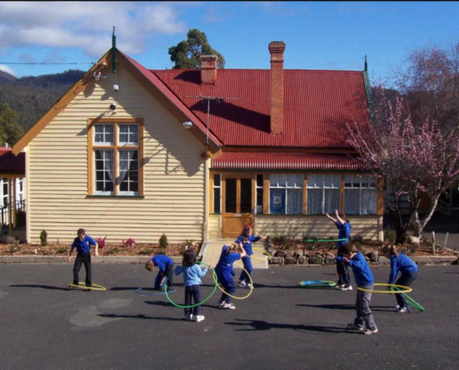

The idea of closing small country and suburban schools, as a quick band-aid to our current financial woes, is a bad one.
To create a financially thriving state, there are two pathways – one is the one chosen consistently by the Lennon-Bartlett-Giddings government over the last ten years – to go for quick profit, whether in forestry or hotel development via gambling. There is a quick flash of money, followed by long term degradation and impoverishment. Its like eating the goose that lays the golden eggs.
The other pathway, now being recognized by economists all over the world, but first named up by E.F. Schumacher of “Small is Beautiful” fame – that there is a deep capital based in our people, our land, our water, soil and air, our oceans and mountains, that will feed and clothe us FOREVER if managed well.
The assets that are most valuable are hard to put a dollar value on. One of those is a small and friendly school within walking distance or a short drive from your home. Another is a feeling of community and belonging in a town. Some towns have it, and are great places to live, and property values soar as a result. There is an inflow of young families as well as cashed up retirees, mixed with locals who have always loved the place, and the town grows and renews in a stable and attractive way.
Measuring a school by its dollar value – what can be saved by firing its groundsman, office staff, maintenance and rates, and one or two teachers, is very dubious. Children have to be schooled somewhere, this is still a cost. And transport is added to that.
Few school buildings can be profitably adapted to other purposes, they are likely to be sold for a fraction of their cost, and never return.
But even this is not the main point. A school may add many millions to the economy of a town by making it attractive to live in. Kids are happy and well catered for, they belong and are less likely to become offenders or accident statistics. Young parents have a place to belong and feel welcome, there is often a playgroup, or community garden. If young families are drawn to or kept in a small town, its population stabilizes. When a town thrives, it holds onto its shop, its service station, perhaps a pharmacy, and medical care. If it tips beyond the ability to hold these basic services, it collapses.
When we lived there, my kids were schooled at Collinsvale Primary. It was a hub of parental involvement, the source of much pride and fun, a secure and friendly quality education. Its staff were cohesive and knew each child well, there was very little bullying or behaviour difficulties, and a wide range of abilities and special needs were catered for. It was small enough to care, and big enough to be stimulating and exciting. Multi-age mixing and caring between the different age groups was the norm. A toddler was safe there, and a sixth grader developed their nurturing qualities.
There is a point where a school is not viable, where demographics shift and new schools must be built elsewhere. But I suspect that point is below 20 students – and even then it depends. Sometimes you have to lead the recovery and growth of a place, by investing in it. There is no greater investment than having a local school. If its already there, then its very conserving – of buildings and plant and equipment, as well as the intangibles – the human connections which are what a school really is. The trust, friendships, volunteer work, and loyalty and commitment of the staff. In country schools, as in any really thriving organization, people give far more than they are paid for.
In the end, we have to have a vision of the future. Government is about guessing the future and working towards its most favourable version.
My vision is a Tasmania that still thrives through its closeness to nature, in a world that has melted down economically, where the globalization experiment has failed. Where we no longer have a growth economy because that is not possible on a finite earth, because oil is scarce, the climate has gone mad, food is critically short, and billions of refugees have nowhere secure to live. This world is already at our door.
My future Tassie is a beacon in the world. Because we manage it well, this island feeds itself and many others too. It is safe, cohesive, and generous. It has clean and abundant water, energy and space. It is green and lean and socially rich and interesting. It has hundreds of thriving small towns. And those towns have schools.
Steve Biddulph works worldwide consulting to schools in teacher development. His latest book The New Manhood explores how men can thrive when they live for others.
• ABC Online, Nick McKim: Closing schools to save $26m
Tasmania’s Education Minister has revealed the schools earmarked for closure have a combined value of $26 million.
Nick McKim faced a barrage of questions in budget estimates over the Government’s plan to close up to 20 schools around the state.
Liberal spokesman Michael Ferguson demanded to know the value of the schools on the hit list.
Mr McKim said the most expensive was Geilston Bay High School which has been valued at $10 million.
Warrane Primary School is worth just over $3 million and Sandy Bay Infant, $2.8 million.
The Education Minister was also pressured to give a detailed breakdown of the savings on staff.
He said about $5 million will be saved each year, including just under $2 million on principals, $1.2 million on senior executive officers and $409,000 on base grade teachers.
Operational savings included $187,000 on maintenance, $302,000 on energy costs and $127,000 on rates.
Mr McKim has released some of the legal advice from the Solicitor General about paying back school stimulus funding to the Commonwealth if the government closes the schools.
He told the budget estimates hearing that the Federal Government had no legal grounds to recoup the $13 million it has invested in the schools marked for closure.
…
Several of Tasmania’s Federal Labor MPs have now weighed in on the issue, saying the money should be paid back.
First published: 2011-06-28 03:30 AM
Minister runs gauntlet of angry parents
Updated Thu Jun 30, 2011 3:59pm AEST
Parents believe closing the Glenora school will be the death of the community.
Parents believe closing the Glenora school will be the death of the community. (ABC News: Linda Hunt)
Tasmania’s Education Minister, Nick McKim, has been confronted by angry parents at one of the rural schools slated for closure.
The Glenora District High School is one of the 20 schools on the State Government’s hit list.
The Minister arrived at the school for a tour, flanked by the Premier’s security guard.
Mr McKim approached a group of about 20 protesting parents and residents waiting at the school gate.
He thanked them for coming and assured them no decision had yet been made and he would listen to their concerns.
But parents are angry they were not invited to join the minister during the visit.
They fear closing the high school will be the death of the community.
It is the second day of school visits by the Minister.
He has also meet the principal and School Associations at Warrane Primary School on Hobart’s eastern.
On Wednesday he toured four southern schools at Dover, Sandy Bay, Franklin and Goodwood.
Mr McKim has dismissed Opposition claims that he is sneaking into schools.
Opposition spokesman, Michael Ferguson, says the minister gave schools less than 24 hours notice before arriving.
Mr McKim says he wants to see the schools for himself.
“We’ve notified schools and school associations of the time of my visit and we’ve said if you want to invite the media onto your school that’s fine by me, if you don’t that’s fine by me too,” he said.
“It’s up to schools and schools have to be treated with respect through this process.”
The Attorney-General has come under fire for not releasing the Solicitor-General’s advice on refunding Federal money spent on schools it intends to close.
The Liberal’s Matt Groom says it is in the public …