It was never to happen again.
After floods devastated Brisbane in 1974, the giant Wivenhoe Dam was built to hold back any threat of submerging Australia’s northern metropolis. The city stretched along the river, soaking up the views of the water, but it was growth in the shadow of a lie.
Living on a hill of the inner Brisbane suburb of Milton seemed safe enough. My daughter was expecting to give birth to her second child any day. All preparations had been made for a home birth in their apartment, so as the rain fell heavily, they stayed and waited.
Monday saw an ocean fall from the sky onto the inland city of Toowoomba, where no such flood was ever expected to happen, as the city is perched on the northern reach of the Great Dividing Range. The full fury of Nature was felt, however, as a wall of water surged through the streets, sending cars shooting away like corks. The inland tsunami plummeted into the plains below, lifting up houses and carrying them off like boxes. People within were heard screaming. It happened so fast. There was no place to run.
On Tuesday the citizens of Brisbane were told that the hour of the impossible had arrived and the mighty Wivenhoe Dam was full to the brim and overflowing. There was nothing that could be done. Water had to be released. “That was how this dam worked,” Premier Bligh said. Brisbane was going to flood.
When the river began rising on Wednesday, the Police told my daughter “You had better get out, or you will be going to hospital in a boat.” Their hill in Milton was about to become an island, as Ipswich drowned beneath 19 metres of water. They drove to the home of the mid-wife, who lived on a higher hill south of the river, to wait for the birth.
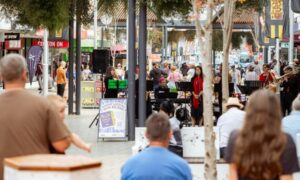
Many stayed up all night, watching the waters rise, creeping up the roads, filling the houses, the car parks, the shops. It was a king tide that night. Many worked frantically to sandbag threatened businesses, in the hope the water would go no higher. A musician played music on the edge of the surge, like King Knut, but the waters did not hear. One man went to check on his father, but something went wrong in the inky dark and he drowned.
On the bright sunny morning of the great Brisbane flood of Thursday 13th January 2011, with abandoned yachts and ferry pontoons racing down the river toward Neptune’s kingdom, my daughter gave birth. A little boy, a child of the deluge on the day that Brisbane sank beneath the muddy waters. A little joy arrived through the waves of tragedy.
The situation could have been much worse. The second floodgates on the Wivenhoe Dam would have opened automatically, if there had been just three more hours of rain, which would have sunk Brisbane beneath 2 more metres of water. The accounting now begins on a catastrophe that has affected 75 percent of the Sunshine State, which could run up a bill of 20 billion dollars, or more.
The planners will be hauled before the furnace of public scrutiny and asked, “Is this the face of climate change? Should we be building on the flood plains? Should we be pulling development back from the river’s edge?” Action Abbott, the Federal leader of the opposition, the denier of changing climate realities, came out swinging for more dams to control floods, but this pipedream was quickly hosed down. Hydraulic engineer, Professor Hubert Chanson of the University of Queensland, commenting in a Brisbane Times story of January 8th said, “while a reservoir will be able to spare some of these communities for small to medium sized floods, major extraordinary events are not ones that you can always find a solution.”
Last year was found to be the equal hottest year on record, along with 2005. Hotter ocean water across the north of Australia has been causing corals to bleach. In a hotter world more water rises as vapour beneath the blazing Sun and what goes up, must come down. On the Internet the storms could be seen sailing in from the north east. We are told the oceans are rising, the storms are becoming fiercer, more rain is falling and water is moving through the Earth cycle faster.
Brisbane is not alone, not with most of Queensland in a flood crisis, with less severe flooding in New South Wales, parts of Victoria experiencing record flood peaks and Tasmania recording some of the heaviest rains in it’s history, where temperatures reaching a tropical 29C. Last year the floods in Pakistan impacted on the lives of 20 million people and the floods in Sri Lanka last month affected a million people. Currently in Brazil at least 655 people have died in flooding and landslides, with fears the death toll will pass 1,000. This disaster is now being described as the worst flood event in Brazil’s history.
We were lucky in Mountain Creek, a suburb on the coastal flood plain north of Brisbane, next to Maroochydore on the Sunshine Coast. To our north Gympie was hit by floods, along with towns and farms on the banks of the Mary River. The rains were extraordinary and the local creek, normally a quiet tidal estuary, became a raging rapid flowing with immense force as the water sought to escape back into the ocean. If the heavy rains of Tuesday had been falling on Wednesday and been blocked by the king tide, the old flood plain could have lived up to it’s name. We could also have been caught in major suburban flooding, where suburbs should never have been built.
Early settlement in the area built the towns on the hills above the flood plains, but the attraction of the beaches, the surf and the sun saw developers rampaging for coastal expansion and canal estates. We rest in peace for now, more uneasily, but those who can may move to higher ground. There have been reports for months of people who can afford the luxury, buying second homes in the hills of the Sunshine Coast hinterland.
Nambour in the hills of the hinterland, where the train arrives from Brisbane, was always intended to be the commercial and civil centre of the Sunshine Coast region, but now the Council has moved this planning to Maroochydore, which is located at sea level on the flood plain. Will this decision change after the floods of 2011? Though a train line is planned for Maroochydore, the State and Federal Governments may hesitate to see capital investment being washed away by coastal flooding as the ocean rises and the rains increase.
It is poignant to note that the Byron Bay rail line has been shut down for a few years now. Running along the coastal flood plain of the Northern Rivers region, the line would be at risk from sea level rise, along with the areas of Byron Bay built on sand at sea level. The Byron Bay light house may end up on an island, as Australia’s most easterly location on the mainland moves west. The Earth is changing, but people do not always move as swiftly as Nature to keep pace. Sometimes it takes a disaster to sharpen the thinking and the planning.
Emerging cities like Maroochydore, wishing to stay on the coast, may need to be built as fortresses to withstand the assaults of an encroaching ocean and torrential floods across the plain. Serviced by fleets of airships that could travel to any location with freight and passengers, railways and highways would not be so critical. The suburbs on the coastal plain would be swept away, the people forced to flee inland as refugees from the sea, but the aquatic citadels of the old coastline may evolve into submarine cities. Or would it make more economic sense to build ahead of climate change at higher elevations?
My daughter returned to her Milton home on Friday, with her newborn babe, her flood child. The power was not back on yet, the Internet was silent and her mobile phone needed recharging. Modern cities are fragile creatures. A little water and their circuits fry.
As the flood drains away from Brisbane, the cleanup begins, with an army of volunteers, christened the Mud Army, washing out the filth and scrubbing the houses. One volunteer, former Prime Minister Kevin Rudd, became ill with an infection when helping to clean up the mess in his riverside electorate. Flood related diseases now present a risk, as soldiers continue the grim task of searching for the bodies of those caught in the flash flood in the Lockyer Valley. Raw sewage is still flowing into the river. Brisbane will shine again, but the river will be viewed with an air of dread, as this great muddy serpent writhes and rolls it’s way toward the ocean.
The memory will haunt Brisbanites, all Queenslanders, all Australians, that an ocean of water can dump on a city in the mountains without warning, that Nature cannot be tamed that easily, if at all. That insurance companies can limit their liability when flooding is a flash flood, as struck Toowoomba and the Lockyer Valley. Many who lived in locations seen as flood zones could not get insurance before the flood. This affecting many workers living in normal suburbs around Brisbane. Flood-zone insurance restrictions may now gain a larger footprint.
Professor Catherine Lovelock of the University of Queensland described our challenge very aptly when quoted in The Age newspaper of January 15th, ”We need to make sure we don’t get amnesia this time … we must use the lesson.”
The lesson could be the report, just released, from the Danish Meteorological Institute that it may now be too late to stop the melting away of the Greenland ice sheet, committing future generations to 7 metres of sea level rise. Together with the melting of Antarctic ice and the thermal expansion of warmer oceans, we could be looking toward at least 15 metres of sea level rise during the next thousand years. This could be at one and a half metres of sea level rise a century and could be a few metres this century. Nature is not polite or predictably convenient in the delivery of disasters.
Do we wait for catastrophe, or plan to be ahead of the storms and the rising oceans, especially when we know that change in Nature can happen swiftly, as when an earthquake is finally released after a long build-up of pressure, which can cause a stunami? Being pre-warned is being pre-armed and knowing what is coming, we have the chance to act, to build our way through and beyond this gathering climate catastrophe. We do not need to wait to be dumped on, or wake up to the sound of the ocean breakers pounding through the dunes and onto the coastal plains like a million bulldozers.
Or will amnesia set in again, as we are transfixed by the diamonds of sunlight dancing on the water?
The trains were free on Monday, the day I went to see my grandson. The power was still off in Milton, where muddy water still lay in some streets, garbage piled up from sodden shops and pumps working away at clearing basement car parks. The streets smelt like a tip. Without power, many unflooded shops and cafes were still closed.
My daughter was fine in her cave in the new dark age. They were camping and had driven to the laundromat in Paddington. They had bought a battery recharger for their mobile phone. It was wondrous to see the tiny babe, still reddish from the birth. A new life emerged from the storm. Such tiny hands. Such tiny feet and eyes that barely see.
Warnings have been issued that more storms could follow in the weeks and months ahead. We could get it all again. It could be worse. Many houses may never be rebuilt. Premier Bligh has announced $15 million for a Commission of Inquiry into the floods. There is talk of rezoning parts of Brisbane and building levees.
The coal industry is being hit to the tune of many billions with such wide-spread flooding. Tourism is getting a king hit with bad press about soggy Queensland flying around the World. Food prices are expected to sky rocket, around Australia. The national economy is set to wobble and we will all feel the pain.
Looking down from the train, the Brisbane River flowed brown and dirty like an angry cauldron of filth, carrying the farmlands away to become ocean deposits, like a red tide spreading out to sea. The Navy minesweeper HMAS Huon searches for submerged debris. The citizens of Brisbane and all parts of Australia now hit by these floods, search for a future.
How does a nation build its way through the predicted delivery by Nature of climate change catastrophes?
Flood Child
========
Born in flooding days,
a child of rain and storm,
arrives in a world so strange,
as the Earth is changing form.
What future will we give you?
And what hope can we speak?
The Earth is not the one we knew,
nor the one that you will meet.
The future is yours to tackle,
we can but build the way,
for you to battle forward
and create a better day.