Economy
Forest issues need to be in – not out – of the spotlight

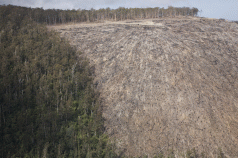

I agree with David Obendorf (Without the skills grand plans melt into dreams Tasmanian Times July 1st 2010 ) critical comments concerning the lack of consultation and transparency, in the current discussions about the future of forestry in Tasmania.
My own concerns include whether or not the vital land use and water quantity and quality issues involved in monoculture plantations project are on the radar of those purporting to represent environmental interests.
Will the Our Common Ground negotiators from the Wilderness Society and Environment Tasmania recognise that the food factory workers whose jobs have been lost and the famers pushed off their land are Tasmanian citizens who have suffered as result of monoculture plantations. Are the ‘environmental representatives’ up to date on the now revealed facts that the whole paper from woodchips and pulp project has its losers as well as its few winners.
Further are these negotiators bearing in mind that the Tasmanian public purse and the vast majority of people in Tasmania are among the losers. (For details of how it all actually works read The Truth About Plantations Mike Bolan, Tasmanian Times 15-6-10) Senator Christine Milne ( Where has your money gone? TT 2-6-10 ) wrote: “…more than $650 million has been handed out of the pockets of the community to the forestry industry since 1997….”
The negotiations with the controllers of our forest industries are about a public resource and the public interest and need to be open rather than secret. Now it is not at all surprising to read, in comment no15 by Mike Bolan, on the above mentioned Obendorf paper, .that Minister Bryan Green has apparently been sending out letters about the discussions between “the forest industry and environmental groups”. Nor is it surprising that,Byran Green would be saying in his letters: “… the best chance of success is for the parties involved to be able to work together out of the public spotlight”
My concerns also include that an “Our Common Ground “ letter dated Nov.12th -2009 and later published on Tasmanian Times contained the following to quote: “Only a few Tasmanians have the opportunity and capacity to make a difference. We ask you to join us.” This letter’s following paragraph suggests as an ideal individual donation to the work of the group could be the sum of “$5,000”. These suggestions and the behind doors discussions now in train appear to me as altogether too close to Byran Green’s ideal of keeping discussions about public issues “out of the public spot light.”
The issues are, after all, about how forest practices affect people our environment and people’s futures.
The interests of the many people affected needs to be included in our focus as does openness and democratic practice. Ending the widely perceived corruption, actual massive loss of public money and the water and soil degradation involved are essentials. As are ending the negative consequences of current forestry practice involving the large scale take up of land for monoculture plantations. These consequences include farmers being pushed off their land and are negative for small businesses and workers in several other industries.
The issues involved include but are not confined to a narrow perception of environmental matters. Further the idea that a few well heeled people are the only ones capable of changing our policies and the world are effectively debunked by no less a recognised and applauded long term environmental campaigner than Professor Ian Lowe. (See particularly final chapter of Lowe’s A Big Fix (Pub. Black Inc.2009.) Discussing the changes we need to make Lowe wrote on page 96;of “A big Fix”: “The choices we make will only be politically sustainable if they are made openly after rigorous discussion based on credible analysis of the costs and benefits.”In his essay published in “Goodbye To All That “a recent book edited by R Manne and D McKnight and pub. by Black Inc. in 2010 on page227 Lowe wrote: “…change is more likely to be driven from the ground up than from our present leaders.”
On page 107 of “A Big Fix” Lowe wrote: “Short term thinking is an impediment to achieving the sort of sustainable future I want to see.” This sound advice poses, in my mind at least, the question— is focus on a pre-election deal behind closed doors just one more example of short term thinking? Any attempt to by pass the land use and water quality issues including the toxins in our water and to lock us into continuing subsidies from the public purse could lead to environmental and economic disasters of very major proportions.
We need to think beyond the next election and a short term deal that would create more problems than it solves Positive proposals are being put forward it is time for people in authority to listen and for real change. For example Ian Johnston Hobart Mercury 14-7-10 and Tasmanian Times ( Cutting through the forest feud ) and much that has appeared on Tasmanian Times.
Just one more thought . —The open and frank approach of Green leaders Senators Christine Milne and Bob Brown to their negotiations with Labor on Climate Change issues where they are publicly proclaiming their support for a tax on carbon is a good example of the way to properly represent the public interest. Here the issues have been put into not kept “out of the public spotlight.”