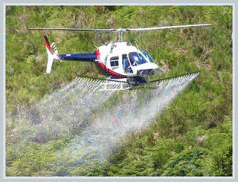
The campaign by people who are pushing the land and essential eco systems destructive plantations began to highlight, again, the issue of the deadly environmental and people health effects of the chemical sprays necessary to monoculture plantations. This campaign brought responses from the many of us who, as long term environmental activists, have learned to take notice of the studies and experiences that have shown how environmentally and people negative chemical farming, and chemically dependent silviculture, is.
The Eucalyptus nitens is a tree that is useful for pulp but a very poor substitute for native forests or multi species plantations. It has taken over far too much of our previously good agricultural and forested land. Further there is no future for paper from wood pulp. There was paper centuries before chemically dependent paper from wood pulp attracted large scale investments . The even more recent development of chemically dependent Monoculture, encouraged by the Howard tax breaks, is not a solution to the environmental crises. As well as being able to be produced from other materials paper can now be produced from banana tree stems with little water and no harmful chemicals.
The all-ready happening and portending human tragedies rapid climate change has brought and is bringing is what we have to confront. Returns on faulted investments are of course important to the unfortunate few who were conned into what they, or some of them anyway, actually thought was an environmentally friendly investment. However compared to the drowning of their land and homes that for example some of our Pacific island neighbours are already suffering it is a relatively minor matter.
Those of us who contributed to the ‘Get Up Organised’ fund to enable representatives of these Pacific Islanders to be heard at Copenhagen have reason to be disappointed that the clear and ably represented voice of these people was largely ignored at that world conference. It was however the Islanders directly endangered and further threatened by the effects of global warming who are paying the immediate price of the conniving of some western governments, including our own, that put on ice the positive hopes that global cooperation could bring.
People who suggest that initiation of legal actions against the powerful corporations that are the major contributors to our problems is the way to go ignore experience and reality. It is true that defence of people victimised by the laws passed by parliaments, heavily influenced by these same corporations, is often necessary. The real struggle is to change public opinion as reflected in voting habits and misled support for the enshrinement of those whose real interest in life is accumulation of $ and the power over the lives of others that very large such $ accumulations brings.
It is true that some of us have from time to time been able to get letters etc , that raise some of the real issues in the climate change debate, published in the main stream media. But many of the vital aspects involved in this now relatively long running debate remain essentially taboo in the mass media.
Discussion in electronic media and occasional publications that are not controlled by large corporations is where most of the serious discussion is taking place. Even in parliament there is all too little said on the real issues. Were it not for Senator Christine Milne, and not very many others in various parliaments, none of the real issues and real solutions would get public airing in the institutions that are supposed to look after our interests. The interests of the polluters take precedence most of the time.
The possibilities for a human future rests, in large part, in the serious discussion of these issues in the now available avenues for that discussion. The collective demand for serious action by our governments to do some thing other than talk about and misrepresent the realities we face needs to be well informed and thought through. Our proposals for a new approach, that can make a human future possible, need to be based on a full understanding of the real consequences of no radical change to present practices. This includes a need to understand that the common ground that can give us hope will not be found in practices that destroy the agricultural potential of the land, as well as clean water and many animal species we humans are dependent upon for our own existence.
Solidarity with the people that are already suffering from climate change and the economic practices and social attitudes that have accelerated global warming is ,or should be, a concern for all responsible citizens. As a father, grandfather and great-grandfather who has had, or found, ways to study economic, social and ecological issues and their interconnections – these issues have concerned me greatly for several decades now.