Environment
During a Japanese summer, life is a fetid beach

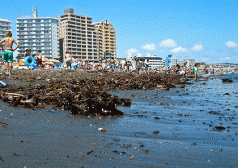

… It is easy to see the parallels with Sydney’s Bondi Beach. Close to town. Picture postcard views. A melting pot of old and young people. A thriving tourism industry and firmly entrenched local community. And, critically, a heaving mass of humanity during the summer months.
However this is where the similarity ends.
Over the past few decades, Australia has worked diligently to protect the natural environment and keep our beaches in great condition. This has not been difficult as, for many Australians, a visit to the beach is almost a spiritual experience. A place of contemplation. A spiritual cleansing of sorts. Pure white sand and crystal clear waters.
Unfortunately, the Japanese summer hordes save their spiritual activities for the shrines and temples . . . and treat Enoshima’s beaches with total contempt.
For two months during the summer the beach is a pigsty. Fast food wrappers, empty beer and soft drink cans, dog turds, broken glass, rotting fruit, a million plastic bags and a billion cigarette butts. The smell of decay makes one want to dry retch.
It is futile trying to escape the crud by getting into the water — it feels like an oil slick. And faeces floats everywhere.
During summer, the Government also builds wooden structures on the sand – yes, on public land — and rents them out to the highest bidder as food marts, tanning salons and beach bars. Convenient? Yes. Attractive? No. Sacrilegious? I think so.